A batter tries to hit the ball, but it does not travel in the direction they planned. Instead, it touches the bat’s edge and moves towards the wicketkeeper or a nearby fielder. This small touch can change the whole result of a delivery.
In cricket, this is known as an edge. There are two common types: an Inside Edge and an Outside Edge.
Although both happen when the ball touches the edge of the bat, the direction of contact is different. This also changes where the ball may go and how a batter can get out.
If you watch cricket regularly or follow match updates on KheloExch, understanding these terms can help you follow close moments in a match. Let’s look at how each edge works.
What Happens When a Batter Gets an Inside Edge?
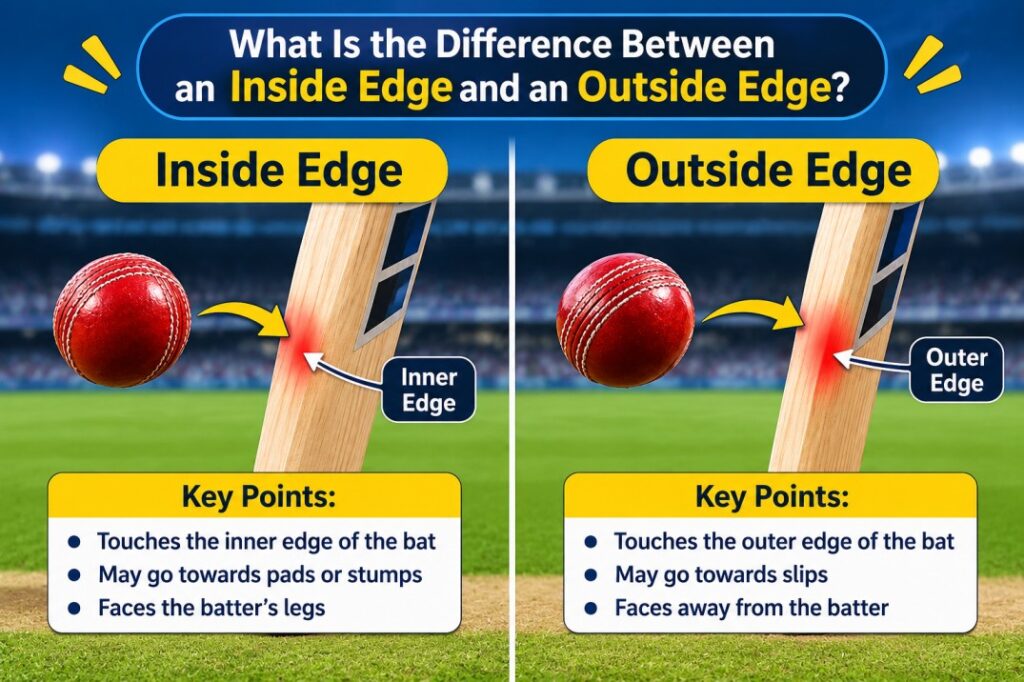
An inside edge happens when the ball touches the inner edge of the bat. This is the edge that faces the batter’s legs.
For example, imagine a fast bowler sends a ball towards the batter’s stumps. The batter tries to play a straight shot but gets the bat angle slightly wrong. The ball hits the inner edge and changes direction.
It may then move towards the batter’s pads, legs, or stumps. Sometimes, it can also travel towards the wicketkeeper or the leg side.
An inside edge can be hard to notice because the ball may change direction very quickly.
Here are a few common results:
- Ball hits the pads: The ball may touch the batter’s leg after hitting the bat.
- Ball reaches the stumps: A small edge can send the ball back towards the wicket.
- Ball moves towards the leg side: It may travel into an open area and allow the batter to score runs.
- Wicketkeeper gets a chance: Depending on the direction and speed, the keeper may catch the ball.
However, not every inside edge leads to a wicket. Sometimes, it can even help the batter avoid being bowled.
And What Is an Outside Edge?
An outside edge happens when the ball touches the outer edge of the bat. This is the edge that faces away from the batter’s body.
It often happens when a batter tries to play a shot outside the off stump but does not make proper contact with the middle of the bat.
The ball may then move behind the batter towards the wicketkeeper or slip fielders.
Think about a fast bowler delivering a ball just outside the off stump. The batter tries to drive it through the covers, but the ball catches the outside edge. Instead of travelling towards the boundary, it flies behind the bat.
This can create a good catching chance for the fielding team.
Outside edges are common when bowlers use swing or seam movement to make the ball move away from the batter.
Inside Edge vs Outside Edge: What Makes Them Different?
Both edges happen because the ball does not hit the middle of the bat. However, their contact points and usual directions are different.
| Feature | Inside Edge | Outside Edge |
| Contact point | Inner edge of the bat | Outer edge of the bat |
| Bat side | Faces the batter’s legs | Faces away from the batter |
| Common direction | Towards pads, stumps, or leg side | Towards slips or wicketkeeper |
| Common cause | Incorrect bat angle or late contact | Mistimed shot outside off stump |
| Fielding chance | Depends on where the ball travels | Often creates a catching chance behind the batter |
One easy way to remember the difference is this: an inside edge comes from the side facing the batter, while an outside edge comes from the side facing away.
Why Do These Edges Happen?
Even experienced batters can get an edge. Cricket balls move at high speed, and a small mistake in timing can change the point of contact.
A few common reasons include:
- Poor timing
If the batter plays the shot too early or too late, the ball may hit the edge instead of the middle of the bat.
- Wrong bat angle
The angle of the bat matters a lot. Even a small change can send the ball in a different direction.
- Swing bowling
When the ball moves in the air, the batter may misjudge its path. As a result, the ball can catch an edge.
- Seam movement
After pitching, the ball may move away from its expected path. This can surprise the batter and create an outside or inside edge.
- Fast deliveries
A quick ball gives the batter less time to react. Therefore, making clean contact becomes more difficult.
Can an Edge Lead to a Wicket?
Yes. Both types of edges can lead to a dismissal, but the result depends on what happens after the ball touches the bat.
For example, an outside edge may travel towards the slips, where a fielder can catch it. Similarly, an inside edge may hit the stumps and bowl the batter.
There are also situations where the ball touches the bat and then the pads before moving away. If it reaches a fielder, a catch may still be possible under the normal rules.
However, if the ball touches the ground before reaching a fielder, it cannot be caught as a normal catch.
How Can Batters Reduce the Chance of Getting an Edge?
Getting an edge is part of cricket, but batters can work on their technique to make cleaner contact.
- Watch the ball closely: Follow its movement from the bowler’s hand.
- Keep the bat straight: A controlled bat position helps when playing straight deliveries.
- Judge the line: Avoid playing at every ball outside the off stump.
- Improve footwork: Moving into the right position can make shot timing easier.
These small things can help batters make better contact and avoid giving fielders easy chances.
When watching cricket on KheloExch, try noticing where the ball goes after touching the bat. It is a simple way to understand the difference between these two edges during a live match.
Frequently Asked Questions (FAQs)
- What is an inside edge in cricket?
An inside edge happens when the ball touches the inner edge of the bat, which faces the batter’s legs.
- What is an outside edge in cricket?
An outside edge occurs when the ball touches the outer edge of the bat, usually sending it towards the wicketkeeper or slip fielders.
- Which edge usually goes towards the slips?
An outside edge commonly travels towards the slips because it comes from the outer side of the bat.
- Can an inside edge hit the stumps?
Yes. The ball can touch the inside edge and then move towards the stumps, resulting in a bowled dismissal.
- Can a batter score runs from an outside edge?
Yes. If the ball passes the fielders and reaches the boundary, the batter may score runs. The exact number depends on how the ball travels.
- Can an inside edge result in an LBW dismissal?
If the ball touches the bat first, the batter cannot be given out LBW from that delivery. The contact must be checked under the LBW rules.
- Why do fast bowlers create more edges?
Fast bowlers can use speed, swing, and seam movement to make the ball difficult to judge. This can cause batters to mistime their shots and get an edge.