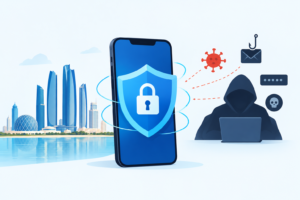
Businesses in ABU DHABI increasingly depend on mobile applications to manage customer accounts, process payments, and deliver digital services. However, cyber threats such as phishing, malware, unauthorized access, and data breaches can expose sensitive information and damage customer trust. App Development Abu Dhabi can help businesses address these risks by incorporating data encryption, secure authentication, access controls, and regular security testing into application development. DeviceBee Technologies helps businesses explore secure digital solutions that support data protection, operational reliability, and customer confidence across the UAE.
Why Is Customer Data Protection Important?
Customer data is valuable to businesses and cybercriminals alike. Mobile applications may collect names, contact details, account credentials, payment-related information, and personal preferences. If this information is not properly protected, attackers may exploit vulnerabilities to access confidential records or misuse customer accounts.
A data breach can result in financial losses, reputational damage, service interruptions, and potential regulatory consequences. Businesses should therefore make security a priority from the planning stage rather than adding protective measures only after an application is launched. A proactive approach helps identify risks early and establishes clear procedures for collecting, processing, storing, and managing customer information.
How Does Encryption Protect Sensitive Information?
Encryption converts readable information into a protected format that cannot easily be understood without the appropriate decryption key. It helps protect customer information when data travels between an application and its server and when sensitive information is stored.
A Mobile App Development Company Abu Dhabi can implement suitable encryption protocols, secure communication channels, and appropriate data-storage practices according to project requirements. Developers should also protect encryption keys, avoid storing unnecessary sensitive information, and review how third-party services handle customer records.
Encryption is most effective when combined with other safeguards. Businesses should ensure that sensitive information is accessible only to authorized users and that security controls remain effective throughout the application’s lifecycle.
Which Authentication Features Can Prevent Unauthorized Access?
Authentication helps verify that someone accessing an account is an authorized user. Weak passwords, stolen credentials, and poorly managed sessions can create opportunities for cybercriminals to enter customer accounts.
Businesses can reduce these risks by introducing practical security features, including:
- Multi-factor authentication: Adds another verification step beyond a password.
- Strong password policies: Encourages users to create difficult-to-guess credentials.
- Biometric authentication: Uses supported fingerprint or facial recognition features where appropriate.
- Secure session management: Automatically ends inactive sessions and protects authentication tokens.
- Login attempt limits: Helps reduce repeated password-guessing attempts.
Developers should also apply role-based access controls so employees and administrators can access only the information required for their responsibilities. These measures help protect customer accounts without unnecessarily complicating the user experience.
How Can Secure Coding Reduce Cyber Threats?
DeviceBee Technologies follows a security-focused approach to help businesses reduce vulnerabilities in mobile applications. Secure coding practices help prevent weaknesses that attackers could exploit. Developers should validate user inputs, manage application permissions carefully, protect API endpoints, and avoid exposing confidential information in error messages or application logs.
The Mobile App Development Abu Dhabi process should include code reviews, dependency checks, and assessments of potential vulnerabilities. Outdated libraries and unpatched software components can introduce known security risks, making regular updates an important part of application maintenance.
Businesses should also evaluate third-party integrations before connecting them to customer databases or internal systems. Limiting unnecessary permissions and reviewing data-sharing arrangements can reduce the number of potential entry points for attackers.
Why Is Regular Security Testing Necessary?
Security testing helps identify weaknesses before they cause serious problems. Different testing methods examine different parts of an application, including its code, authentication processes, APIs, and data-storage systems.
A Top Mobile App Development Company Abu Dhabi should be able to explain how security testing fits into the development lifecycle and how identified problems are addressed. Useful activities include vulnerability assessments, penetration testing, automated security scans, and testing after significant application updates.
Businesses should also monitor suspicious activity after launch. Timely security patches, incident-response procedures, and periodic reviews help teams respond when new vulnerabilities or emerging threats appear. Testing cannot eliminate every possible risk, but it can strengthen an application’s defenses and help reduce preventable security incidents.
How DeviceBee Technologies Can Support Secure Applications
DeviceBee Technologies provides software development services tailored to business requirements, including mobile applications and custom digital solutions. A security-focused project can incorporate protective measures during planning, development, testing, and maintenance.
The appropriate approach depends on the application’s purpose, the sensitivity of customer information, its integrations, and the risks associated with its users. DeviceBee Technologies can help businesses assess these requirements and identify relevant technical safeguards, such as secure authentication, encrypted communication, access management, and structured testing.
For organizations operating in ABU DHABI, and the UAE, a reliable security strategy should also consider applicable data-protection obligations and industry-specific requirements. DeviceBee Technologies can help businesses plan applications with security in mind while balancing usability, performance, and future scalability.
Protect Your Customers’ Data With a Security-Focused Approach
Protecting customer information requires more than one security feature. Encryption, secure authentication, careful coding, access restrictions, and ongoing testing work together to reduce exposure to cyber threats. Businesses that review these measures regularly are better positioned to protect customer trust and maintain dependable digital services.
Work with professionals to discuss your mobile application requirements and identify practical security measures for your business.
Get a Free Quotation from DeviceBee Technologies to discuss your project scope, development needs, and security requirements.
Frequently Asked Questions
1. How can mobile applications protect customer data?
Applications can protect customer data through encryption, secure authentication, restricted access, secure APIs, regular updates, and ongoing security testing.
2. What are common cyber threats to mobile applications?
Common threats include phishing, malware, credential theft, insecure APIs, unauthorized access, and vulnerabilities caused by outdated software.
3. Is encryption enough to secure a mobile application?
No. Encryption is important, but it should be combined with authentication, access controls, secure coding, monitoring, and regular vulnerability assessments.
4. How often should mobile applications undergo security testing?
Testing should take place throughout development, before launch, after significant updates, and periodically during maintenance. Additional testing may be necessary when new risks are discovered.
5. Why should businesses include security in application development?
Integrating security early helps identify weaknesses before release, reduces the likelihood of preventable data exposure, and supports customer confidence and business continuity.