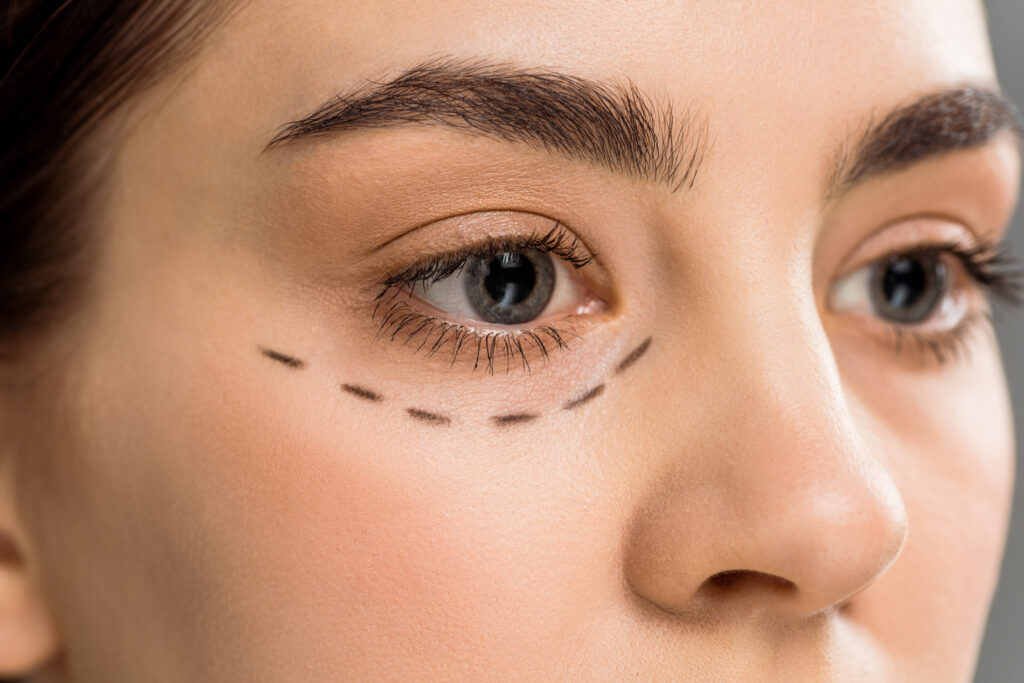
cropped view of young woman with marks on face isolated on grey
Under-eye bags can make the face appear tired, even when someone feels rested and maintains a healthy lifestyle. For some people, puffiness beneath the eyes develops gradually with age, while others notice it because of inherited facial features, changes in skin elasticity, or the natural distribution of fat around the lower eyelids. Although eye creams and skincare routines may help improve the appearance of the surrounding skin, they cannot address every cause of persistent under-eye bags.
Lower blepharoplasty is a surgical procedure designed to improve the appearance of the lower eyelids by addressing concerns such as prominent fat pockets, excess skin, and certain contour irregularities. Before recommending treatment, a surgeon needs to understand what is causing the under-eye appearance and how the lower eyelids relate to the rest of the face.
For individuals considering Lower Blepharoplasty in London, the assessment process is an important part of treatment planning. It helps establish whether surgery is appropriate, which anatomical features need attention, and what type of improvement may be achievable. A personalised evaluation also allows the surgeon to discuss the patient’s concerns, expectations, and preferred outcome.
Why Is Under-Eye Bag Assessment Important Before Surgery?
Under-eye bags do not have a single cause. Two people may have similar-looking puffiness but require different approaches because the underlying anatomical features are not the same.
In some individuals, the appearance results mainly from prominent fat compartments beneath the eyes. In others, loose skin, a hollow tear trough, changes in cheek volume, or a combination of these features creates the impression of bags.
A detailed assessment helps distinguish between these possibilities before a treatment plan is developed. It also allows the surgeon to consider whether the concern is primarily related to the lower eyelids or whether the surrounding facial structures contribute to the overall appearance.
During a consultation, the surgeon may examine skin quality, eyelid position, fat distribution, facial proportions, and the transition between the lower eyelids and cheeks. Understanding these details helps guide decisions about the most suitable surgical technique.
How Does a Surgeon Evaluate Under-Eye Bags?
Reviewing the Patient’s Concerns and Medical History
The assessment usually begins with a conversation about what the patient would like to change. Some people are concerned about persistent puffiness, while others notice loose skin, uneven contours, or a shadow that makes the area beneath their eyes appear darker.
The surgeon may ask when the concern first developed, whether it has changed over time, and whether the appearance varies throughout the day. These details can help distinguish relatively stable anatomical features from swelling that fluctuates.
Medical history is also relevant. The consultation may cover previous eye procedures, facial surgery, existing eye conditions, contact lens use, allergies, and medications. The surgeon may ask about symptoms such as dry eyes, irritation, or excessive watering, as these can influence the assessment and treatment plan.
Previous cosmetic treatments around the eyes should also be discussed. For example, a history of dermal filler treatment may be relevant when evaluating persistent swelling or changes in the tear trough area.
Examining Fat Distribution Beneath the Eyes
One of the main objectives of lower eyelid assessment is to identify whether prominent fat compartments contribute to the appearance of under-eye bags.
Fat naturally surrounds and cushions the eyes. Over time, changes in the supporting tissues can allow this fat to become more noticeable beneath the lower eyelids. In some people, hereditary anatomy makes these fat pockets prominent from a relatively young age.
During the examination, the surgeon evaluates the shape, position, and prominence of the lower eyelid contours. This helps establish whether the appearance is associated mainly with fat protrusion, excess skin, or another feature.
The findings may influence whether a procedure involving fat repositioning, selective fat removal, or another approach is considered. The aim is to create a balanced contour rather than simply removing as much tissue as possible.
Assessing Lower Eyelid Skin Quality and Elasticity
Skin quality is another important consideration when planning Lower Eyelid Surgery In London. The lower eyelid has delicate skin, and changes in elasticity can contribute to fine lines, creasing, and visible folds.
The surgeon examines how much excess skin is present and whether the tissue appears relatively firm or lax. They may also consider the depth of wrinkles and how the skin sits when the face is relaxed.
Patients with prominent fat pockets but little excess skin may have different treatment needs from those with both puffiness and significant skin laxity. The amount of skin that can appropriately be addressed depends on the individual’s anatomy and eyelid support.
Not every patient with under-eye bags needs skin removal. When skin quality is relatively good, an approach that focuses on the underlying fat may be more suitable. If excess skin is a significant concern, the surgeon will consider how it can be addressed while maintaining natural eyelid shape and function.
Examining the Tear Trough and Cheek Transition
Under-eye bags are not always caused by protruding fat alone. The transition between the lower eyelids and upper cheeks can strongly influence how prominent the area appears.
A hollow beneath a fat pocket may create a noticeable contrast between the raised and recessed areas. This can make the under-eye region look more uneven, even when the amount of excess tissue is relatively modest.
The surgeon therefore assesses the tear trough, cheek volume, and the overall contour of the midface. They may consider whether the appearance results from a combination of fullness above and volume deficiency below.
This distinction is important because removing fat without considering the surrounding contours may not produce the most balanced result. Depending on the anatomy, fat repositioning or another treatment approach may be discussed instead of straightforward fat removal.
What Other Factors Are Considered During the Examination?
Lower Eyelid Position and Support
The position and support of the lower eyelid are important elements of surgical planning. The surgeon examines how the eyelid sits against the eye, its overall shape, and the condition of the supporting tissues.
They may assess eyelid tone and how the lower eyelid responds to gentle examination. These observations help determine which surgical approach may be appropriate and whether additional attention to eyelid support should be considered.
The objective is to plan treatment that addresses the patient’s cosmetic concern while respecting the natural structure and function of the eyelid.
Facial Symmetry and Natural Proportions
Although under-eye bags are often assessed closely, the surgeon also considers the face as a whole. Differences between the left and right sides are common, and the lower eyelids may naturally vary in shape, fullness, or skin texture.
Photographs and clinical examination can help identify these differences before surgery. The surgeon may compare the relationship between the eyes, cheeks, nose, and other facial features to understand how the lower eyelids contribute to the overall appearance.
For patients seeking treatment at a Blepharoplasty Clinic in London, this broader assessment is useful because the objective is not to create an isolated change that looks out of place. Instead, treatment planning aims to maintain facial character while improving the specific concern.
Identifying Swelling That May Have Another Cause
Persistent under-eye puffiness does not always indicate that surgery is the most appropriate option. Fluid retention, allergies, irritation, and certain medical conditions can contribute to swelling around the eyes.
The surgeon may ask whether the puffiness is more noticeable in the morning, changes during the day, or appears alongside other symptoms. They may also consider whether the skin is irritated or whether there are signs that warrant further medical assessment.
If the appearance is primarily caused by fluctuating swelling rather than stable fat protrusion or excess skin, the surgeon may recommend investigating the underlying cause before considering cosmetic surgery.
This step helps ensure that treatment is directed towards the actual concern rather than an assumed anatomical problem.
How Is the Most Suitable Surgical Technique Selected?
Once the assessment is complete, the surgeon uses the findings to discuss the available approaches. Lower blepharoplasty is not a single technique that suits every patient. The choice depends on the amount of excess skin, the prominence of fat pockets, the condition of the lower eyelid, and the relationship between the eyelid and cheek.
Transconjunctival Lower Blepharoplasty
A transconjunctival approach involves accessing the lower eyelid through the inside of the eyelid. It may be considered for patients whose primary concern is prominent fat pockets and who have little excess skin requiring removal.
Because the incision is made on the inner surface of the eyelid, there is no external skin incision from this approach. However, suitability depends on the individual’s anatomy and the changes needed to achieve the intended result.
Transcutaneous Lower Blepharoplasty
A transcutaneous approach involves an incision through the skin, usually positioned close beneath the lower eyelashes. It may be considered when excess skin needs to be addressed alongside under-eye bags.
The surgeon evaluates how much skin can appropriately be treated and whether other changes to the lower eyelid contour are needed. The precise plan depends on skin quality, eyelid support, and the overall facial assessment.
Fat Repositioning Rather Than Removal
In some cases, the surgeon may consider repositioning fat to improve the transition between the lower eyelid and cheek. This approach may be relevant when prominent fat pockets sit above a noticeable hollow.
The decision to reposition or remove fat is based on the individual’s anatomy. The objective is to create a smoother contour while avoiding an unnecessarily hollow appearance.
During the consultation, the surgeon should explain why a particular technique is being considered and how it relates to the patient’s specific concerns.
What Should Patients Expect During a Lower Blepharoplasty Consultation in London?
A consultation generally combines a discussion of the patient’s goals with a clinical examination of the lower eyelids and surrounding facial structures.
Patients can expect questions about their medical history, previous treatments, eye symptoms, and the changes they would most like to see. The surgeon may take clinical photographs to document the starting appearance and assist with treatment planning.
The assessment should also include a realistic discussion of what surgery can and cannot address. For example, lower blepharoplasty may improve prominent fat pockets and selected skin concerns, but it does not necessarily remove every fine line, correct all pigmentation, or resolve every cause of dark circles.
Patients should have the opportunity to ask questions about the proposed technique, expected recovery, aftercare, and the likely nature of the result. A clear explanation of the treatment plan helps them make an informed decision.
Choosing an experienced practitioner who regularly assesses lower eyelid anatomy is important. The consultation should be individualised rather than based on a standard procedure offered to everyone with under-eye bags.
How Can Patients Prepare for Their Assessment?
Preparation can help make the consultation more productive. Patients may find it useful to note when they first noticed the under-eye bags, whether the appearance changes throughout the day, and which features concern them most.
It is also helpful to bring an up-to-date list of medications and relevant medical information, including details of previous eye surgery or cosmetic treatments. Patients who experience dryness, irritation, watering, or other eye symptoms should mention these during the appointment.
A few practical steps can support a clear discussion:
- Describe the specific changes you would like to achieve.
- Explain whether puffiness is constant or fluctuates.
- Mention previous procedures or treatments around the eyes.
- Share any existing eye conditions or relevant medical history.
- Ask which features are likely to respond to surgery.
- Discuss recovery expectations and the proposed surgical approach.
Patients should also approach the consultation with realistic expectations. The aim is to improve the features that can be addressed appropriately while preserving natural facial proportions.
Conclusion
Assessing under-eye bags before surgery involves much more than measuring puffiness beneath the eyes. A thorough examination considers fat distribution, skin elasticity, tear trough depth, cheek contours, eyelid position, facial symmetry, and possible causes of swelling.
For people considering Lower Blepharoplasty in London, this personalised evaluation helps determine whether surgery is suitable and which technique may best address their concerns. Depending on the findings, the surgeon may discuss fat removal, fat repositioning, skin treatment, or an alternative approach.
A detailed consultation also provides an opportunity to understand the expected outcome, discuss individual treatment goals, and clarify any questions before making a decision. By identifying the underlying cause of under-eye bags and assessing the surrounding anatomy, the surgeon can develop a treatment plan that prioritises a natural-looking, balanced appearance.
Frequently Asked Questions
1. What does a surgeon look for when assessing under-eye bags?
A surgeon evaluates the prominence of fat pockets, the amount and quality of lower eyelid skin, the depth of the tear trough, cheek contours, eyelid position, and facial symmetry. Medical history and possible causes of swelling are also considered.
2. Is lower blepharoplasty suitable for everyone with under-eye bags?
No. Suitability depends on the cause of the bags, the condition of the lower eyelids, the patient’s general health, and their expectations. Some people may benefit more from non-surgical treatment or investigation of an underlying cause of swelling.
3. Can lower blepharoplasty treat both puffiness and loose skin?
It may address both concerns when they occur together. The surgeon assesses the amount of excess skin and the prominence of fat pockets before deciding whether a technique involving skin treatment, fat removal, or fat repositioning is appropriate.
4. How does a surgeon decide between fat removal and fat repositioning?
The decision depends on the distribution of fat and the surrounding facial contours. Fat removal may be considered when prominent fat pockets are the main concern, whereas repositioning may be discussed when a hollow beneath the eyes contributes to an uneven transition between the eyelids and cheeks.
5. Does lower blepharoplasty remove dark circles?
Lower blepharoplasty may improve shadows caused by prominent fat pockets or certain contour irregularities. However, dark circles can also result from pigmentation, visible blood vessels, thin skin, or other factors that surgery may not correct.
6. Are photographs taken during a lower eyelid assessment?
Clinical photographs may be taken to document the existing appearance, compare the two sides of the face, and support surgical planning. The surgeon will explain how photographs are used during the consultation.
7. What should I tell the surgeon before lower eyelid surgery?
Share your main concerns, medical history, medications, previous eye or cosmetic procedures, and any symptoms such as dry eyes or watering. Explaining whether the puffiness changes throughout the day can also help the surgeon understand its possible cause.
8. How do I choose a clinic for lower blepharoplasty in London?
Look for a clinic that offers a thorough, individualised assessment with an appropriately qualified and experienced surgeon. The consultation should explain the proposed technique, realistic outcomes, recovery expectations, and how your specific eyelid anatomy influences treatment planning.