On a warm October afternoon, a homeowner in Clairemont pulls back the patio curtain and notices the pool looks a little off. The water isn’t green yet, but it has lost its sparkle. There’s a faint ring along the tile line, and a few eucalyptus leaves are drifting near the skimmer.
Moments like this explain why so many residents look into pool service San Diego CA options at some point. In a region where swimming season barely ends, small problems can grow quickly. This article covers what professional pool care involves, why local conditions matter, and what to look for when comparing providers.
Why Pools in San Diego Need Year-Round Attention
In much of the country, pools close for the winter. Covers go on, pumps shut down, and owners don’t think about them until spring. Southern California works differently.
Mild temperatures mean many pools stay open twelve months a year. Even when nobody swims in January, the water keeps circulating, collecting debris, and responding to sunlight. A pool that runs all year needs care all year.
Sunshine and Chlorine Loss
The region’s famous sunshine is great for swimmers but hard on pool chemistry. Ultraviolet light breaks down free chlorine, the sanitizer that keeps algae and bacteria in check. Without a stabilizer such as cyanuric acid, an outdoor pool can lose much of its chlorine within a few hours of direct sun.
That’s why technicians pay close attention to stabilizer levels. Too little lets sunlight burn off chlorine fast. Too much reduces chlorine’s ability to sanitize, which can leave water cloudy even when test strips show a “normal” reading.
Hard Water and Scale Buildup
Much of the area’s tap water carries high levels of calcium and other minerals. When pool water evaporates in dry weather, those minerals stay behind and become more concentrated.
Over time, this shows up as white, chalky crust along tile lines, on water features, and inside heaters. Scale isn’t only a cosmetic issue. Inside equipment, it can reduce efficiency and shorten the life of parts that are expensive to replace.
Wind, Leaves, and Coastal Air
Santa Ana winds can dump a surprising amount of dust, leaves, and blossoms into a backyard pool in a single afternoon. Homes near jacaranda or eucalyptus trees often deal with heavy debris during certain seasons.
Closer to the coast, salty marine air and morning fog add their own wear on metal fixtures and pool equipment. Inland neighborhoods tend to see more evaporation and higher water temperatures, which can speed up algae growth.
What Professional Pool Service Typically Includes
Most residential service follows a weekly routine. While each company has its own approach, a standard visit usually covers the basics that keep water clean and balanced.
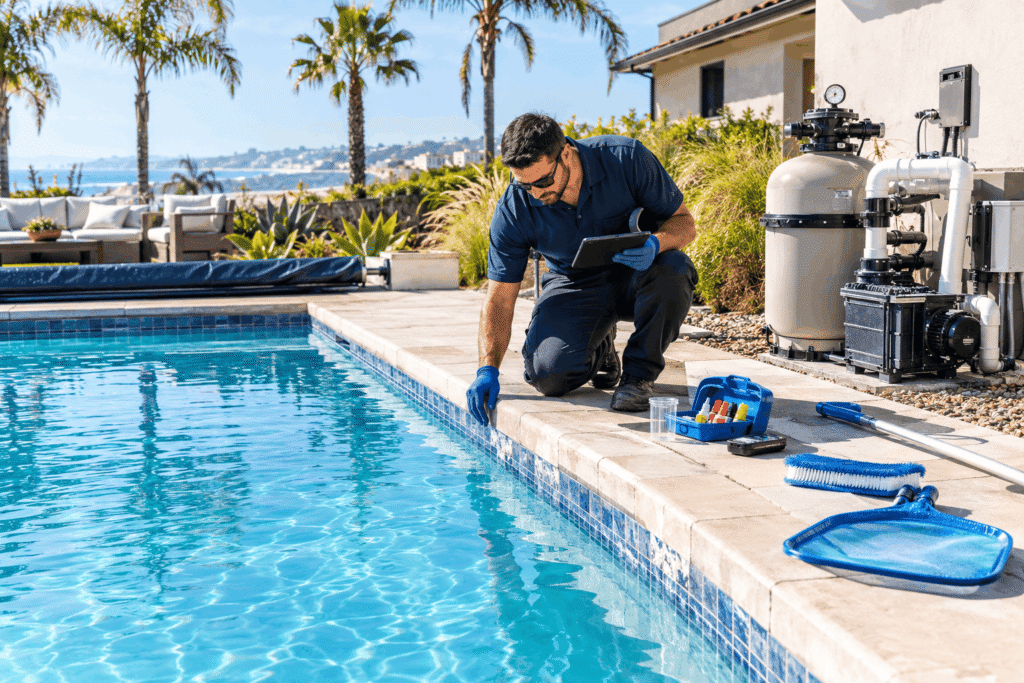
A technician will often skim the surface, empty the skimmer and pump baskets, and brush the walls and steps. Vacuuming the floor removes settled dirt that brushing loosens. The visit also includes testing and adjusting the water chemistry, including chlorine, pH, alkalinity, and stabilizer.
Beyond the weekly tasks, filters need periodic cleaning. Cartridge and diatomaceous earth (DE) filters are common in the area, and many technicians clean them every few months depending on bather load and debris. A neglected filter forces the pump to work harder and leaves the water hazy.
Good technicians also keep an eye on equipment. They notice when a pump sounds louder than usual, when a heater struggles to ignite, or when pressure readings creep upward. Catching these signs early often turns a major repair into a minor one.
The Real Benefits of Consistent Pool Care
The most obvious benefit is clean, safe water. Balanced chemistry protects swimmers from skin and eye irritation and keeps harmful bacteria from taking hold. It also means the pool is ready whenever someone wants to use it, not after a weekend of scrubbing.
There’s a financial side as well. Water that runs too acidic can corrode metal parts and etch plaster surfaces. Water that leans too alkaline encourages scale. Either way, poor chemistry slowly damages equipment and finishes that cost thousands of dollars to replace.
Consistency also saves water. Many homeowners don’t realize that a pool lost to a serious algae bloom sometimes needs to be partially or fully drained. In a region that takes water conservation seriously, regular pool maintenance San Diego CA homeowners can count on helps avoid that kind of waste.
Then there’s simply time. Weekly pool care takes an hour or more when done properly, plus trips to buy chemicals and supplies. For busy families, handing off that routine frees up weekends for actually enjoying the backyard.
Real-World Situations Homeowners Run Into
Consider a family in Rancho Bernardo who travels for three weeks each summer. Before they hired regular help, they came home to cloudy green water almost every year. The inland heat, combined with no one adjusting chlorine, gave algae plenty of time to spread.
Or think about a retired couple in Point Loma. Their pool rarely gets heavy use, so they assumed it needed little care. Over time, though, they noticed rust spots on the ladder and a pump that seemed to run constantly. A technician traced the problem to low pH and a clogged filter, both of which had quietly worn on the system for months.
Rental properties present another common scenario. Landlords and short-term rental hosts often need the pool to look perfect between guests. Many rely on scheduled service so they don’t have to inspect the water themselves before every check-in.
New pool owners face a learning curve too. Someone who just bought a home with a pool may not know how to read a test kit, what a backwash valve does, or why the water turns cloudy after a party. Professional visits often double as a crash course in how the system works.
Choosing Pool Service in San Diego CA
The local market includes everyone from large regional companies to independent technicians who run a single route. Providers across the county, including smaller operators such as All Corners Pool Service, generally build their schedules around weekly visits, with repairs and equipment work handled as needed.
When comparing options, homeowners often look at a few practical factors. Licensing and insurance matter, especially if the work involves electrical or gas equipment. It also helps to ask what’s included in a standard visit, whether chemicals are part of the monthly rate, and how the technician communicates about problems.
Experience with local conditions is another key point. A technician familiar with hard water, Santa Ana debris, and coastal corrosion will usually spot issues faster than someone who doesn’t know the area. Reliability counts as well. The best routine in the world doesn’t help if visits happen irregularly.
Some homeowners prefer a hybrid approach. They handle light tasks like skimming and emptying baskets themselves, then rely on professional pool maintenance San Diego CA technicians for chemistry, filter cleaning, and equipment checks. This can work well for people who enjoy some hands-on involvement but want expert oversight.
The Bottom Line
A backyard pool in Southern California is a year-round commitment. Strong sun, hard water, seasonal winds, and long swimming seasons all put steady pressure on water quality and equipment.
Whether owners handle care themselves or bring in a professional, the key is consistency. Regular testing, cleaning, and equipment checks keep small issues from turning into costly repairs. For anyone weighing their options, it’s worth comparing a few local providers, asking clear questions about what’s included, and choosing a routine that fits both the pool and the household.
Frequently Asked Questions
How often should a pool be serviced in San Diego?
Most residential pools in the area benefit from weekly service. Warm weather and year-round use mean chemistry and debris can change quickly, so weekly visits help keep water balanced and equipment running smoothly.
How much does pool service cost in San Diego?
Costs vary based on pool size, location, and whether chemicals are included. Basic weekly service often falls somewhere in the range of roughly $120 to $250 per month, with repairs and filter cleanings sometimes billed separately.
Why does my pool get cloudy even when chlorine levels look fine?
Cloudy water often points to high stabilizer levels, poor filtration, or unbalanced pH and alkalinity. Hard water and high calcium can also contribute. A full water test usually reveals the underlying cause.
How often should a pool filter be cleaned?
Many cartridge and DE filters need cleaning every three to six months, depending on usage and debris. Pools surrounded by trees or exposed to frequent wind may need more frequent cleanings to maintain good circulation.