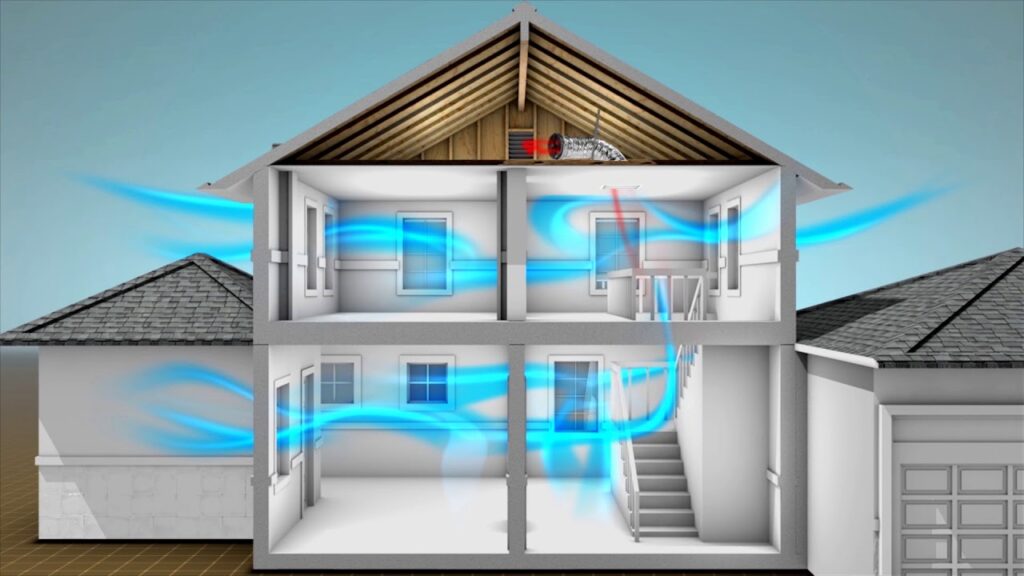
A whole house ventilation system provides continuous and controlled air exchange throughout a residential property, helping maintain healthier and more comfortable indoor conditions. These systems regulate airflow, limit the buildup of indoor pollutants, and assist with managing excess moisture. Heat recovery technology can further improve energy efficiency by retaining useful heat during the ventilation process while helping maintain stable indoor temperatures. This can support a more consistent home environment as outdoor conditions change and contribute to improved household energy performance.
As sustainable residential design becomes increasingly important, whole-house ventilation systems provide a practical approach to managing airflow while limiting unnecessary energy use and supporting reduced emissions. Their ability to combine controlled ventilation, indoor comfort, and energy-conscious operation makes them a useful feature within modern residential environments.
Enhancing Residential Energy Efficiency with Whole-House Ventilation
Whole-house ventilation can contribute to improved residential energy performance by providing continuous and regulated airflow throughout a property. These systems remove stale indoor air and replace it with fresh outdoor air while helping limit unnecessary energy losses. This function can be particularly useful in modern homes with airtight construction, where limited natural air leakage may influence indoor air quality. Ventilation technologies that recover or retain energy during air exchange can help maintain comfortable indoor conditions without placing excessive demands on heating and cooling equipment.
Effective ventilation can also work alongside insulation by helping regulate indoor humidity, which may otherwise influence thermal performance. Managing excess moisture supports building materials while contributing to a more comfortable living environment. Consistent air exchange can additionally help reduce concentrations of indoor pollutants. Together, these functions show how suitable ventilation design can support residential comfort while encouraging more efficient and responsible energy use.
Maintaining Balanced Airflow for Better Home Energy Performance
Balanced airflow supports consistent movement between incoming fresh air and outgoing stale air, helping create a more stable indoor environment. Maintaining this balance can limit pressure differences that may contribute to unwanted draughts or allow untreated outdoor air to enter the home. Steady air circulation may also reduce the workload placed on heating and cooling systems, supporting more efficient household energy management.
Consistent air movement can assist with moisture regulation, helping reduce conditions that may affect insulation or contribute to dampness and mould. Effective circulation also helps remove allergens and other airborne pollutants, supporting better indoor air quality. By maintaining reliable air distribution and exchange throughout the property, balanced ventilation can contribute to energy-conscious operation and comfortable residential conditions.
Heat Ventilation Systems for Maintaining Stable Home Comfort
Heat ventilation systems combine controlled air exchange with heat recovery to support efficient and comfortable residential environments. A heat exchanger transfers thermal energy between outgoing and incoming air, helping fresh outdoor air enter the property at a temperature closer to existing indoor conditions. This can reduce the amount of adjustment required from heating and cooling equipment.
During air exchange, unwanted elements such as excess moisture, allergens, and volatile organic compounds can also be removed from indoor spaces. By helping regulate humidity and maintain continuous circulation, heat-ventilation systems can contribute to more consistent indoor air quality. Their use in residential ventilation demonstrates how controlled airflow and heat conservation can operate together to support comfort, energy efficiency, and healthier indoor conditions.
Managing Airflow to Limit Household Energy Use
Controlled ventilation allows airflow between indoor and outdoor environments to be adjusted according to the requirements of a residential property. Introducing fresh air at an appropriate rate can help prevent energy losses associated with excessive ventilation. Maintaining suitable airflow levels may also reduce the work required from heating and cooling systems, supporting more efficient energy consumption and potentially reducing operating costs.
Regulated air exchange can contribute to steadier humidity levels while helping protect building materials and maintain indoor comfort. Accurate airflow management limits unnecessary energy use while supporting the removal of moisture and airborne pollutants from living areas. This approach can strengthen the energy performance of modern homes while supporting residential designs focused on efficient resource use and more sustainable operation.
Conserving Energy through Heat Recovery and Ventilation
Heat recovery and ventilation systems conserve usable thermal energy by transferring heat between outgoing indoor air and incoming outdoor air. An integrated heat exchanger can recover energy that might otherwise be lost during ventilation and use it to precondition incoming fresh air. This can reduce the heating or cooling required to maintain suitable indoor temperatures.
Reduced demand for temperature control can support lower household energy consumption while helping maintain comfortable indoor conditions. These systems can also assist with humidity management and continuous air exchange, supporting indoor air quality and thermal performance. Incorporating heat recovery and ventilation into residential design reflects the growing focus on efficient energy management while allowing comfortable indoor environments to be maintained with less unnecessary energy use.
Fresh-Air Movement for Greater Residential Comfort
Fresh-air circulation contributes to healthier indoor conditions by providing a steady supply of clean, oxygen-rich air throughout a property. This process assists in removing airborne contaminants, including dust, allergens, and unwanted odours, creating a more comfortable living environment. By controlling airflow, fresh-air circulation also helps manage humidity, reducing the likelihood of condensation and mould that may affect both structural conditions and household comfort.
Consistent air movement can also help maintain stable indoor temperatures, reducing dependence on heating and cooling equipment. This balance improves thermal comfort while supporting greater energy efficiency. Well-designed ventilation systems with effective fresh-air circulation establish suitable conditions for everyday living by balancing air quality, temperature control, and moisture management within modern homes.
Enhancing Thermal Efficiency with a Heat Energy Recovery System
A heat energy recovery system recovers thermal energy from outgoing indoor air and transfers it to incoming fresh air, helping limit heat losses that can occur during ventilation. Specialised heat exchangers allow this transfer to take place while keeping incoming and outgoing airstreams separate, supporting indoor air quality alongside improved energy efficiency. Preconditioning fresh air before it enters the property can reduce the workload placed on heating and cooling equipment, potentially lowering energy consumption and operating expenses.
More stable indoor temperatures can also support thermal comfort when external conditions become particularly warm or cold. Controlled airflow and humidity regulation may further contribute to healthier indoor surroundings. Integrating heat-energy recovery technology into residential ventilation therefore provides a practical approach to improving resource efficiency while supporting sustainable operation and comfortable living conditions.
Intelligent Ventilation Controls for Optimised Energy Management
Smart ventilation systems incorporate monitoring and automated control technologies to regulate indoor air quality while supporting efficient energy use. Sensors can monitor factors such as humidity, carbon dioxide concentrations, and temperature, allowing ventilation levels to change according to conditions within the home. Adjusting airflow based on actual requirements can reduce unnecessary ventilation while continuing to maintain suitable comfort and indoor air quality.
Certain smart ventilation systems can also connect with automated home management technologies, allowing coordinated operation alongside other energy-efficient equipment. Responsive airflow regulation can limit excessive ventilation and associated energy losses by supplying fresh air when it is needed. These systems may also support humidity management and the removal of indoor pollutants, helping maintain balanced indoor conditions. Smart ventilation consequently offers a responsive approach to energy-conscious residential airflow management.
Efficient Residential Airflow with a Mechanical Heat Recovery Unit
A mechanical heat recovery unit improves ventilation efficiency by recovering thermal energy from outgoing indoor air and transferring it to incoming fresh air. An integrated heat exchanger performs this transfer while keeping the two airstreams separate, helping maintain indoor air quality and limit thermal energy losses. By preheating or precooling incoming air before it enters the home, the unit can reduce dependence on heating and cooling equipment while helping maintain more consistent indoor temperatures.
These units can also support humidity management by helping reduce conditions associated with excessive moisture, condensation, and dampness. Continuous air exchange assists with removing indoor pollutants and maintaining better air quality throughout the property. Combining heat recovery with regulated airflow and thermal comfort allows mechanical heat recovery units to provide an energy-conscious ventilation solution for contemporary residential environments.
The Importance of Filtration and Airflow Control in Ventilation
Effective filtration and precise airflow control are central to the functionality of modern ventilation systems, ensuring clean and well-regulated air circulation within a property. Advanced filtration mechanisms capture fine particles, allergens, and pollutants from incoming air, preventing their entry into indoor spaces and supporting healthier living conditions. Meanwhile, accurate airflow control ensures that air is distributed evenly throughout the property, avoiding areas of stagnant air or over-ventilation.
This balance prevents unnecessary energy expenditure and aids in maintaining stable indoor humidity levels, which is essential for both comfort and the preservation of structural materials. By working together, filtration and airflow control enhance the overall performance of ventilation systems, promoting efficient energy use while maintaining a comfortable and pollutant-free indoor environment.
Supporting Sustainable Home Performance through Heat Recovery
Heat recovery technology can contribute to more sustainable residential operation by capturing and reusing thermal energy during ventilation. Thermal energy from outgoing indoor air is transferred to incoming fresh air, helping limit unnecessary losses during the air exchange process. Preconditioning incoming air in this way can reduce dependence on conventional heating and cooling equipment while supporting lower household energy requirements. More consistent indoor temperatures can also enhance thermal comfort and help create a stable living environment throughout the property.
Heat recovery systems can additionally assist with humidity management, helping limit excessive moisture that may affect building materials and indoor conditions. Reusing thermal energy already available within the home can reduce overall energy requirements and may contribute to lower greenhouse gas emissions. Incorporating this technology into modern residential ventilation supports efficient resource management and sustainable design while maintaining comfortable indoor conditions.
Maintaining Seasonal Airflow with a Full House Ventilation System
A full house ventilation system provides continuous air exchange throughout a property while responding to varying outdoor conditions. By regularly bringing fresh air indoors and removing stale air, these systems help maintain suitable indoor air quality. Advanced components such as heat exchangers can recover thermal energy from outgoing air and transfer it to incoming air, reducing the energy needed to adjust fresh air towards the preferred indoor temperature.
Ongoing ventilation can also assist with regulating indoor humidity and temperature, helping maintain comfort across different seasons. Recovering thermal energy during air exchange can reduce unnecessary heat losses and support lower energy requirements. Consistent airflow distribution throughout the property may also reduce uneven circulation and unwanted draughts, contributing to a balanced indoor environment that remains comfortable during warmer and cooler periods.
Conclusion
Whole-house ventilation systems contribute to energy-conscious residential design by promoting consistent indoor airflow and supporting improved air quality. Features such as heat recovery and automated controls can help minimise avoidable energy losses while maintaining effective ventilation. Distributing fresh air across the property can assist with removing indoor pollutants and supporting more stable thermal conditions. By incorporating modern ventilation technologies, whole house ventilation systems can support sustainable living practices while meeting the airflow and comfort requirements of contemporary homes.
FAQs
How can a whole house ventilation system support indoor air quality?
A whole house ventilation system provides ongoing and balanced air exchange throughout the property, helping remove stale air while maintaining fresher, healthier, and more comfortable indoor conditions.
What role does heat recovery play in sustainable ventilation?
Heat recovery reuses thermal energy from outgoing air by transferring it to incoming air, helping reduce wasted heat, lower energy requirements, and improve overall ventilation efficiency.
What are the benefits of controlled air exchange?
Controlled air exchange regulates airflow throughout a property, supporting effective ventilation while helping minimise unnecessary energy consumption and maintain consistent indoor comfort.
Why is humidity control important for ventilation systems?
Managing indoor humidity can reduce the likelihood of excess condensation and mould growth, helping protect building materials and supporting a more comfortable indoor environment.
How can filtration improve ventilation results?
Filtration can capture airborne contaminants such as dust, allergens, and other pollutants, helping improve indoor air quality and maintain cleaner airflow throughout residential areas.
| Related Business Listings |
| Contact Directory |
| Local Business Profiles |