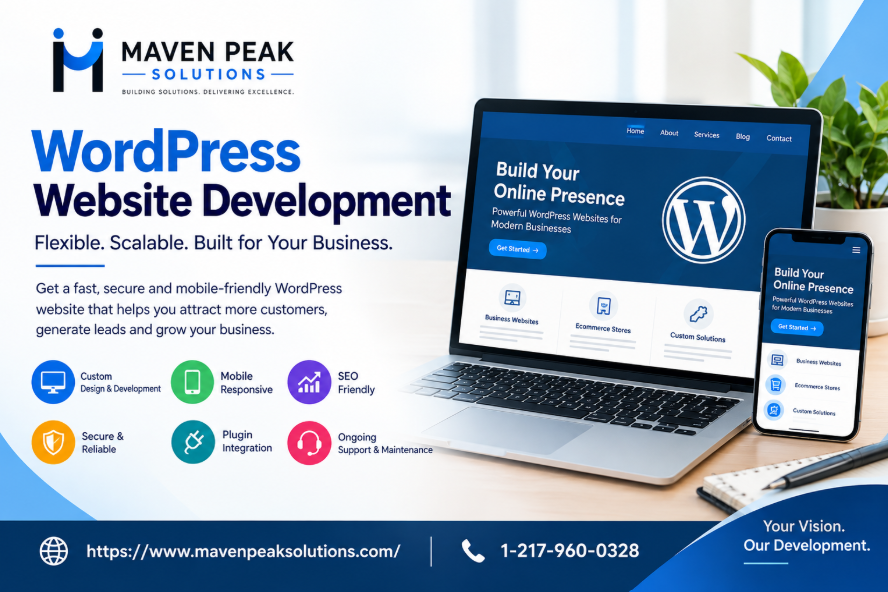
Your website is often the first place potential customers interact with your business. A slow, outdated, or difficult-to-use website can make it harder to generate leads, sell products, or build trust. For businesses targeting customers across the United States, having a professional, fast, mobile-friendly, and search-engine-ready website is an important part of a strong digital presence.
WordPress Website Development gives businesses the flexibility to create websites that are easy to manage, responsive across devices, and adaptable as the company grows. From small business websites and service websites to larger corporate platforms and ecommerce stores, WordPress can support a wide range of business requirements.
However, installing WordPress and choosing a theme is only one part of building a successful website. A professional website needs thoughtful planning, clean development, strong performance, secure functionality, and an experience that makes it easy for visitors to take action.
What Is WordPress Website Development?
WordPress website development involves designing, developing, customizing, testing, and maintaining websites using the WordPress content management system.
Businesses can use WordPress to create service websites, company websites, blogs, landing pages, portfolio websites, membership platforms, and ecommerce stores. Developers can customize themes, plugins, layouts, functionality, navigation, forms, and other website components according to specific business requirements.
A professionally developed WordPress website can also provide a manageable content structure. Business owners and marketing teams can update pages, publish articles, add images, edit product information, and manage other website content without depending on a developer for every small change.
For companies looking for flexible website solutions, WordPress website development can provide a practical foundation for building and managing a professional online presence.
Why Businesses Choose WordPress
WordPress is widely used because it offers flexibility without requiring businesses to build every website component from the ground up.
One major benefit is content management. Businesses can regularly publish service pages, blogs, case studies, FAQs, news, and other resources. This can support content marketing and organic search strategies when the content is useful and properly optimized.
Another benefit is customization. A WordPress website can be modified to match a company’s branding, business model, customer journey, and functional requirements.
WordPress can also support integrations with different tools and platforms. Depending on the project, a website may connect with contact forms, analytics platforms, CRM systems, payment solutions, ecommerce tools, email marketing platforms, booking systems, and other business applications.
This flexibility makes WordPress suitable for both startups and established companies.
Custom WordPress Development for Different Business Needs
Every business website has different goals. A local service provider may need a simple website that generates phone calls and form submissions. A professional services company may require detailed service pages, lead forms, case studies, and resource sections. An ecommerce business may need product management, secure checkout, inventory functionality, and payment integrations.
This is where custom development becomes useful.
Instead of forcing a business to work around the limitations of a pre-built website, developers can customize the website structure and functionality around its actual requirements.
For businesses that need more flexibility than a standard template can provide, custom website development can help create a website based on specific design, functionality, and business requirements.
Custom WordPress solutions may include:
- Custom page layouts
- Responsive website design
- Custom theme modifications
- Plugin integration
- Custom functionality
- Lead generation forms
- Ecommerce functionality
- API integrations
- Content management features
- Website security improvements
- Performance enhancements
- SEO-friendly website structures
The goal is to create a website that supports business operations instead of simply functioning as an online brochure.
WordPress Website Performance Matters
Website performance affects the experience visitors have when they interact with a business online. If important pages take too long to load, users may leave before contacting the business or viewing its services.
A professional WordPress development process should therefore consider page speed, image optimization, responsive layouts, efficient code, caching, hosting configuration, and unnecessary plugin usage.
Performance is especially important for mobile users. Many US customers search for businesses, services, and products from smartphones. A website that works well on a desktop but performs poorly on mobile can create unnecessary friction.
A responsive WordPress website should adjust its layout, images, menus, forms, and content to different screen sizes.
SEO-Friendly WordPress Development
Website development and SEO work together. Search engines need to understand the structure and content of a website, while users need to find relevant information quickly.
A properly developed website can create a stronger technical foundation for SEO.
Important areas include:
- Clean URL structures
- Logical website navigation
- Proper heading hierarchy
- Mobile responsiveness
- Fast-loading pages
- Internal linking
- Image optimization
- XML sitemap configuration
- Metadata management
- Crawlable website architecture
- Structured content
- Secure HTTPS implementation
Businesses can then build on this foundation through keyword research, content creation, technical SEO, local SEO, link building, and ongoing website improvements.
For companies that need a broader digital platform rather than only WordPress-specific work, website development services can cover different website requirements based on business goals and technical needs.
WordPress Development and Lead Generation
A business website should have a clear purpose. For many US companies, that purpose is generating qualified leads.
A website can support lead generation through strategically placed contact forms, service pages, phone numbers, consultation requests, quote forms, booking functionality, and clear calls to action.
For example, a professional service company may create separate pages for each service and location. Each page can explain the service, answer common customer questions, show relevant information, and provide a clear way to contact the business.
This approach can make the website more useful for both customers and search engines.
Instead of sending every visitor to one generic homepage, businesses can create dedicated landing pages that address specific search intent.
Building Mobile-Friendly WordPress Websites
Mobile responsiveness is now a basic requirement for modern websites.
Customers may visit a website from smartphones, tablets, laptops, and desktop computers. The website should provide a consistent experience across these devices.
A mobile-friendly WordPress website should have:
- Easy-to-use navigation
- Readable text
- Properly sized buttons
- Responsive images
- Mobile-friendly forms
- Fast page loading
- Simple page layouts
- Accessible menus
- Clear calls to action
These elements can make it easier for visitors to find information and contact a business regardless of the device they use.
Security and Website Maintenance
Launching a website is not the final step. WordPress websites require regular maintenance to keep software, themes, plugins, and security components updated.
Security should be considered during development as well as after launch.
Common maintenance activities include software updates, backups, security checks, performance monitoring, broken-link checks, plugin reviews, and troubleshooting.
Regular maintenance can also help identify problems before they affect customers.
Businesses should avoid installing unnecessary plugins or using outdated software simply because it offers a feature that is rarely needed. A cleaner website setup can make ongoing management easier.
WordPress Ecommerce Development
WordPress can also support online stores through ecommerce solutions such as WooCommerce.
An ecommerce website may include product pages, categories, shopping carts, payment gateways, shipping options, customer accounts, coupons, order management, and inventory functionality.
However, ecommerce development requires more than adding products to a website. The shopping experience should be simple, secure, and easy to understand.
Product navigation, search functionality, mobile usability, checkout performance, payment options, and product information all influence the customer experience.
For businesses selling products across the United States, a properly structured ecommerce website can provide a central platform for managing online sales and customer interactions.
WordPress Website Design and User Experience
Design should support usability rather than simply making a website look attractive.
Visitors should be able to understand what a company offers within a few seconds. Important information should be easy to locate, and pages should guide visitors toward the next action.
A professional WordPress website should have consistent branding, readable typography, logical navigation, clear content sections, and noticeable calls to action.
The design should also reflect the target audience. A technology company, healthcare provider, professional services firm, restaurant, ecommerce brand, and local service company may all require different website structures.
Good web development combines visual design with functionality, accessibility, performance, and business objectives.
Choosing the Right WordPress Development Approach
Before starting a project, businesses should define what they actually need from their website.
Consider questions such as:
- What is the primary purpose of the website?
- Who is the target audience?
- Which services or products need dedicated pages?
- Does the website require ecommerce functionality?
- Will the business publish content regularly?
- Are third-party integrations required?
- Does the website need custom functionality?
- How will leads or customer inquiries be managed?
- What SEO goals does the business have?
- Will the website need to scale in the future?
Answering these questions can help determine whether a standard WordPress setup, customized theme, or more extensive development solution is appropriate.
Build a WordPress Website With Long-Term Goals in Mind
A business website should be prepared for future changes. As a company grows, it may add new services, enter new markets, publish more content, introduce ecommerce functionality, or integrate new business tools.
A flexible website structure makes these changes easier to manage.
This is why WordPress Website Development should be approached as more than a one-time design project. The website should provide a foundation for content, SEO, lead generation, customer communication, and future functionality.
For US businesses competing in search results, a strong website can support broader digital marketing efforts. When development, content, technical SEO, mobile usability, and performance work together, the website becomes a useful business asset rather than simply an online presence.
The right WordPress development approach depends on the company’s goals, audience, functionality, budget, and plans for future growth. With a well-planned structure and professional development, businesses can create a website that is easier to manage, easier for customers to use, and better prepared for ongoing digital marketing efforts.