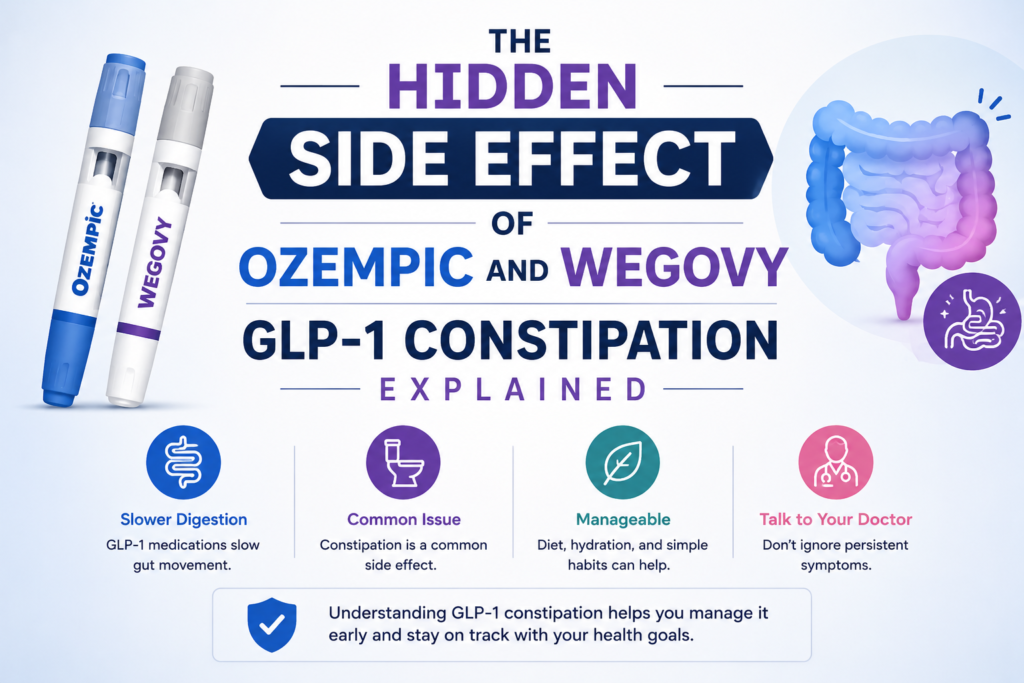
The Hidden Side Effect of Ozempic and Wegovy: GLP-1 Constipation Explained
Everyone talks about nausea when they start Ozempic or Wegovy. Fewer people talk about what happens two or three weeks in, when appetite drops, weight starts coming off, and suddenly the bathroom becomes a source of frustration instead of routine. Constipation rarely makes the highlight reel of these medications, yet it is one of the most reported complaints among people using them.
The Direct Answer
Ozempic and Wegovy both contain semaglutide, a GLP-1 receptor agonist that slows down digestion as part of how it helps you eat less. That same slowdown, known as delayed gastric emptying, is the root cause of the constipation so many users experience. Add in lower food volume, reduced fiber, and mild dehydration, and the problem compounds quickly.
Why This Side Effect Gets Overlooked
Most conversations around semaglutide focus on nausea, vomiting, and appetite suppression because those are the effects people notice first and the ones prescribers warn about most often. Constipation tends to show up later, once the initial nausea settles and the medication has fully kicked in. By that point, people often assume something else is wrong rather than connecting it back to their treatment.
It also does not get discussed as much because it feels like a minor issue compared with the visible results of weight loss. But for the people dealing with it, hard stools, bloating, and straining several times a week are anything but minor.
The Mechanism Behind It
Semaglutide mimics a natural hormone called glucagon like peptide 1. This hormone tells your brain you are full and simultaneously signals your gut to slow its contractions. Slower contractions mean food and waste move through your intestines at a reduced pace.
The longer stool sits in the colon, the more water gets reabsorbed from it, and the harder and more difficult to pass it becomes. This is the same mechanism responsible for the fullness and appetite reduction that make Ozempic and Wegovy effective for weight loss, which is why the constipation is not a random side effect but a direct consequence of the drug doing exactly what it is designed to do.
Who Notices It Most
Not everyone experiences this equally. A few groups tend to report it more:
People increasing their dose. Every step up in dosage tends to bring a fresh wave of digestive slowdown until the body adjusts.
People who already ate low fiber diets before starting treatment. Their gut had less bulk to work with even before appetite dropped further.
People not drinking enough fluids. Reduced thirst signals combined with nausea often lead to quiet, unnoticed dehydration.
People with a prior history of slow gut motility or irritable bowel syndrome, who are simply more sensitive to any additional slowdown.
What Helps in Practice
The reassuring part is that this side effect is very manageable with a few consistent habits.
Prioritize Fluids Throughout the Day
Sipping water steadily rather than drinking large amounts occasionally keeps stool soft enough to pass comfortably. Warm fluids in the morning, including plain water or herbal tea, can help trigger a natural bowel movement.
Build Fiber Back Into Meals
Because appetite drops so significantly on these medications, fiber intake often falls without anyone noticing. Reintroducing it gradually through foods like oats, berries, chia seeds, and leafy greens, alongside enough water, helps restore regularity without triggering bloating.
Keep Moving
Physical activity, even light walking, stimulates intestinal muscle contractions. People who stay consistently active on semaglutide tend to report fewer digestive complaints than those who become more sedentary.
Use a Gentle Laxative When Needed
For cases that do not resolve with diet and hydration alone, an osmotic laxative or stool softener recommended by a prescriber can offer relief without irritating an already slowed gut. This should always be discussed with your care team rather than self directed, especially while also managing nausea. A detailed walkthrough of these strategies is available in this resource on constipation from GLP-1, which covers daily habits that reduce discomfort while keeping treatment on track.
Adjust Dose Pacing With Your Prescriber
Slowing down how quickly your dose increases gives your gut more time to adapt at each level, which often reduces the severity of constipation considerably.
Does It Matter Whether You Take Tablets or Injections
Semaglutide is available in different formats, and some people assume switching form will remove the side effect entirely. In reality, the active hormone pathway is the same regardless of format, so the underlying cause of constipation does not change. What can change is how comfortably you tolerate the routine of taking it. Some people find Daily Weight Loss Tablets easier to fit into their day, while others prefer the dosing schedule of Weight Loss Injections UK. A prescriber can help match the format to your lifestyle and tolerance.
When to Seek Medical Advice
Mild constipation is expected and usually manageable at home. But severe abdominal pain, persistent bloating, vomiting, or going more than five days without a bowel movement are signs that need direct medical attention rather than home remedies. These symptoms can point to a more significant gut motility issue that requires prompt evaluation.
Getting Support That Actually Works
Because everyone’s digestive system responds differently to semaglutide, generic tips only go so far. Ongoing clinical monitoring, dose adjustments, and personalized guidance tend to produce far better results than trial and error on your own. Weight Medics offers this kind of continuous support throughout treatment, helping patients manage side effects like constipation as their dose and progress evolve.
Frequently Asked Questions
Why do Ozempic and Wegovy specifically cause constipation? Both contain semaglutide, which slows gut motility as part of how it reduces appetite. This slower movement through the intestines allows more water to be absorbed from stool, making it harder to pass.
Is constipation from these medications permanent? For most people it improves as the body adjusts to a stable dose over several weeks. Some people continue to experience it throughout treatment and need ongoing management through diet and hydration.
Can I take a laxative while on Ozempic or Wegovy? Yes, gentle options such as polyethylene glycol or fiber supplements are commonly recommended, though you should confirm with your prescriber first, especially if nausea is also present.
Does drinking more water actually help? Yes. Staying well hydrated is one of the simplest and most effective ways to keep stool soft enough to pass without straining.
Should I stop treatment if constipation becomes severe? Speak with your prescriber before making that decision. Severe cases are usually managed through dose pacing, dietary changes, or a stool softener rather than stopping the medication entirely.
Is constipation worse with higher doses? Often yes. Many people notice symptoms intensify with each dose increase before partially settling once the body adapts to the new level.