When a turned component has to be small, accurate, and consistent, the machining method matters more than people sometimes realize. This is where Swiss turn parts come into the conversation. These components are often used where tiny dimensional errors can create bigger problems later, especially in medical, electronics, automotive, aerospace, and precision equipment. Swiss-style machining is built around controlling the workpiece close to the cutting area, which sounds simple enough. But that basic idea changes a lot. It improves stability, supports tighter tolerances, and helps manufacturers produce complicated features without making every part a headache. The short answer is, yes, the machining process can have a direct effect on finished part quality.
Why Workpiece Support Matters So Much
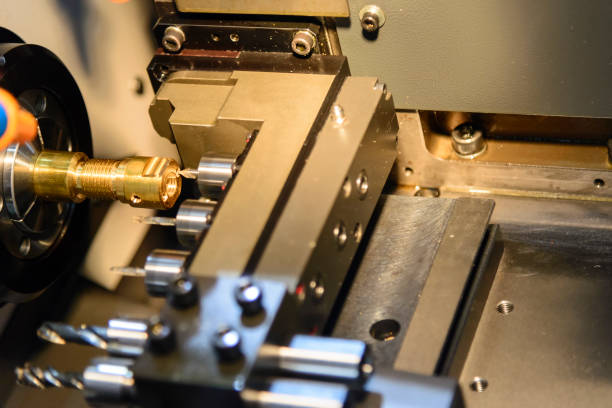
One of the biggest advantages of Swiss-type turning is the way the material is supported during cutting. In conventional turning, the bar usually extends from the chuck, and longer sections can flex when cutting forces are applied. That flexing might not look like much. On a small precision component, though, even slight movement can affect dimensions and surface finish. Swiss machining uses a guide bushing to support the material very close to the cutting tools. The cutting happens near that support point, reducing unwanted movement. It gives the machine a much more stable setup. That stability is a big deal when producing narrow shafts, pins, threaded sections, or other delicate turned features.
Better Accuracy Across Small, Detailed Components
Precision isn’t just about getting one part right. It is about getting the tenth, hundredth, or thousandth part right too. That’s where Swiss-style CNC turning earns its keep. Because the material is supported during machining, the process can maintain tighter dimensional control, even when parts are long compared with their diameter. Features such as grooves, shoulders, bores, threads, tapers, and small diameters can be produced with less risk of deflection. Let’s be real, a component that looks almost perfect to the naked eye can still fail if a critical diameter is a few microns out. Swiss turning gives manufacturers better control over those details, which can make inspection results more predictable and production quality more consistent.
Complex Features Without Constant Repositioning
Another quality benefit comes from the ability of modern Swiss CNC machines to handle several operations in one setup. Depending on the machine and part design, turning, drilling, threading, milling, slotting, and other operations can be combined. Why does that matter for quality? Every time a component is removed, repositioned, and clamped again, there is another chance for alignment to shift. It may be tiny, but again, tiny matters here. Keeping more operations in one setup helps maintain the relationship between different features. A hole stays where it is supposed to be relative to a turned diameter. A slot doesn’t suddenly end up slightly off-center. Fewer setups can mean fewer opportunities for human or machine-related variation.
Surface Finish Is Part of Quality Too
Dimensional accuracy gets most of the attention, but surface finish shouldn’t be pushed aside. A precision part can measure correctly and still perform poorly if its surface is rough, damaged, or inconsistent. Tool selection, cutting conditions, machine rigidity, coolant, material choice, and programming all affect the final surface. The stability of a Swiss-type machine gives the cutting tools a controlled environment, which can help produce cleaner finishes on small features. This matters for components that slide, rotate, seal, or fit into another precision assembly. Sometimes the difference between a part that works smoothly and one that causes friction or premature wear comes down to a surface that looked fine on a drawing.
Swiss Machining and Repeatability in Production
For manufacturers, quality also means repeatability. A prototype that looks excellent isn’t much use if the next 5,000 pieces vary all over the place. Swiss machining is particularly useful when production requires large quantities of small, highly consistent components. CNC controls, tooling systems, guide bushings, and automated processes help maintain the programmed dimensions from one cycle to another. Of course, the machine isn’t magic. Tool wear still happens. Material can vary. Coolant conditions change. Operators still need to monitor the process. But a well-managed Swiss turning operation gives manufacturers a strong foundation for keeping variation under control. That’s important when parts are going directly into automated assembly lines or products with strict quality requirements.
Less Deflection Means Fewer Quality Problems
Deflection deserves another look because it’s one of those issues that can quietly cause trouble. Imagine trying to machine a thin metal rod while holding most of it away from the cutting support. The tool pushes against the material, and the material pushes back. It can bend, vibrate, or chatter. The result might be an inconsistent diameter, poor finish, or a feature that isn’t quite in the correct position. Supporting the stock near the cutting area reduces this problem considerably. That doesn’t mean every Swiss-turned part will automatically be perfect. Tool geometry and machining parameters still need to be right. But the process starts with a mechanical advantage, and that’s a pretty good place to start.
Material Control, Tooling, and Inspection Still Count
It’s easy to talk about Swiss turning as if the machine does everything. It doesn’t. Quality comes from the entire manufacturing process. The right material has to be selected and prepared properly. Cutting tools need to match the material and geometry. Speeds and feeds have to be controlled instead of guessed at. Tool wear needs attention before it starts affecting dimensions. Then there is inspection. Critical features may require micrometers, optical systems, gauges, or coordinate measuring equipment depending on the application. A capable manufacturer understands that machining and inspection work together. The machine creates the part, but measurement confirms whether the process is actually holding the required standard. Skipping either side is asking for trouble.
Conclusion: A Better Process Creates Better Parts
The quality of precision turned components isn’t determined by one feature or one machine setting. It’s the result of stability, accuracy, repeatability, tooling, programming, material control, and inspection all working together. Swiss machining brings several of those advantages into one manufacturing approach, especially for small and complex components where ordinary turning can struggle with deflection and repeated setups. For companies that depend on reliable, consistent components, that can make a real difference. Truth is, Swiss turning isn’t the answer for every part. But when the job calls for tight tolerances, intricate details, good surface finishes, and dependable production, it is a pretty hard process to ignore.