domestic electrical installation certificate
A domestic electrical installation certificate is issued after relevant electrical installation work in a home has been properly completed, inspected and tested. It provides a formal record of the work and the results of the required electrical checks. The certificate is commonly associated with new circuits, rewiring and other significant changes to a fixed electrical installation.
Getting a domestic electrical installation certificate starts with using a competent electrical professional who can carry out the work and the required inspection and testing. In England, certain domestic electrical work must also comply with Part P of the Building Regulations. Approved Document P covers the design, installation, inspection, testing and notification of relevant electrical work in dwellings.
The process is not simply about requesting a piece of paper after the work is finished. The certificate should reflect electrical work that has been properly designed, installed, inspected and tested. Choosing the right electrician and understanding the certification process can help homeowners keep accurate records and avoid problems later.
What Is a Domestic Electrical Installation Certificate?
A domestic electrical installation certificate, usually called an Electrical Installation Certificate (EIC), records electrical installation work carried out in a domestic property.
It can contain information about the property, the extent of the work, the person responsible for the installation, inspection details and electrical test results.
An EIC may be appropriate for substantial work such as:
- Installing a new circuit
- Rewiring a property
- Replacing or substantially altering a consumer unit
- Installing new fixed electrical systems
- Making significant alterations to an existing installation
The exact certification requirements depend on the nature and scope of the work.
An EIC should not be confused with an Electrical Installation Condition Report (EICR). An EIC documents relevant installation work, while an EICR assesses the condition of an existing electrical installation.
How to Get a Domestic Electrical Installation Certificate
The process can be broken down into several stages. The important point is that certification follows appropriate electrical work and testing.
1. Identify the Electrical Work Required
First, we should establish what work needs to be done.
The type of project affects the certification that may be appropriate. Installing a new circuit is different from replacing a damaged socket. A full rewire is different from a minor alteration.
We should describe the proposed work clearly to the electrician. This gives the electrical professional enough information to determine the required installation method, testing and documentation.
2. Choose a Competent Electrician
The next step is to appoint an electrician who has the competence required for the work.
For domestic work in England, using an electrician registered with an appropriate Competent Person Scheme can provide a straightforward route for applicable Building Regulations compliance. Registered installers can self-certify certain work rather than requiring a separate Building Control approval process. GOV.UK explains that competent person schemes allow registered tradespeople to self-certify certain building work and notify the local authority where required.
We should check that the electrician’s registration covers the type of electrical work being undertaken.
3. Discuss Certification Before Work Starts
Before the project begins, we should ask what documentation will be provided at completion.
For significant installation work, this may include an Electrical Installation Certificate. Depending on the circumstances, there may also be Building Regulations compliance documentation.
This conversation should happen before the work starts rather than after completion.
It helps ensure that everyone understands the scope of the project and the records that will be supplied.
4. Complete the Electrical Installation
The electrician then carries out the agreed work.
The installation should be designed and installed according to the applicable requirements. BS 7671, commonly known as the IET Wiring Regulations, provides the recognised technical framework for electrical installations.
The work may include installing cables, accessories, protective devices, consumer units or other fixed electrical equipment, depending on the project.
Electrical installation work should be completed by a suitably competent person. We should never attempt hazardous electrical work without the necessary training and competence.
5. Inspect the Completed Installation
Once the installation work is complete, it needs to be inspected.
Inspection involves checking the installation and its components against the applicable requirements.
The electrician may review the installation’s wiring systems, protective devices, connections, earthing arrangements, bonding and other relevant components.
The extent of inspection depends on the project.
6. Carry Out Electrical Testing
Testing is an essential part of the certification process.
The electrician uses suitable test equipment to assess relevant characteristics of the installation.
Depending on the work, tests can cover areas such as continuity, insulation resistance, polarity and earth fault loop impedance.
The test results are recorded on the appropriate certification documentation.
A certificate should therefore represent work that has actually been inspected and tested. It should not simply be issued because a customer has requested one.
7. Complete the Electrical Installation Certificate
After the required inspection and testing, the electrician completes the Electrical Installation Certificate.
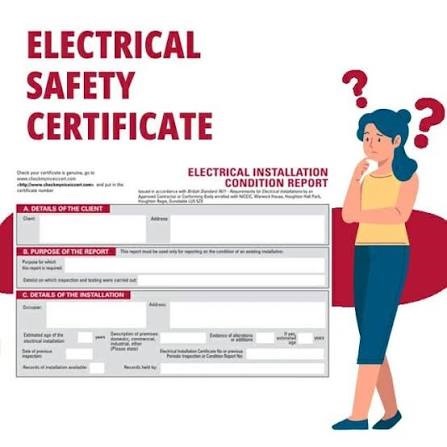
The document can record details such as:
| Certificate information | What it shows |
| Property address | Where the electrical work was completed |
| Client details | Who commissioned the work |
| Installation description | The scope and nature of the work |
| Installer information | Details of the responsible electrical professional |
| Design information | Relevant design responsibilities |
| Inspection information | Checks completed on the installation |
| Test results | Results from electrical testing |
| Protective measures | Information about relevant safety measures |
| Earthing details | Relevant earthing arrangements |
| Completion date | When the work was completed |
The certificate should be completed accurately and kept with the property’s electrical records.
Do You Need a Domestic Electrical Installation Certificate for Every Job?
No. Different types of electrical work require different forms of documentation.
A substantial new circuit may require an Electrical Installation Certificate.
Certain minor electrical work may instead be recorded with a Minor Electrical Installation Works Certificate.
An EICR is used for a different purpose. It assesses the condition of an existing electrical installation rather than documenting the completion of new installation work.
This distinction matters because asking for the wrong certificate can create confusion.
We should therefore discuss the exact work with the electrician before the project begins.
Which Domestic Electrical Work Is Notifiable?
Building Regulations notification requirements depend on the type of electrical work and the circumstances.
In England, Part P covers electrical safety in dwellings, and Approved Document P explains when notification is required.
Examples of work that may fall within notification requirements include major electrical work such as a complete rewire, replacing a consumer unit or installing a new circuit. The precise requirements should be checked for the proposed work.
A competent person scheme can provide a route for registered electricians to self-certify applicable work and notify the relevant local authority.
GOV.UK lists electrical installation work in dwellings among the work covered by authorised competent person schemes.
What Is Part P?
Part P is part of the Building Regulations in England and deals with electrical safety in dwellings.
It is designed to ensure that relevant electrical installations are properly designed and installed to protect people from fire and injury.
Approved Document P provides practical guidance and explains requirements relating to notification, design, installation, inspection, testing and the provision of information.
Part P is not the same as an Electrical Installation Certificate.
Part P relates to Building Regulations requirements, while the EIC provides technical documentation for applicable electrical installation work.
Both can form part of the wider compliance record for a domestic electrical project.
Can You Get a Certificate for Existing Electrical Work?
This depends on the circumstances.
If electrical work was completed in the past but the original certificate is missing, we should not assume that a new EIC can simply be issued.
An electrician can inspect the existing installation and determine what type of assessment is appropriate.
Where the goal is to establish the current condition of an existing installation, an EICR may be more appropriate.
An EICR can identify defects, damage, deterioration and other issues that may affect the safety of an existing installation.
It does not recreate the original certificate for historical work.
What If the Electrician Is Not Registered With a Competent Person Scheme?
Using a registered competent person can make the Building Regulations process simpler for applicable work.
However, GOV.UK explains that homeowners can also use Building Control rather than relying on a competent person scheme.
If a contractor is not registered for the relevant competent person scheme, we should establish the Building Regulations route before work begins.
Depending on the project, this may involve contacting a Building Control Body so that the work can be assessed for compliance.
The important point is to establish the process before starting the work, not after the installation has been completed and covered up.
How Long Does It Take to Get the Certificate?
The timing depends on the size and complexity of the electrical project.
For a straightforward installation, the electrician may complete inspection, testing and certification soon after the work is finished.
Larger projects can require more extensive inspection and testing.
If Building Regulations notification is also involved, the timing of the compliance documentation can depend on the route used.
GOV.UK states that registered competent person installers can provide customers with a certificate showing Building Regulations compliance, where applicable.
We should therefore ask the electrician when the electrical certificate and any separate Building Regulations documentation will be supplied.
How Much Does a Domestic Electrical Installation Certificate Cost?
There is no single fixed price for an Electrical Installation Certificate.
The cost depends on the electrical work being completed.
A certificate is part of the wider electrical installation process rather than simply a standalone document. The overall cost may include design, materials, labour, inspection, testing and certification.
A small project will usually involve a different amount of work from a full domestic rewire.
We should request a clear quotation that explains the scope of the work and the documentation included.
Be cautious if someone offers a certificate without properly carrying out the associated electrical work and testing.
What Does the Certificate Tell a Homeowner?
The certificate provides useful information about the electrical installation work completed.
It can help answer questions such as what work was undertaken, who was responsible and what inspection and test results were recorded.
This information can be useful when another electrician needs to work on the installation.
It can also form part of the property’s electrical records.
However, an EIC should not be viewed as a permanent guarantee that an installation will remain safe. Electrical systems can change after certification, and components can deteriorate over time.
What If You Lose Your Electrical Installation Certificate?
If the original certificate is missing, we should first contact the electrician or company that completed the work.
They may have retained a copy.
If the work was completed through a competent person scheme, there may also be records relating to Building Regulations notification.
GOV.UK notes that certificates issued through competent person schemes can provide evidence of Building Regulations compliance and may be useful when selling a home.
If the original documentation cannot be found, a competent electrician can assess the existing installation and advise whether an EICR or another inspection is suitable.
Domestic Electrical Installation Certificate for House Sales
Electrical certificates can be useful when selling a property.
A buyer may ask whether the property has been rewired or whether significant electrical alterations have taken place.
Having certificates available can help provide a clearer record of the work.
Building Regulations compliance certificates can also be relevant to property records. GOV.UK states that certificates issued through competent person schemes can be used as evidence of compliance and may appear in solicitor searches when a property is sold.
However, a certificate from several years ago does not replace an assessment of the present condition of the electrical installation where one is needed.
Domestic Electrical Installation Certificate for Landlords
Landlords should keep accurate electrical records for rental properties.
In England, private rented properties are subject to electrical safety requirements that include periodic inspection and testing.
The installation certificate for new work and the EICR for an existing installation serve different purposes.
If a landlord has new electrical work completed, the relevant installation certificate should be retained.
For the ongoing condition of the property’s electrical installation, the landlord must comply with the applicable inspection and reporting requirements.
Keeping all certificates together can make property management much easier.
Common Mistakes When Getting an Electrical Certificate
One common mistake is choosing an electrician based only on price.
The electrician’s competence and the certification route are important.
Another mistake is waiting until the project is complete to ask about Building Regulations notification.
This can create problems if the work should have been notified before or during the installation process.
A third mistake is confusing an EIC with an EICR.
Finally, homeowners should avoid treating certification as paperwork that can be obtained without proper inspection and testing.
A reliable certificate should reflect genuine electrical work and appropriate test results.
How to Choose the Right Electrical Professional
We should look at several factors before appointing an electrician.
First, confirm that the electrician is competent for the type of work required.
Second, where Building Regulations self-certification is relevant, check that the electrician is registered with an appropriate competent person scheme for the work.
Third, ask what certificate will be supplied.
Fourth, ask whether Building Regulations notification is required and who will handle it.
Finally, request a written quotation that clearly describes the work.
GOV.UK provides access to the Electrical Competent Person Register for homeowners looking for registered electrical installers.
Domestic Electrical Installation Certificate Checklist
Before electrical work starts, we can use the following checklist:
- Confirm the exact electrical work required.
- Choose a competent electrician.
- Check relevant competent person scheme registration where applicable.
- Ask which certificate will be issued.
- Confirm whether Building Regulations notification applies.
- Ask who will notify Building Control where required.
- Ensure the installation is inspected and tested.
- Obtain the completed electrical certificate.
- Obtain any relevant Building Regulations compliance documentation.
- Keep all electrical records in a safe place.
How Almens Consult Can Help
At Almens Consult, we support clients with electrical engineering, installation, inspection and compliance-related requirements. We understand that proper certification starts with suitable electrical work and appropriate inspection and testing.
We can help property owners understand the documentation associated with electrical projects and identify the appropriate steps for maintaining clear electrical records. Our approach focuses on technical accuracy, safety and clear communication throughout the project.
For projects involving new electrical installations or significant alterations, we can support the process from planning through to inspection, testing and documentation. Where an existing installation has limited records, we can also help clients understand what type of assessment may be appropriate.
Conclusion
Learning how to get a domestic electrical installation certificate starts with understanding the electrical work that needs to be completed and choosing a competent professional to carry it out.
The process normally involves identifying the scope of work, selecting a suitable electrician, completing the installation, inspecting and testing the work, and completing the appropriate certification. Where applicable in England, Building Regulations and Part P requirements must also be addressed. Approved Document P provides guidance on electrical safety in dwellings and the circumstances in which electrical work must be notified.
For applicable work, using an electrician registered with a suitable competent person scheme can provide a straightforward route for self-certification and notification.
We should also keep the Electrical Installation Certificate separate from an EICR. An EIC documents relevant installation work, while an EICR provides an assessment of an existing installation.
By choosing competent professionals, confirming the certification requirements before work begins and keeping complete electrical records, we can make domestic electrical projects safer and easier to manage.
FAQs
Can I get a domestic electrical installation certificate without doing electrical work?
An Electrical Installation Certificate should record electrical installation work that has been appropriately inspected and tested. It should not be treated as a standalone document that can be purchased without the necessary electrical assessment.
Can I issue my own electrical certificate?
Electrical certification involves technical competence, inspection and testing. Domestic electrical work that requires certification should be handled by a suitably competent person, with the applicable Building Regulations process followed.
Is an EICR the same as an electrical installation certificate?
No. An EIC normally relates to new electrical installation work. An EICR assesses the condition of an existing electrical installation.
Do I need a certificate after replacing a socket?
Not every minor electrical alteration requires an Electrical Installation Certificate. Depending on the work, a Minor Electrical Installation Works Certificate or no formal Building Regulations notification may apply. The correct documentation should be confirmed with a competent electrician.
Can I get an electrical certificate if the original electrician has disappeared?
You may not be able to recreate the original EIC. However, a competent electrician can inspect the existing installation and determine whether an EICR or another form of assessment is appropriate.
Does a domestic electrical installation certificate expire?
An EIC records work and testing completed at a particular time. It is not a permanent guarantee of the installation’s future condition.
Is a domestic electrical installation certificate required when selling a house?
The need for a particular certificate depends on the electrical work carried out and the property’s circumstances. Keeping installation and Building Regulations records can be useful during a property sale.