Establishing a wine manufacturing plant involves a series of carefully managed processes designed to ensure product quality, consistency, and regulatory compliance. The production workflow typically includes grape harvesting and sorting, crushing and pressing, controlled fermentation, clarification and stabilization, aging, filtration, bottling, labeling, and storage. Essential equipment required for wine production includes grape crushers and presses, fermentation tanks, temperature control systems, filtration units, aging vessels such as oak barrels or stainless-steel tanks, and automated bottling and packaging lines. As a beverage-grade manufacturing operation, maintaining stringent hygiene standards, quality assurance protocols, and compliance with food safety and alcohol regulations is essential. Conducting a detailed wine manufacturing plant setup cost is equally important for assessing capital expenditure, machinery investments, operational efficiency, and long-term profitability.
The global wine manufacturing industry is expected to witness stable and sustained growth through 2026, driven by rising global demand for premium and craft alcoholic beverages, growth in hospitality and tourism sectors, and shifting consumer preferences toward high-quality, origin-specific, and consistent flavor profiles. The global wine market was valued at USD 532.68 Billion in 2025, and is projected to reach USD 814.40 Billion by 2034, exhibiting a CAGR of 4.8% from 2026 to 2034.
| IMARC Group’s report titled “Wine Manufacturing Plant Project Report 2026: Industry Trends, Plant Setup, Machinery, Raw Materials, Investment Opportunities, Cost and Revenue” provides a complete roadmap for setting up a wine manufacturing unit. It covers comprehensive market overview to micro-level information such as unit operations involved, raw material requirements, utility requirements, infrastructure requirements, machinery and technology requirements, manpower requirements, packaging requirements, transportation requirements, and more.
Request for a Sample Report: https://www.imarcgroup.com/wine-manufacturing-plant-project-report/requestsample |
What is Wine?
Wine is produced through the controlled fermentation of grapes by yeast, resulting in a beverage characterized by its unique flavor, aroma, color, and texture. Its composition primarily includes water, ethanol, organic acids, sugars, phenolic compounds, and aromatic substances. Several factors influence the final product, including grape variety, terroir, fermentation techniques, and aging methods. These elements collectively contribute to the diversity and complexity of wines available in the market.
The industry offers a wide range of products, including red, white, rosé, sparkling, dessert, and fortified wines, as well as emerging categories such as low-alcohol, organic, and specialty wines. Depending on the intended market and style, wines may be crafted for immediate consumption or aged over extended periods to enhance their character and complexity. Modern wine production combines traditional winemaking expertise with advanced manufacturing technologies to ensure product consistency, safety, and regulatory compliance.
Wine Industry Outlook 2026
The global wine industry is expected to experience sustained growth through 2026, driven by increasing wine consumption, premiumization trends, and the expansion of consumer markets across Asia-Pacific and other emerging economies. Government initiatives supporting domestic agriculture, sustainable viticulture practices, and regulated alcoholic beverage industries are further contributing to market development.
Beyond conventional table wines, growing demand for organic, biodynamic, low-alcohol, and private-label wine products is creating new growth opportunities for manufacturers. Technological innovations such as precision fermentation, automated bottling systems, advanced quality monitoring, and temperature-controlled aging facilities are enhancing production efficiency and product quality. At the same time, increasing emphasis on sustainability, water conservation, waste reduction, and renewable energy integration is helping wineries improve operational performance while minimizing environmental impact.
Despite these positive trends, industry participants must address challenges including climate-related fluctuations in grape supply, substantial capital requirements for production and aging infrastructure, evolving regulatory frameworks, and shifting consumer preferences. Careful planning and strategic investment remain essential for successfully establishing and operating a competitive wine manufacturing facility in the global marketplace.
Key Insights for Setting Up a Wine Manufacturing Plant
Detailed Process Flow
- Product Overview — Types of wine, quality grades, and market positioning
- Unit Operations Involved — Harvesting, crushing, pressing, fermentation, clarification, aging, filtration, bottling
- Mass Balance and Raw Material Requirements — Grape yield ratios, additive quantities, and expected output volumes
- Quality Assurance Criteria — pH, acidity, alcohol content, color, clarity, and sensory parameters
- Technical Tests — Microbiological testing, chemical analysis, and compliance verification
Project Details, Requirements and Costs Involved
- Land, Location and Site Development — Proximity to vineyards, climate conditions, infrastructure, and site preparation costs
- Plant Layout — Winery floor plan, aging cellar design, bottling hall, laboratory, and utility zones
- Machinery Requirements and Costs — Crushers, presses, fermentation tanks, centrifuges, filtration units, bottling lines, labeling machines
- Raw Material Requirements and Costs — Grapes, yeast, sulfur dioxide, fining agents, additives, and packaging materials
- Packaging Requirements and Costs — Bottles, corks/closures, capsules, labels, and secondary packaging
- Transportation Requirements and Costs — Inbound grape logistics and outbound finished product distribution
- Utility Requirements and Costs — Water, electricity, refrigeration, compressed air, and wastewater treatment
- Human Resource Requirements and Costs — Viticulturists, winemakers, QC staff, machine operators, and administrative personnel
Capital Expenditure (CapEx) and Operational Expenditure (OpEx) Analysis
- Detailed CapEx breakdown covering land, civil construction, machinery, installation, and pre-operative expenses
- OpEx analysis covering raw materials, labor, utilities, packaging, maintenance, and overhead costs
- Fixed vs. variable cost segmentation for accurate financial modeling
Project Economics
- Capital Investments — Total project cost and phased investment schedule
- Operating Costs — Annual cost of production and cost per liter benchmarks
- Expenditure Projections — Five to ten year cost outlook under base and optimistic scenarios
- Revenue Projections — Based on capacity utilization, selling price, and market demand
- Taxation and Depreciation — Applicable tax structures and asset depreciation methodology
- Profit Projections — Gross and net profit timelines based on ramp-up assumptions
- Financial Analysis — NPV, IRR, payback period, and break-even analysis
Key Cost Components of a Wine Manufacturing Plant
Raw Materials
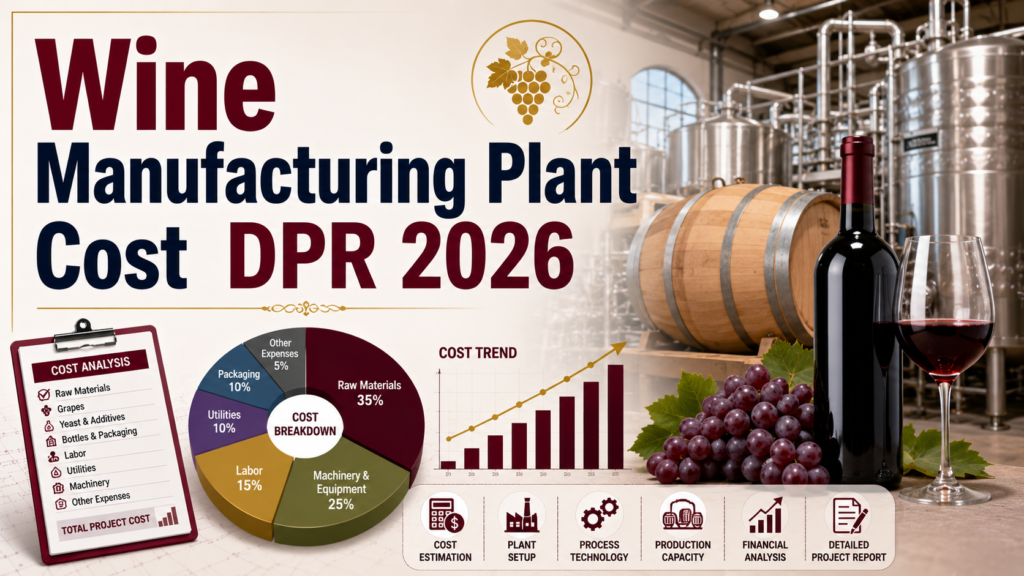
The primary cost driver, grapes account for approximately 50-60% of total operating expenses. Other significant raw materials include wine yeast, sulfur dioxide (SO₂) as a preservative and antioxidant, tartaric acid for pH adjustment, fining agents such as bentonite and egg whites, and sugar for chaptalization where permitted.
Energy Costs
Wine manufacturing is moderately energy-intensive, with refrigeration and temperature-controlled fermentation being the largest consumers. Electricity for cooling systems, pumps, bottling lines, and lighting, combined with natural gas or biomass for heating and steam, typically represents 10-15% of operating expenses. Investments in solar power and energy-efficient refrigeration systems are increasingly reducing long-term energy costs.
Machinery and Equipment
Capital investment in grape crushers, pneumatic presses, stainless steel fermentation tanks, oak barrels or alternative aging vessels, centrifuges, plate-and-frame filters, automated bottling lines, labeling machines, and capsule applicators represents a significant portion of CapEx. Ongoing maintenance, spare parts procurement, and periodic equipment upgrades also constitute recurring costs.
Labor
Includes salaries, training, and benefits for skilled winemakers, viticulture specialists, quality control analysts, bottling line operators, cellar hands, maintenance technicians, and administrative staff. The seasonal nature of grape harvesting may require additional temporary labor during peak harvest periods.
Utilities
Costs for water (cleaning, processing, and irrigation), compressed air for pneumatic systems, industrial refrigeration for temperature-controlled fermentation and storage, wastewater treatment for winery effluent, and other utilities essential for continuous, safe production form a critical part of the operational budget.
Packaging and Transportation
Expenses related to procuring glass bottles, corks or screw caps, foil capsules, front and back labels, secondary carton packaging, and palletizing are significant. Distribution logistics covering outbound transportation to wholesalers, importers, and retail channels, along with cold chain requirements for premium wines, add to overall costs.
Depreciation and Financing
Depreciation of fixed assets including winery building, aging cellars, bottling halls, and specialized equipment, along with interest payments or capital repayments for project loans, represents a fixed cost element that influences net profitability. Typical project payback periods for wine manufacturing plants range from 5 to 10 years depending on scale and market positioning.
Compliance and Safety
Investment in alcohol licensing and regulatory compliance, food safety certifications, effluent treatment plants, wastewater management, air quality controls, fire safety systems, and worker health and safety infrastructure are mandatory for legal operation. Costs vary significantly across geographies based on local regulatory requirements.
Overheads
Administrative costs including plant insurance, office operations, sales and marketing, quality certifications (ISO, organic, biodynamic), distribution agreements, export documentation, and general plant management contribute to the overall cost structure and must be accounted for in financial projections.
Economic Trends Influencing Wine Plant Setup Costs 2026
Grape & Agricultural Input Price Volatility
As grapes are the primary raw material for wine manufacturing, fluctuating agricultural commodity prices directly impact both capital and operating costs. Climate change-related disruptions, disease pressures, and harvest variability can cause significant price swings, making contract farming arrangements and geographic diversification of sourcing increasingly important strategic considerations for new plant investors.
Carbon Pricing & Environmental Policies
Growing regulatory focus on greenhouse gas emissions, water usage, and packaging waste is increasing compliance costs for new winery setups. Carbon pricing mechanisms, tighter regulations around wastewater discharge, and increasing requirements for sustainable packaging are elevating capital outlay requirements. However, wineries implementing renewable energy, organic certification, and sustainable practices can benefit from premium pricing and consumer brand loyalty.
Inflation & Interest Rates
Rising inflation increases the cost of building materials, civil construction, stainless steel tanks, oak barrels, and bottling equipment, while higher interest rates raise financing costs for plant construction and equipment procurement. These macroeconomic conditions require careful financial planning and sensitivity analysis in feasibility studies for new wine manufacturing investments.
Government Subsidies & Stimulus
Policies supporting domestic agricultural production, rural economic development, agri-tourism, and food and beverage export promotion can reduce setup costs through grants, low-interest loans, tax incentives, and duty exemptions on imported winery equipment. Investors should conduct jurisdiction-specific assessment of available incentive programs as part of site selection analysis.
Technological Advancements
Innovations in precision fermentation monitoring, IoT-based cellar management systems, automated bottling and labeling lines, energy-efficient refrigeration, and digital quality control are increasing upfront CapEx but offer significant productivity gains, reduced product losses, improved consistency, and lower per-unit costs. These technologies enhance long-term ROI and competitiveness in premium segments.
Supply Chain Localization
Efforts to develop local glass bottle manufacturing, domestic packaging supply chains, and regional cork or closure production are incentivizing vertically integrated investments in wine-producing regions. While this may increase initial capital requirements, it improves supply chain resilience, reduces import dependency, and can lower per-unit packaging costs over time.
Speak to an Analyst: https://www.imarcgroup.com/request?type=report&id=8423&flag=C
Labor Market Considerations
Shortages in skilled winemakers, cellar masters, and experienced bottling line technicians in key wine-producing regions can drive up labor costs or require investment in staff training, apprenticeship programs, and retention incentives. Automation in bottling and packaging operations is increasingly being adopted to offset labor cost pressures and improve output consistency.
Challenges and Considerations for Investors
Agricultural Input Volatility
Wine manufacturing is fundamentally dependent on grape supply, which is subject to seasonal variation, climate events, disease outbreaks, and regional agricultural conditions. Price and supply fluctuations in grapes can significantly impact production costs and margin stability, requiring robust contract farming arrangements and alternative sourcing strategies.
High Capital Intensity
Establishing a wine manufacturing plant requires substantial investment in stainless steel fermentation and storage tanks, oak aging barrels, specialized bottling lines, laboratory infrastructure, and climate-controlled cellar space. The combination of high upfront CapEx and the extended working capital cycle associated with aged wines can result in longer payback periods, requiring patient capital and careful financial structuring.
Regulatory and Licensing Complexity
Alcohol production is among the most heavily regulated industries globally. Producers must navigate multi-tiered licensing requirements, excise duty structures, labeling regulations, geographic indication rules, and import/export compliance frameworks. Regulatory complexity increases significantly for producers targeting international export markets, requiring dedicated compliance expertise.
Market Competition
The global wine market is highly competitive, with established producing nations including France, Italy, Spain, Australia, Chile, and Argentina competing with emerging producers across Eastern Europe, China, India, and South Africa. New entrants must focus on clear product differentiation, defined target segments, strong branding, and efficient cost structures to compete effectively.
Logistics and Distribution
Wine requires careful handling, temperature management during transport, and specialized logistics for fragile glass packaging. Establishing reliable distribution networks, managing inventory across aging cycles, and accessing organized retail and on-trade channels represent significant operational challenges for new market entrants, particularly in export-oriented business models.
Technological Barriers
Staying competitive in premium wine segments requires continuous investment in winemaking technology, cellar automation, laboratory analytical equipment, and digital quality management systems. Outdated production methods lead to quality inconsistency, higher waste rates, and competitive disadvantage in increasingly sophisticated consumer markets.
Climate and Environmental Risk
Climate change represents an existential long-term risk for wine production, with shifting temperature patterns, altered precipitation, increased frost and hail frequency, and new disease pressures affecting traditional growing regions. New plant investors must conduct thorough climate risk assessment and consider adaptive viticulture strategies as part of long-term business planning.
Policy and Regulatory Risks
Changes in government policies such as shifts in alcohol taxation, restrictions on advertising and marketing, minimum pricing legislation, changes to geographic indication rules, or alterations in export trade agreements can abruptly alter market dynamics and profitability. Ongoing regulatory monitoring and flexible business planning are essential for long-term investment success.
About IMARC Group
IMARC Group is a global management consulting firm that helps the world’s most ambitious changemakers to create a lasting impact. The company excels in understanding its clients’ business priorities and delivering tailored solutions that drive meaningful outcomes.
We provide a comprehensive suite of market entry and expansion services. Our offerings include thorough market assessment, feasibility studies, company incorporation assistance, factory setup support, regulatory approvals and licensing navigation, branding, marketing and sales strategies, competitive landscape and benchmarking analyses, pricing and cost research, and procurement research.
Contact Us:
IMARC Group
134 N 4th St. Brooklyn, NY 11249, USA
Email: sales@imarcgroup.com
Tel No: (D) +91 120 433 0800
United States: (+1-201-971-6302)