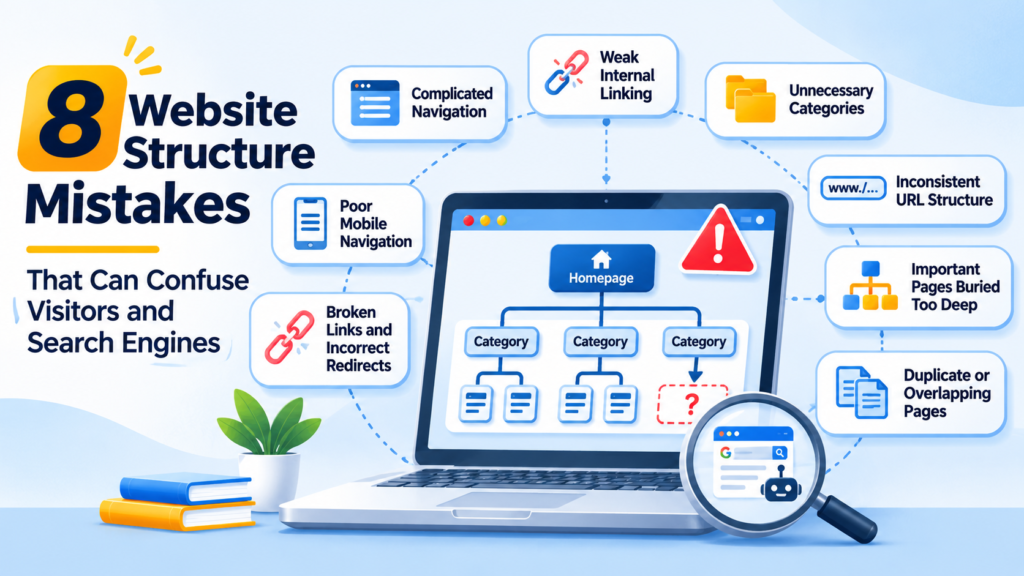
A well-organized website makes it easier for visitors to find information and helps search engines understand how different pages are connected. When website structure is clear, users can explore services, products, and informational content without confusion. Search engines can also discover important pages through navigation menus and internal links. However, many websites develop structural problems as they grow. New pages are published, categories are created, URLs are changed, and older content is updated without considering how these changes affect the overall website. Over time, this can create confusing navigation, disconnected pages, and unnecessary technical complications. Website structure is an important part of search engine optimization (SEO), but it is often overlooked. Business owners may spend time improving keywords and publishing new articles while ignoring how their content is organized. Even useful pages can become difficult to discover when the website does not provide clear paths between related information. Poor structure does not always cause an immediate ranking decline. However, certain structural mistakes can affect crawling, indexing, usability, and the ability of visitors to find relevant information. Understanding the most common website structure mistakes can help businesses identify weaknesses, improve accessibility, and build a stronger foundation for long-term organic search visibility.
1. Complicated Navigation Makes Important Information Hard to Find
Navigation is one of the most important parts of website structure because it helps visitors move between different sections. A clear navigation menu allows users to understand what a website offers and find the information they need without unnecessary effort. Problems often develop when websites contain too many menu options, unclear labels, or categories that do not follow a logical order. Visitors may struggle to identify the correct section, especially when similar services or topics appear under different names. Complicated navigation can also make content discovery more difficult for search engines. Crawlers use accessible links to discover pages and understand relationships between website sections.
Business owners should organize their navigation around the main subjects and services that matter to their audience. Important pages should be accessible through relevant menus and categories, especially when working with web development to build a clear and user-friendly website structure. Navigation labels should describe their destinations clearly rather than relying on vague or overly creative wording. A simple and consistent navigation structure improves usability and helps visitors understand how information is organized throughout the website.
2. Poor Internal Linking Leaves Valuable Pages Disconnected
Internal links connect webpages within the same website. They help visitors discover related information and provide search engines with pathways to explore important content. When a website has weak internal linking, some valuable pages may receive few connections from other sections. These pages can become difficult to discover even when they contain useful information. This issue often appears when businesses publish new articles without linking them to existing resources. It can also happen when older pages are removed from navigation or category structures are changed. Search engines can discover URLs through XML sitemaps and external links, but meaningful internal connections remain important for website accessibility. Internal links should connect genuinely related pages and use descriptive anchor text that helps readers understand the destination. Website owners should review whether important service pages, category pages, and informational resources receive relevant internal links. A thoughtful internal linking structure makes the website easier to navigate and provides clearer connections between important topics.
3. Unnecessary Categories Create a Confusing Website Hierarchy
Categories help organize related content into logical groups. They are especially useful for websites that contain multiple services, products, or informational articles.
However, creating too many categories can make website navigation unnecessarily complicated. Visitors may find similar topics scattered across different sections and struggle to understand where specific information belongs. Unnecessary categories may also create pages with very little useful content. When several categories cover nearly identical subjects, the overall website structure can become harder to manage. Website owners should create categories based on meaningful differences between topics rather than using every available keyword as a separate category. Each category should have a clear purpose and connect users to relevant information. Categories should also remain consistent as new pages are published. Adding new sections without reviewing the existing structure can lead to unnecessary overlap. A well-planned hierarchy helps visitors understand the website and supports clearer relationships between related content.
4. Inconsistent URL Structure Can Make Website Management Difficult
URLs identify webpages and help users understand where information is located. A clear URL structure can support navigation and make website organization easier to maintain. Problems may develop when URLs follow different naming patterns or include unnecessary words, confusing parameters, and inconsistent folder structures. Although search engines can process many URL formats, complicated URL structures may create additional management challenges. Website owners should use readable addresses that accurately represent the content and follow a consistent naming approach.
However, changing existing URLs simply to make them shorter is not always necessary. URL changes can affect internal links, redirects, and search engine indexing. When URLs need to be changed, appropriate redirects should be implemented, and internal links should be updated to point toward the correct destinations. A stable URL structure reduces unnecessary technical complexity and supports a more organized website.
5. Important Pages Are Buried Too Deep Within the Website
Page depth refers to how many link steps are required to reach a webpage from the homepage or another important section. When valuable pages are located deep within complicated navigation structures, visitors may struggle to find them. Search engine crawlers may also have fewer straightforward pathways to discover those pages. Deep page structures are not automatically harmful to SEO. However, important content should remain accessible through logical navigation and relevant internal links. This problem often develops as websites expand and additional categories or subcategories are created without reviewing the overall hierarchy. Website owners should identify their most important pages and ensure they are connected to suitable sections of the website. Relevant contextual links can also help visitors discover content that might otherwise remain difficult to reach. The objective is not to place every page directly beneath the homepage. Instead, website navigation should provide clear and meaningful paths to important information.
6. Duplicate and Overlapping Pages Can Create Content Confusion
Duplicate or overlapping pages are another common website structure problem. They occur when multiple URLs provide identical or substantially similar information without serving clearly different purposes. This can happen when businesses create several service pages targeting nearly identical subjects or when content management systems generate multiple URLs for the same content. Google does not automatically penalize websites for duplicate content. However, multiple similar URLs can complicate indexing and make it harder for search engines to determine which page should be treated as the preferred version. Overlapping pages can also confuse visitors who are unsure which resource contains the most relevant information. Website owners should review pages covering similar topics and identify whether each provides distinct value. Canonical tags, appropriate redirects, and content consolidation can help manage duplication when necessary.
Businesses that need professional support with these concerns can work with Smart Leading Solution, which provides SEO services, including technical SEO audits, website structure optimization, internal linking improvements, and content strategy development. These services help businesses identify structural weaknesses and organize website content more effectively. Maintaining clearly defined pages reduces unnecessary overlap and supports a more understandable content structure.
7. Broken Links and Incorrect Redirects Interrupt Website Navigation
Broken internal links and incorrect redirects can make a website difficult to explore. These problems often develop after URLs are changed, pages are removed, or website sections are redesigned. When visitors click a broken link, they may reach an error page instead of the information they expected. This creates frustration and can interrupt their browsing experience. Search engine crawlers may also encounter broken destinations while following internal links. Redirects are useful when content moves to a new location, but incorrect implementation can create additional problems. Long redirect chains, redirect loops, and redirects leading to unrelated content can make navigation less efficient. Website owners should regularly review internal links and ensure that they lead to relevant, accessible pages.
When content permanently moves, an appropriate redirect can help visitors and search engines reach the updated URL. Maintaining functional links and redirects supports website accessibility and creates a more reliable browsing experience.
8. Poor Mobile Navigation Can Limit Website Accessibility
Mobile navigation is an important part of website structure because many visitors access online information through smartphones and tablets. A navigation system that works properly on desktop computers may become difficult to use on smaller screens. Complicated menus, hidden links, crowded layouts, and poorly positioned buttons can prevent visitors from accessing important pages. Google primarily uses the mobile version of website content for indexing. Therefore, essential information and internal links should remain accessible on mobile devices. Website owners should ensure that navigation menus open correctly, links are easy to select, and content remains readable across different screen sizes. Responsive design can help websites adjust their layout while maintaining consistent functionality. Important pages should not become inaccessible simply because visitors use a smaller device. Regular mobile testing helps identify navigation problems and supports a better experience for both users and search engines.
How Website Structure Affects Search Engine Crawling
Search engine crawling is the process through which automated programs discover and access webpages. A website’s structure influences the pathways crawlers can follow when exploring content. Internal links, navigation menus, and XML sitemaps provide useful information about available URLs. When important pages are disconnected or difficult to reach, search engines may have fewer opportunities to discover them through normal crawling. However, crawlability depends on more than website structure alone. Server responses, robots.txt settings, JavaScript rendering, and other technical conditions can also influence access. Website owners should ensure that valuable pages remain accessible and connected through meaningful links. A clear structure helps support content discovery, but it does not guarantee that every page will be indexed or ranked. Technical accessibility and useful content should work together as part of a complete SEO strategy.
Why Website Structure Matters for User Experience
Website structure is not only important for search engines. It also affects how visitors interact with a website. People expect to find information quickly and understand where different sections are located. When pages are organized logically, visitors can explore related topics and move between important sections without unnecessary confusion. Poor structure can create frustration, especially when navigation labels are unclear or relevant content is difficult to access. A user-friendly website should provide consistent menus, meaningful categories, functional internal links, and accessible information. Website owners should consider the needs of their audience when organizing content rather than focusing only on search engine requirements. A clear structure supports better usability and helps visitors complete their intended actions more comfortably.
How to Identify Website Structure Problems
Identifying structural issues begins with reviewing how pages are connected and organized throughout the website. Website owners should examine navigation menus, categories, internal links, URLs, and the accessibility of important content. Technical crawling tools can help identify broken links, redirect chains, orphan pages, and other structural concerns. Google Search Console provides additional information about indexing and search performance that may help reveal important issues. However, not every technical warning indicates a serious SEO problem. Businesses should evaluate findings according to their actual impact on users and important pages. Structural improvements should focus on making content easier to discover and navigate. Regular reviews help prevent small website organization problems from becoming more difficult to manage as the site grows.
How to Build a Better Website Structure for Long-Term SEO
A strong website structure begins with understanding the website’s purpose and the information visitors need. Important services, products, and informational resources should be organized into meaningful sections. Each page should have a clear role within the website and connect naturally to relevant content. Internal links should support useful navigation rather than being added only for keyword optimization. Website owners should also maintain consistent URLs and avoid unnecessary changes that create technical complications. Mobile navigation and website performance should be reviewed to ensure that important information remains accessible across devices. As the website expands, new pages should fit logically into the existing structure. A planned approach helps maintain clarity and creates a stronger foundation for ongoing content development.
Why Regular Website Structure Audits Are Important
Website structure can change over time as businesses introduce new services, publish articles, and update existing pages. Without regular maintenance, navigation may become complicated, internal links may break, and important content may become disconnected. Regular audits help identify these issues and determine which improvements are necessary. An effective review should examine content organization, internal linking, redirects, indexing settings, and mobile accessibility. Businesses should prioritize problems that prevent visitors or search engines from reaching important pages. Not every structural issue requires immediate changes, and unnecessary modifications can sometimes introduce additional complications. A consistent maintenance process helps businesses keep their websites organized and accessible. Regular monitoring also supports more informed decisions when planning future website updates.
Conclusion
Website structure plays an important role in helping visitors and search engines understand how information is organized. Complicated navigation, weak internal linking, unnecessary categories, inconsistent URLs, and broken links can make important pages difficult to discover. Although not every structural mistake directly causes ranking losses, unresolved problems can create unnecessary barriers to content accessibility and user experience. Businesses should review their website organization regularly, maintain functional internal links, and ensure valuable content remains accessible through logical navigation paths. Smart Leading Solution helps businesses improve these areas through professional SEO services, including technical website audits, internal linking optimization, website structure improvements, and content planning. By identifying structural weaknesses and making thoughtful improvements, website owners can create a more accessible website, improve navigation, and build a stronger foundation for sustainable organic search visibility.