Two cranes with matching model badges can still need different versions of the same component. A production change between their build dates explains many cases. A replaced assembly explains others. Either way, the wrong choice turns a simple order into extra freight and another day of downtime.
When ordering Grove crane parts, start with the full model designation and the crane serial number. From there, find the relevant assembly in the parts catalog, read the notes that govern which version applies, and confirm the current orderable number. If the crane has been modified, the identification plate on the installed assembly and the maintenance history can help resolve any differences. Manitowoc publishes reference manuals by model and directs owners to use the serial-number-specific manuals supplied with their equipment.
Know which number you’re looking at
The crane serial number identifies the individual machine. The Grove part number identifies a part or assembly listed in the catalog. You may also find a manufacturer’s model code and serial number on an assembly such as a hydraulic pump. Write down what each number came from. A supplier can do more with a photo labeled “pump tag” and one labeled “crane data plate” than with two unexplained strings of digits.
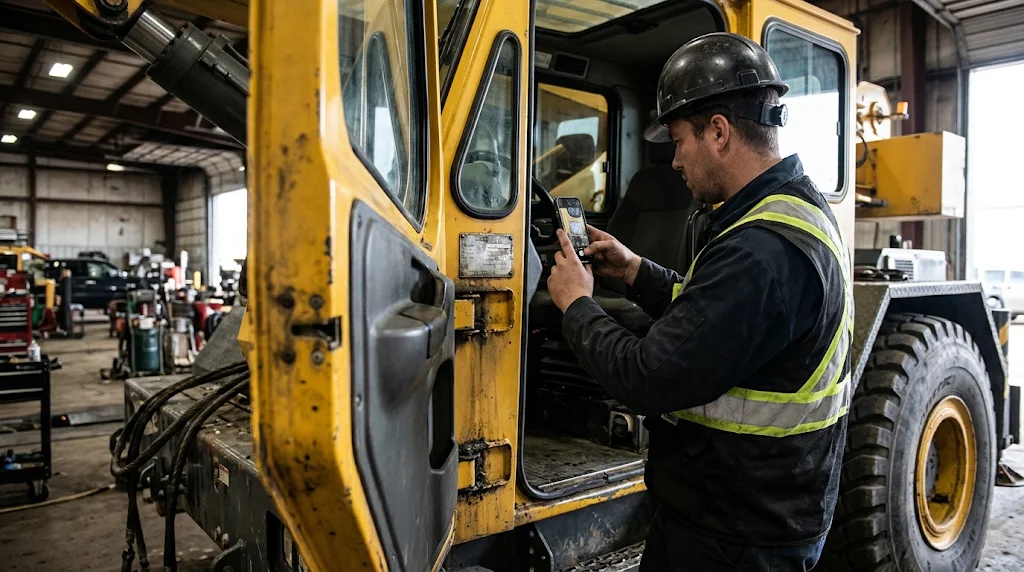
The location of the crane serial number depends on the model. For the GRT8120, Grove’s operator manual points to the frame stamping, the data plate inside the cab, and the operator manual cover. If you’re looking at a used crane with a folder of manuals from several units, verify the number against the machine itself. Photograph the plate so the buyer can double-check the transcription.
A number cast into a housing is another useful clue, but it may identify the casting rather than the complete assembly as supplied. Two versions of an assembly can share a housing and use different internal components. Send the casting number with the tag photo and catalog reference if you have them. When copying a part number from the catalog, keep any leading zeros, letters, suffixes, and punctuation as printed.
Read the serial number break before choosing a line item
A serial number break is a cutoff used to show where a part or assembly changes within a production run. The catalog might list two versions of the same item and assign each one to a different group of machines. In that case, the crane model gets you to the right family of parts. The serial number tells you which listing to use for the original configuration.
Suppose a catalog lists one version for machines “prior to S/N 2500” and another for “S/N 2500 and up.” In this example, crane 2499 falls on the earlier line, and crane 2500 falls on the later line. Those numbers are illustrative. The wording beside the actual part determines where the cutoff falls. If the entries appear to overlap, leave a gap, or use a serial format that differs from the plate, send the catalog page and the full serial number to the distributor for confirmation.
Check what the note applies to before moving on. A note in a figure heading may apply to the whole assembly, while a note beside one line may apply only to that item. Also check whether the note refers to the crane or to a separately identified component. A production break tied to the crane serial number and a revision tied to the pump’s serial number answer different questions.
Use the diagram and the parts list together
In an illustrated parts catalog, the number beside an arrow is generally a callout. It points you to a row in the parts list, where you can find the part number, description, and any applicability notes. If a figure has two rows for the same callout, read both descriptions and their notes before copying either number. The difference might be a serial range, an optional configuration, or which side of the crane the part fits.
Check what the row actually describes. The figure may show a complete cylinder and then list a seal kit on a separate line. The catalog quantity also deserves a look. If the figure covers one assembly, the listed quantity can differ from what you need for the whole job. Keep the figure and item reference in the purchase request so the supplier and the workshop can see what you selected.
A superseded part number needs its own check
You might find the correct number in a printed book and receive a quote for a different number. Ask whether the new number supersedes the old one for your crane’s serial number and configuration. A supersession is a change in the number supplied for a replacement. A serial break shows which production configuration a catalog entry covers. Both can affect the same order.
Find out what comes in the box. A replacement may be supplied as a kit, and the quote may need to account for companion items or instructions. If the supplier quotes an alternative using a cross-reference, ask them to document compatibility with the specific application. Manitowoc provides access to electronic parts catalog and ordering tools through Manitowoc Direct and directs customers to local parts dealers for support.
What if the crane no longer matches the book?
Imagine you’re ordering a seal kit for an outrigger cylinder. The crane serial number points to an earlier cylinder in the catalog, but the service records show that the complete cylinder was replaced five years ago. Now the part number or identification on the fitted cylinder matters to the seal kit lookup. A kit selected only by the crane’s original build can send the workshop the wrong seals.
Give the supplier the crane serial number, a photo of the installed cylinder’s identification, and the work order for the replacement if you can find it. The same approach helps when a previous owner has changed a winch or hydraulic pump. If the tag is missing or the records conflict, ask the distributor what other identifiers they can use to confirm the fitted assembly before you order.
Put the fitment details on the purchase order
A good enquiry gives the supplier enough information to confirm the fit. Include the full crane model and serial number, the part description and its location on the crane, the catalog figure and item number, and any relevant photos or repair records. If you’re requesting several parts, tie each line to the crane it belongs to. This matters when two units share a model and sit on opposite sides of a serial break.
For buyers sourcing quality Grove parts, the quote should make it clear what will ship. Ask for the confirmed orderable number, whether it is a direct replacement or a kit, and what the kit includes where applicable. Save the supplier’s confirmation with the purchase order. When the shipment arrives, the receiving team can check the label against the confirmed number and flag an unexplained substitution before the part reaches the workshop.
Once the fitted part has been confirmed, record its number against that crane in the fleet’s maintenance system. If an assembly was replaced, record the new assembly identification too. The next buyer can start with the crane’s actual service history instead of reopening an old catalog and trying to work out which version went in.