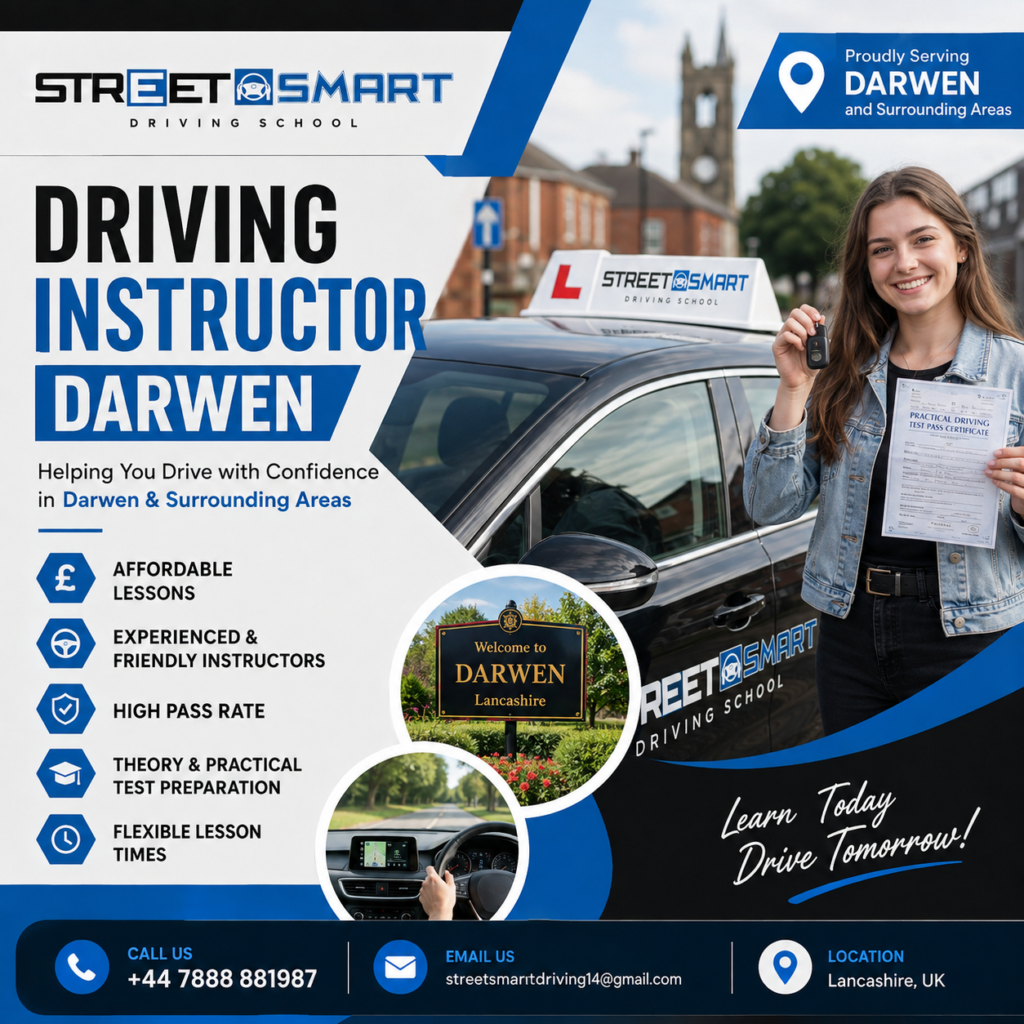
Learning to drive is an important milestone that brings greater independence, flexibility, and confidence. However, becoming a safe and responsible driver requires more than simply understanding how to operate a vehicle. It involves developing road awareness, learning traffic regulations, making informed decisions, and responding confidently to different driving situations. One of the most important steps towards achieving these skills is choosing the right driving instructor.
For learners in Lancashire, finding experienced driving instructor darwen can make a significant difference to the overall learning experience. A suitable instructor provides structured lessons, practical guidance, and constructive feedback to help learners progress at a comfortable pace. Whether someone is completely new to driving or preparing for another practical test attempt, the quality of instruction plays an important role in developing long-term driving skills.
Understanding what makes a good instructor, how lessons are structured, and what challenges learners may encounter can help individuals make better decisions before starting their driving journey.
1. Why Choosing the Right Driving Instructor Matters
Every learner has different abilities, confidence levels, and learning preferences. Some people quickly understand vehicle controls, while others need additional practice before feeling comfortable behind the wheel. A professional instructor recognises these differences and adapts lessons accordingly.
Choosing suitable driving instructor darwen offers several potential benefits.
Personalised learning: A good instructor assesses a learner’s existing knowledge and creates lessons that address individual strengths and weaknesses.
Improved road awareness: Learners develop an understanding of road signs, traffic signals, pedestrian crossings, junctions, roundabouts, and other important road features.
Better driving confidence: Regular practice with clear instructions helps reduce nervousness and encourages independent decision-making.
Safer driving habits: Professional guidance helps learners understand defensive driving, appropriate speed selection, hazard perception, and safe following distances.
Structured progress: Lessons follow a logical sequence, allowing learners to build fundamental skills before progressing to more complicated traffic situations.
The relationship between a learner and instructor also matters. A comfortable learning environment encourages questions, makes mistakes easier to discuss, and helps learners understand how to improve.
2. Important Qualities to Look for in a Driving Instructor in Darwen
Not every instructor uses the same teaching methods. Before choosing a driving instructor in Darwen, learners should consider several important qualities that can influence their progress.
Professional Qualifications and Experience
In the UK, driving instructors who provide paid car-driving tuition must generally be approved by the Driver and Vehicle Standards Agency (DVSA). Learners can check an instructor’s registration through the official DVSA instructor service.
Experience is another important consideration. An instructor familiar with local roads and common driving challenges may be better positioned to explain how different traffic conditions affect driving decisions.
Clear Communication
Driving lessons involve learning several skills simultaneously. Learners must control the vehicle, observe surrounding traffic, understand road markings, and anticipate potential hazards.
An effective instructor explains these responsibilities in straightforward language. Instructions should be clear, timely, and easy to understand, particularly when learners encounter unfamiliar situations.
Patience and Support
Making mistakes is a normal part of learning. Whether a learner struggles with clutch control, parallel parking, reversing, or approaching roundabouts, constructive feedback is more useful than unnecessary pressure.
A patient instructor helps learners identify errors and understand how to correct them safely.
Flexible Lesson Planning
Learners have different schedules and responsibilities. Flexible lesson arrangements can make it easier to maintain consistency, particularly for students and people balancing driving lessons with employment.
Before booking, learners should understand lesson duration, availability, cancellation arrangements, and the instructor’s teaching approach.
3. Common Driving Challenges Learners Face in Darwen
Learning to drive involves gradually becoming comfortable with different road layouts, traffic conditions, and everyday driving situations. Darwen and the surrounding Lancashire area provide opportunities for learners to practise a variety of driving skills.
However, some situations require additional attention and preparation.
Navigating Roundabouts and Junctions
Roundabouts can initially feel challenging because drivers must assess traffic approaching from multiple directions, select the correct lane, signal appropriately, and identify safe gaps.
Learners should practise:
- Checking mirrors before changing speed or direction.
- Approaching at a suitable speed.
- Understanding lane markings and road signs.
- Giving way to traffic approaching from the right when required.
- Checking mirrors and signalling when exiting.
Repeated supervised practice helps make these decisions more natural.
Driving on Narrow or Residential Roads
Residential streets may contain parked vehicles, pedestrians, cyclists, and limited passing space. Learners need to understand when to slow down, wait, or allow other road users to pass.
Developing good observation skills is essential in these environments.
Managing Different Weather Conditions
Lancashire weather can change quickly, creating additional challenges for inexperienced drivers. Rain, reduced visibility, and wet road surfaces require appropriate adjustments.
Learners should understand how to:
- Increase following distances.
- Reduce speed when road conditions require it.
- Use headlights appropriately.
- Avoid sudden braking or steering.
- Maintain clear visibility through properly functioning windows and mirrors.
Building Confidence in Busy Traffic
Driving in heavier traffic requires concentration, patience, and effective planning. Beginners should gradually progress from quieter roads to busier routes as their abilities improve.
An instructor can introduce more demanding situations when the learner demonstrates sufficient control and awareness.
4. How to Make Driving Lessons More Effective
Choosing a suitable instructor is only one part of successful driver training. Learners also need to participate actively, practise consistently, and take responsibility for their development.
The following habits can help make lessons more productive.
Set Clear Learning Goals
At the beginning of a learning programme, identify the skills that require attention. These might include moving off safely, changing gears, positioning, reversing, parking, or navigating complicated junctions.
Setting realistic goals gives every lesson a clear purpose.
Maintain Consistent Practice
Long gaps between lessons can make it harder to remember previously developed skills. Regular sessions help learners maintain familiarity with vehicle controls and road procedures.
Where possible, learners should arrange a consistent schedule that supports gradual improvement.
Ask Questions
Learners should never hesitate to ask for clarification. If an instruction is unclear or a particular manoeuvre feels difficult, discussing the problem helps prevent repeated mistakes.
Understanding why a driving decision is necessary is often more valuable than simply memorising instructions.
Review Progress After Every Lesson
A short discussion at the end of each session can identify what went well and what needs additional practice.
Useful questions include:
- Which driving skills improved today?
- What mistakes occurred during the lesson?
- Which situations require more practice?
- What should be the main objective next time?
Keeping a simple progress record can also help learners recognise improvements over time.
5. Preparing for the UK Practical Driving Test
The practical driving test assesses whether a learner can drive safely and independently. Passing requires more than memorising routes or performing manoeuvres correctly. Candidates must demonstrate good observation, appropriate judgement, vehicle control, and awareness of other road users.
Learners preparing with driving instructors Darwen should become familiar with the main areas assessed during the practical test.
These include:
Eyesight check: Candidates must demonstrate that they can read a number plate from the required distance.
Vehicle safety questions: The examiner asks a vehicle safety or maintenance question, commonly known as a ‘show me, tell me’ question.
General driving: Candidates demonstrate safe driving on different road types and in varying traffic conditions.
Independent driving: Candidates follow sat-nav directions or traffic signs for a period of the test.
Reversing manoeuvres: Candidates may be asked to complete one of the required reversing exercises.
Independent decision-making: Examiners assess whether candidates can identify hazards, respond appropriately, and make safe decisions without continuous instructor guidance.
Before booking a test, learners should discuss their readiness with their instructor and identify any remaining weaknesses.
It is also important to remember that test preparation should focus on genuine driving ability rather than simply learning how to pass an examination. Safe habits developed during lessons remain valuable long after receiving a full driving licence.

6. The Changing Landscape of Driving Education
The driving education industry continues to evolve as technology, vehicle design, and road safety expectations change.
Several developments are influencing how people learn to drive in the UK.
Growing Interest in Automatic Driving Lessons
Automatic vehicles are becoming increasingly popular because they do not require learners to operate a manual clutch and gear system. This can simplify certain aspects of vehicle control, allowing learners to concentrate more on observation and traffic awareness.
However, automatic and manual licences have different restrictions. Learners should understand the implications before deciding which type of vehicle to learn in.
Greater Awareness of Road Safety
Modern driver education places considerable emphasis on hazard perception, vulnerable road users, and responsible driving behaviour.
Learners are encouraged to understand the risks associated with distractions, mobile phone use, inappropriate speed, and driving under the influence of alcohol or drugs.
Technology-Assisted Learning
Online learning resources, digital theory test preparation, and navigation technology can support traditional driving lessons.
These tools can help learners understand road signs, practise theory questions, and become familiar with different traffic situations. However, they should complement rather than replace practical instruction.
For learners exploring local training options, Street Smart Driving School is one example of a driving school serving the wider Lancashire area. Understanding the available teaching options and comparing their suitability can help learners make informed decisions.
Conclusion
Choosing the right driving instructor darwen is an important step towards becoming a confident, responsible, and independent driver. Learners should look beyond convenience and consider professional qualifications, communication skills, teaching experience, lesson structure, and the ability to provide constructive feedback.
Whether someone is beginning their first lesson or preparing for a practical driving test, consistent practice and a positive learning environment can make a meaningful difference.