A bright, attractive smile can make a positive difference to personal appearance and confidence. However, teeth can gradually lose their natural brightness due to ageing, lifestyle habits, food and drink choices, and everyday staining. While regular brushing and good oral hygiene help maintain healthy teeth, they may not be enough to improve noticeable discolouration.
Professional whitening treatments offer an option for people who want to improve the appearance of their natural teeth. Among the available approaches, laser teeth whitening has gained attention for its use of professional whitening products alongside specialised light technology.
But is the treatment worth the investment? Understanding how it works, its potential benefits, the factors that influence results, and the importance of proper dental assessment can help people make an informed decision.
This guide explores the main benefits of Laser Teeth Whitening and explains why it may be a suitable choice for people looking for a professional approach to a brighter smile.
What Is Laser Teeth Whitening?
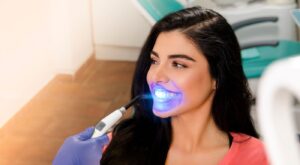
Laser Teeth Whitening is a professional cosmetic treatment designed to reduce certain types of tooth discolouration. It generally involves applying a whitening gel to the teeth and using a specialised light or laser system as part of the treatment process.
The whitening gel contains active ingredients that help break down stains within the tooth structure. Depending on the treatment system, light technology may be used alongside the gel to support the whitening procedure.
Unlike everyday whitening toothpaste, which mainly works on surface stains, professional whitening treatments are designed to address deeper discolouration as well as external staining.
The treatment is usually performed in a controlled clinical or professional setting, where the teeth and gums can be assessed before the procedure begins.
It is important to understand that laser-assisted whitening and LED-activated whitening are not necessarily the same. The technology and treatment protocols can vary, and the light itself is not responsible for all the whitening effects. The whitening agent plays a central role.
How Does Laser Teeth Whitening Work?
The process typically begins with an assessment of the teeth and gums. This helps determine whether professional whitening is appropriate and whether any existing dental concerns need attention before treatment.
Once the teeth are considered suitable, the treatment area is prepared. A protective barrier may be applied to the gums and surrounding soft tissues to minimise contact with the whitening gel.
The whitening product is then carefully applied to the visible surfaces of the teeth. Depending on the system being used, specialised laser or light technology may be incorporated into the procedure.
The active ingredients in the gel work to break down coloured compounds responsible for tooth stains. The treatment may involve one or more application cycles according to the professional’s recommended protocol.
After the procedure, the gel is removed and the teeth are checked. The overall experience and visible outcome can differ depending on the original tooth shade, the type of staining, and individual response to whitening.
Key Benefits of Laser Teeth Whitening
1. Helps Improve Visible Tooth Discolouration
One of the main reasons people consider professional whitening is to improve the appearance of stained or yellow-looking teeth. Discolouration can develop gradually, making teeth appear darker than their natural shade.
Laser Teeth Whitening uses professional bleaching products that help break down certain stain compounds within the teeth. This can improve the appearance of suitable teeth and create a brighter-looking smile.
The degree of improvement depends on the type and severity of the stains. Yellowish discolouration may respond differently from grey or brown staining, so an initial assessment is important.
2. Offers a Professional Treatment Experience
Another potential benefit is the professional setting in which the procedure is performed. Having the treatment carried out by a suitably qualified dental professional allows the condition of the teeth and gums to be considered before whitening begins.
The professional can also select an appropriate whitening product, follow the recommended application procedure, and monitor the treatment.
This level of supervision can be particularly valuable for people who are unfamiliar with whitening procedures or have concerns about tooth sensitivity.
3. Convenient Treatment Sessions
Many people have busy schedules and prefer treatments that fit into their daily routines. Professional in-chair whitening is generally completed during a scheduled appointment rather than requiring repeated applications at home over an extended period.
The actual appointment length depends on the whitening system, gel application process, and individual treatment requirements.
For people who prefer a professionally managed procedure, this convenience can be an important consideration when comparing different whitening options.
4. Provides an Opportunity for Personalised Care
Not every person has the same tooth colour, dental history, or whitening expectations. Some people experience mild surface staining, while others have more noticeable discolouration.
A professional assessment helps identify these differences and determine whether whitening is appropriate.
Laser Teeth Whitening may be considered as part of an individual treatment plan, depending on the condition of the teeth and the professional’s assessment. This approach also allows concerns such as existing restorations, gum irritation, and sensitivity to be discussed before treatment.
5. Can Support Greater Confidence in Your Smile
The appearance of teeth can influence how people feel about their smiles. Some individuals become uncomfortable showing their teeth in photographs, during conversations, or at social gatherings because of visible discolouration.
Improving tooth colour may help some people feel more comfortable with their appearance.
Although whitening cannot guarantee increased confidence, achieving a smile that better matches personal preferences can be a worthwhile benefit for many individuals.
6. Offers an Alternative to Everyday Whitening Products
Whitening toothpaste and other over-the-counter products mainly differ from professional treatments in their formulation, application, and intended results.
Most whitening toothpastes focus on removing external stains through polishing ingredients, while professional bleaching gels use active ingredients to change tooth colour.
For individuals with noticeable discolouration, a professionally supervised whitening procedure may be more appropriate than relying only on everyday whitening products.
Why Professional Whitening May Be Worth the Investment
When considering cosmetic dental treatments, price is only one part of the decision. It is equally important to understand what the treatment involves and whether it meets individual expectations.
Professional whitening may offer value through the use of suitable products, an organised treatment process, and professional assessment.
However, it is important not to assume that laser activation automatically produces better whitening results than conventional professional bleaching. Current research has not established a consistent improvement in final whitening outcomes from adding laser or light activation.
The real value of a whitening treatment should therefore be considered in terms of the overall professional service, suitability, expected results, and patient care rather than the technology alone.
The following table highlights some important considerations when comparing whitening options.
Comparison of Different Teeth Whitening Approaches
| Feature | Whitening Toothpaste | Home Whitening Kits | Professional In-Chair Whitening |
| Main purpose | Removes some surface stains | Lightens tooth colour | Improves tooth colour using professional bleaching products |
| Application | Daily brushing | Repeated home applications | Performed during an appointment |
| Supervision | Routine home use | Depends on the product | Professional assessment and supervision |
| Treatment time | Ongoing use | Usually several applications | Generally completed in a scheduled session |
| Suitable for | Mild surface staining | People suitable for home whitening | People seeking professionally supervised whitening |
Note: This is a general comparison. Treatment times and results vary according to the product, protocol, and individual dental condition.
Factors That Can Influence Whitening Results
Although professional whitening can improve tooth appearance, the outcome is not identical for everyone. Several factors influence how teeth respond to treatment.
Type and Severity of Tooth Staining
External stains caused by food, drinks, and smoking may respond differently from internal discoloration caused by ageing, trauma, or certain medications.
The original tooth shade and depth of staining can affect the level of visible improvement.
Whitening Gel and Treatment Method
The concentration and formulation of the whitening gel play an important role in the treatment process. The application time and professional protocol also influence the outcome.
Laser or light activation does not necessarily mean that a treatment will produce a greater final shade improvement. Choosing an appropriate whitening protocol is more important than relying on technology alone.
Natural Tooth Structure
Teeth naturally vary in colour, thickness, and composition. These differences can influence how whitening products work.
Additionally, crowns, veneers, fillings, and other dental restorations do not whiten in the same way as natural tooth enamel. This should be discussed before treatment, particularly when restorations are visible in the smile.
Is Laser Teeth Whitening Suitable for Everyone?
Professional whitening is not automatically suitable for every individual. A dental assessment is important to identify any conditions that could affect treatment.
People with untreated cavities, gum disease, damaged enamel, or significant tooth sensitivity may need appropriate dental care before considering whitening.
Pregnant or breastfeeding individuals should discuss whitening with a dental professional before proceeding.
It is also important to have realistic expectations. Whitening treatments work on natural teeth and cannot change the colour of existing crowns, veneers, or fillings.
A professional can explain whether the treatment is appropriate and recommend a suitable approach based on individual dental needs.
How to Maintain Your Whitening Results
Maintaining a brighter-looking smile requires consistent oral hygiene and sensible everyday habits. Although whitening can improve tooth colour, it does not prevent future staining.
Brushing twice daily with fluoride toothpaste and cleaning between the teeth regularly can support good oral health. Routine dental check-ups and professional cleaning can also help manage plaque and surface stains.
Limiting frequent exposure to strongly coloured drinks and foods may help reduce new staining. Coffee, tea, red sauces, and other deeply coloured products can contribute to discolouration over time.
Avoiding tobacco products is another important step towards maintaining a healthy-looking smile.
Following any aftercare instructions provided by the dental professional can also help support the treatment outcome.
Final Thoughts
Choosing a teeth whitening treatment involves more than simply looking for a brighter smile. It requires understanding the available options, considering individual dental needs, and selecting an appropriate professional approach.
Laser Teeth Whitening may appeal to people who prefer an in-chair cosmetic treatment and value professional assessment and guidance. However, the laser technology itself should not be considered a guarantee of superior results. The whitening product, treatment protocol, and condition of the natural teeth all play important roles.
At White And Bright, we believe that understanding your whitening options is an important step towards making an informed decision. Whether you are considering your first professional whitening session or exploring different ways to improve your smile, choosing an appropriate treatment and following good aftercare practices can help you work towards a brighter-looking smile.
Frequently Asked Questions
1. How Long Does Laser Teeth Whitening Take?
The treatment duration depends on the whitening system and the number of application cycles required. Many in-chair whitening procedures are completed within a scheduled appointment, but the exact time varies.
2. Does Laser Teeth Whitening Permanently Whiten Teeth?
No. Whitening results are not permanent. Natural ageing, dietary habits, and lifestyle choices can gradually affect tooth colour. Maintenance and good oral hygiene can help preserve the appearance of the results.
3. Can Laser Teeth Whitening Cause Tooth Sensitivity?
Temporary tooth sensitivity can occur following professional whitening. The level of discomfort varies between individuals and depends on the whitening product and treatment protocol. People with existing sensitivity should discuss this before treatment.
4. Is Laser Teeth Whitening Better Than Regular Whitening?
Not necessarily. Laser-assisted whitening may offer a different treatment experience, but research has not consistently shown that laser activation produces better final whitening results than professional bleaching without activation. The suitability of the whitening product and treatment method is more important.
5. Is Professional Teeth Whitening Worth the Cost?
It can be worthwhile for people who want a professionally assessed and supervised approach to improving tooth colour. However, the value depends on individual needs, treatment suitability, expected results, and the quality of care provided.