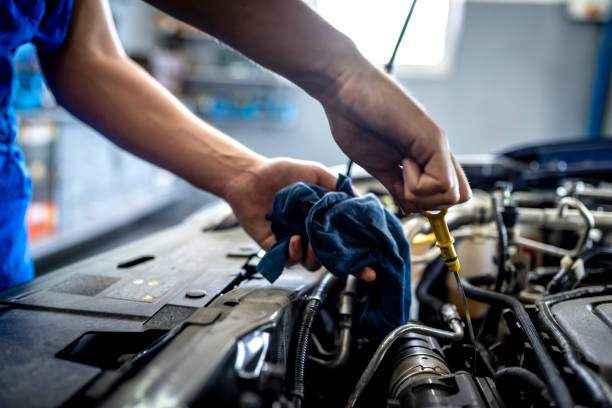
Photo of Unrecognizable male mechanic measuring the oil level of an engine at an auto shop. Mechanic checking the oil level in a car service garage. Repairing engine at a service station. Car repair."r"n.
Almost every driver has heard a piece of advice from a neighbor, a relative, or an old family mechanic that sounded perfectly logical. Some of it was true a few decades ago, but cars have changed dramatically, and outdated beliefs can lead to wasted money or serious damage. Anyone searching for reliable car repair in Provo UT will run into these misunderstandings sooner or later. Over the years, the team at Knight Motor Company has heard them all, so let us clear up six of the most common myths and show you what to do instead.
Myth One: Oil Must Be Changed Every 3,000 Miles
Where the Idea Came From
Decades ago, engines and oils were far less advanced, so frequent changes made sense. The number stuck in people’s minds long after the technology moved on.
What Modern Engines Need
Many newer vehicles using synthetic oil can safely go much longer between changes. Your owner’s manual gives the right interval for your engine and driving style, and severe use such as towing or short trips may call for a shorter schedule.
Myth Two: A Check Engine Light Can Wait If the Car Feels Fine
Why Feeling Fine Is Misleading
Many faults begin silently. A failing sensor or small misfire may not change how the car drives at first, yet it can reduce fuel economy and strain other components.
The Smart Response
Have the codes read soon. A steady light usually gives you a little time, but a flashing light means a serious misfire and you should reduce speed and get help immediately. Ignoring a flashing light can quickly damage the catalytic converter, which is an expensive part to replace.
Myth Three: Only the Dealership Can Service Your Car Under Warranty
What the Law Actually Says
In the United States, federal warranty law generally does not require you to use the dealer for routine maintenance. You can choose an independent garage as long as the work follows the manufacturer’s schedule.
Keeping Your Records Safe
Save every receipt and note the date and mileage of each visit. Choosing a trusted provider of car repair in Provo UT while keeping organized records protects your coverage and often saves money compared with dealership pricing.
Myth Four: Premium Fuel Is Better for Every Car
Reading Your Fuel Door
Premium gasoline has a higher octane rating, which prevents knocking in engines designed to need it. If your manual says regular is fine, paying extra gives you no real performance or cleanliness benefit.
When Premium Really Matters
High-compression and turbocharged engines often require it. Using lower octane in those cars can reduce power and, over time, cause problems that cost far more than the savings at the pump.
Myth Five: You Should Let the Engine Idle to Warm Up
The Old Carburetor Habit
Older cars with carburetors needed time to run smoothly in cold weather. Modern fuel-injected engines adjust automatically within seconds.
Better Winter Habits
Provo winters bring snow and freezing mornings, but long idling only wastes fuel and adds wear. Start the car, give it about thirty seconds, then drive gently until the temperature gauge reaches normal. Heated seats and a full defrost help more than sitting still. Idling also leaves unburned fuel that can wash oil from cylinder walls, so a short, gentle warm-up is the healthier choice for the engine.
Myth Six: The Cheapest Quote Is the Best Deal
What Hides Behind a Low Price
A low estimate can mean lower quality parts, shortened warranties, or vague line items that grow once the work begins. Repeat repairs end up costing far more than a fair price paid once.
How to Compare Quotes Fairly
Ask for written estimates that list parts and labor separately, and compare warranty terms side by side. When you evaluate car repair in Provo UT, look for clear communication, certified technicians, and a willingness to show you the worn parts they replaced. Shops that welcome questions and put everything in writing have usually earned their reputation honestly.
Final Thoughts
Separating fact from folklore is one of the easiest ways to save money and protect your vehicle. Follow your owner’s manual, respond to warnings early, keep thorough records, and judge shops by trust rather than price alone. When it is time for service, reach out to a dependable car repair in Provo UT and drive with confidence all year long.
Frequently Asked Questions
How do I know if a mechanic is trustworthy?
Look for ASE certifications, steady positive reviews, and clear written estimates. A good mechanic explains the problem in plain language and answers your questions patiently. They should never pressure you to approve work on the spot.
How often should I have my brakes inspected?
Most experts suggest a brake inspection at least once a year or whenever you hear squealing or grinding. Mountain driving and stop-and-go traffic can wear pads faster. Early checks prevent damage to rotors and calipers.
Are aftermarket parts as good as original parts?
Quality aftermarket parts can perform very well and often cost less. Cheap, unknown brands may not last as long or fit properly. Ask your shop which brands they trust and what warranty is included.
Should I get a second opinion on a big repair?
Yes, especially when the estimate is large or the explanation feels unclear. A second shop can confirm the diagnosis and price. The small diagnostic fee is usually far cheaper than an unnecessary repair.