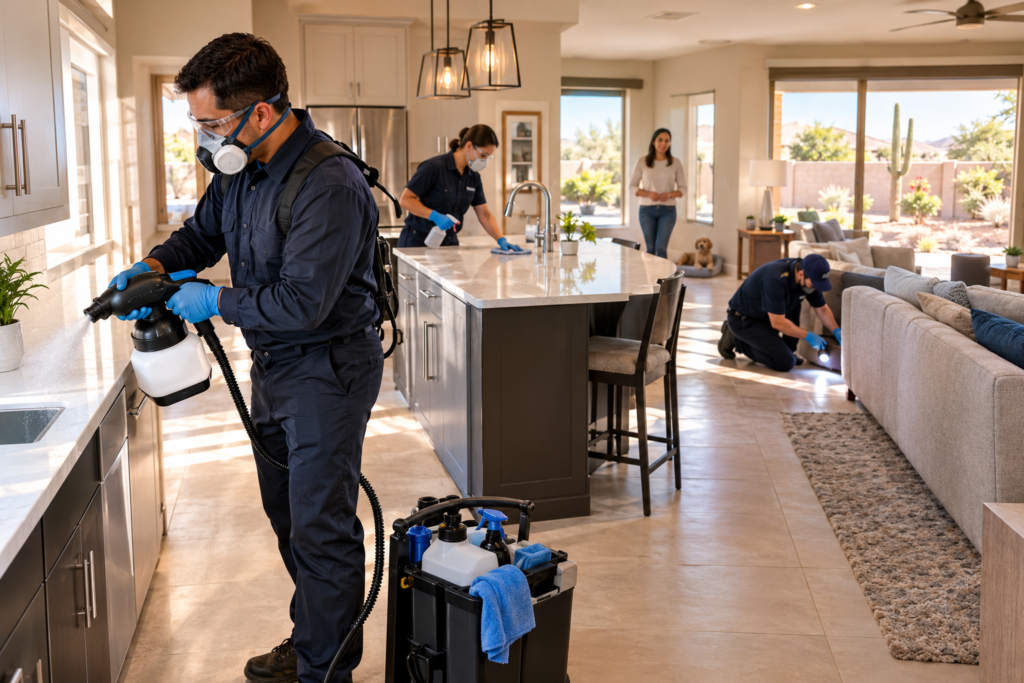
A child brings home a stomach bug from school. Within a week, half the household is sick, and everyone is wiping down doorknobs with whatever spray is under the sink. Many families know this scene well. It is a big part of why sanitizing services in Chandler, AZ have become a common choice for homes and businesses.
Germs spread quietly, and regular cleaning does not always stop them. This guide explains what professional sanitizing involves and how it differs from routine cleaning. It also covers when it makes sense and what to look for before hiring someone.
Cleaning, Sanitizing, and Disinfecting Are Not the Same
These three words get used as if they mean the same thing. They don’t, and the difference matters when health is on the line.
Cleaning removes visible dirt, dust, and grime. It makes a surface look good, but it may leave many germs behind.
Sanitizing lowers the number of germs on a surface to a level public health standards consider safe. It is common on food-contact surfaces and high-traffic areas.
Disinfecting goes further. It uses products designed to kill most of the germs listed on the product label, as long as the product is used correctly.
Professional sanitizing work often blends all three. Technicians usually clean first, because dirt and grease can shield germs from treatment. Then they apply the right product for the surface and the setting.
Takeaway: A surface can look spotless and still carry germs. Cleaning is only the first layer.
Why Demand Has Grown in the East Valley
Life in Chandler, Arizona comes with a few conditions that shape how germs and odors build up indoors. Summer heat keeps people inside for months at a time. Air conditioning runs nearly nonstop, and homes stay closed up.
That means the same air and surfaces get shared again and again. Busy kitchens, shared bathrooms, and pet-friendly homes all add to the load.
Monsoon season brings its own challenges. Dust storms push fine particles into homes and vehicles. Humidity spikes after storms can also create damp spots where bacteria and mildew grow.
Nearby cities see the same patterns. Interest in germ removal in Tempe, AZ, for example, tends to rise around flu season and the start of the school year. Rental turnover near the university adds to that demand.
What Professional Sanitizing Services in Chandler, AZ Usually Include
Every provider works a bit differently, but most professional visits follow a similar approach. The focus is less on general tidying and more on the spots where germs gather and spread.
High-Touch Surfaces
Light switches, door handles, faucet handles, remote controls, and railings get touched dozens of times a day. These are often the first targets during a sanitizing visit.
In offices, the list grows to include keyboards, phones, shared printers, breakroom counters, and elevator buttons.
Application Methods
Many technicians use electrostatic sprayers. These tools give the sanitizing solution a charge so it wraps around surfaces and reaches spots a cloth might miss. Others use foggers for larger spaces, or simple hand application for delicate items.
One detail that often gets overlooked is dwell time. That is how long a product must stay wet on a surface to work. Trained crews follow the label. Many people at home skip this step by wiping too quickly.
Products and Safety
Reputable providers generally use EPA-registered products. They can also explain which products are safe around kids, pets, and food areas. Asking for this information up front is a reasonable and common request.
Takeaway: The method matters as much as the product. Coverage and contact time drive results.
The Real Benefits, Explained Plainly
The most obvious benefit is fewer germs on the surfaces people touch every day. That can help limit the spread of common illnesses through a household or workplace. It is not a guarantee against getting sick, but it does lower the odds.
Another benefit is peace of mind after a specific event. Families recovering from the flu, a stomach virus, or a long illness often want a fresh start. A deep sanitizing visit gives them a clear line between “sick house” and “healthy house.”
Odor control is a quieter advantage. Many lingering smells come from bacteria living in fabrics, carpets, and hidden corners. Air fresheners only mask them. Treating the source tends to work much better.
For businesses, the benefits are practical. Fewer sick days, a cleaner look for customers, and better compliance with health expectations all play a role.
Real-World Situations Where Sanitizing Makes Sense
Not every home needs professional sanitizing on a regular schedule. Some situations, though, make a strong case for it.
After an Illness in the Home
Consider a family of four where the youngest picks up a virus at daycare. Even after everyone recovers, germs can linger on toys, bedding, and bathroom fixtures. A thorough sanitizing visit helps close the loop.
Rental Turnovers and Move-Ins
Short-term rental hosts often schedule sanitizing between guests, especially during busy seasons. New homeowners also book it before moving in. They have no idea how the last owner cared for the space, and a clean slate feels reassuring.
Offices, Gyms, and Clinics
A small dental office waiting room may see dozens of visitors a day. A youth sports facility might host back-to-back tournaments every weekend. In spaces like these, routine janitorial work may not be enough during cold and flu season.
Vehicles and Pet Areas
Cars collect more germs than most people expect. Steering wheels, seat belts, and cup holders rarely get a deep clean. Homes with pets face similar issues around bedding, crates, and favorite lounging spots.
Some local providers, such as Master Germ and Odor Removal, pair sanitizing with odor treatment for these situations. That approach is becoming more common across the industry, because the two problems often share the same source.
Takeaway: Timing matters. Sanitizing is most valuable after illness, before a move, or during high-traffic periods.
Common Mistakes People Make
Mistake: Treating a dirty surface with a sanitizer.
Fix: Clean first. Grime blocks the product from reaching germs.
Mistake: Wiping products off right away.
Fix: Let the surface stay wet for the time listed on the label.
Mistake: Mixing household chemicals for “extra strength.”
Fix: Never combine products like bleach and ammonia. The fumes can be dangerous.
Mistake: Hiring based on price alone.
Fix: Ask what products are used, how staff are trained, and whether the company carries insurance.
How to Choose a Provider
A good provider should be able to answer basic questions clearly. What products do they use? Are those products safe for children and pets? How long before the space can be used again?
Reviews help, but specifics help more. Look for comments that mention reliability, communication, and results after illness or odor problems. Vague five-star ratings say less than detailed feedback.
People comparing options across the Valley, including those searching for germ removal in Tempe, AZ, often find that service areas overlap. A provider’s experience with similar spaces, like homes, offices, or vehicles, is often a better guide than location alone.
Final Thoughts
Germs are a normal part of life, but there are times when they deserve more attention. Knowing the difference between cleaning and sanitizing is the first step.
- Cleaning removes dirt, while sanitizing reduces germs to safer levels.
- Professional crews focus on high-touch areas and proper contact time.
- Sanitizing makes the most sense after illness, before move-ins, and in busy shared spaces.
- Asking about products and safety is always reasonable.
For households and businesses weighing sanitizing services in Chandler, AZ, a little research goes a long way. Start by listing the spaces that matter most, then ask providers how they would handle them.
FAQs
How often should a home be professionally sanitized?
Most homes don’t need it on a fixed schedule. It is most useful after an illness, before moving in, or during peak cold and flu season.
Is professional sanitizing safe for kids and pets?
It usually is when trained technicians use EPA-registered products and follow label directions. Ask about re-entry times before booking.
What is the difference between sanitizing and disinfecting?
Sanitizing lowers germ levels to a safe range. Disinfecting uses stronger products meant to kill most germs listed on the product label.
How long does a typical sanitizing visit take?
A standard home may take one to a few hours, depending on size and condition. Larger commercial spaces can take longer.
Can sanitizing help with lingering odors?
Yes, in many cases. Odors often come from bacteria, so treating the source can work better than masking smells with fresheners.