Coastal Chimneys, Quiet Damage: Why Clacton-on-Sea Homes Need Timely Chimney Repointing
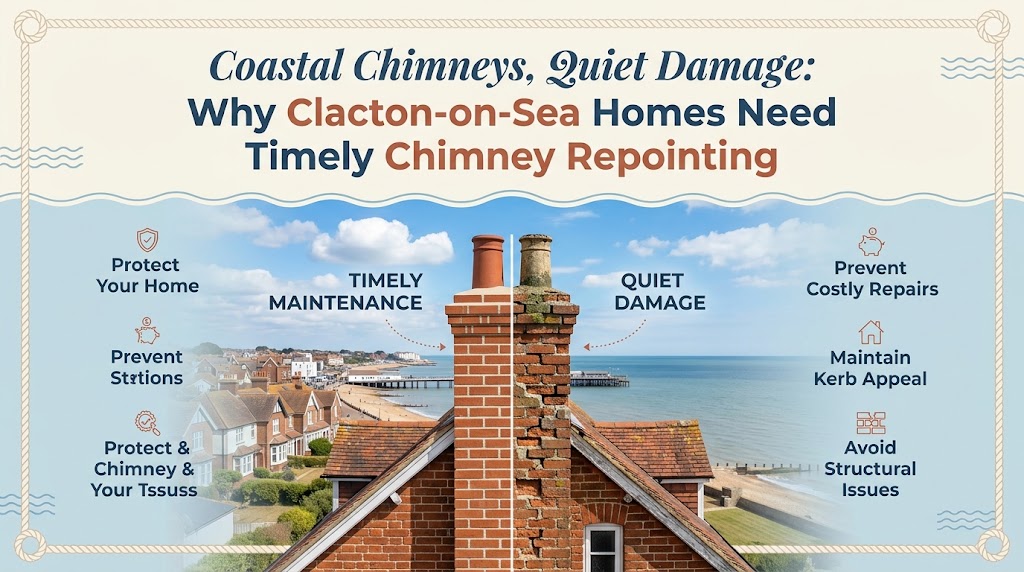
From the seafront promenade to the residential streets behind it, Clacton-on-Sea has a unmistakable coastal character. Salt-laden air, strong winds and frequent rain shape not only the town’s atmosphere but also the condition of its homes. Nowhere is that more visible than on the chimney stack, which stands above the roofline and takes the full force of Essex coastal weather.
For homeowners in Clacton-on-Sea, chimney repointing is not simply a cosmetic improvement. It is a practical safeguard against water ingress, loose brickwork, internal damp and expensive structural repairs. D And B Roofing helps local property owners identify early signs of chimney deterioration and restore chimney stacks before small faults become major problems.
What Chimney Repointing Actually Means
Chimney Repointing Clacton-on-Sea is the process of removing deteriorated mortar from the joints between bricks and replacing it with fresh, correctly mixed mortar. Over time, mortar naturally weakens because it is exposed to rain, frost, temperature changes and wind-driven moisture.
In Clacton-on-Sea, the challenge is intensified by the coastal environment. Sea air can accelerate surface weathering, while repeated wet-and-dry cycles cause mortar joints to crack and crumble. Once mortar begins to fail, rainwater can enter the chimney structure and travel into the roof space or internal walls.
Repointing restores the protective barrier between the bricks. When completed properly, it helps the chimney remain stable, weather-resistant and visually consistent with the rest of the property.
Why Chimney Repair Matters in Clacton-on-Sea
A chimney is one of the most exposed parts of any home. Unlike a wall sheltered by neighbouring buildings, a chimney stack faces wind from every direction. In a seaside town such as Clacton-on-Sea, that exposure can be relentless.
Common chimney problems include:
-
Cracked or missing mortar joints
-
Loose, spalled or damaged bricks
-
Damp patches on ceilings or loft walls
-
Water staining around the chimney breast
-
Damaged lead flashing where the chimney meets the roof
-
A leaning or unstable chimney stack
-
Broken chimney pots, cowls or flaunching
Many homeowners first notice a problem indoors. A damp patch near the chimney, a musty smell in the loft, or peeling plaster around a chimney breast can all point to water entering through failed brickwork or flashing. By the time these signs appear, the issue has often been developing on the outside of the chimney for some time.
Professional chimney repair addresses the source rather than only the visible symptom. For D And B Roofing, that means assessing the stack, mortar joints, flashing, pots and surrounding roof area before recommending the right solution.
The Coastal Effect: Why Local Conditions Matter
Clacton-on-Sea sits on the Essex coast, where properties face a particular combination of weather pressures. Wind-driven rain can force moisture into even small gaps in mortar. During colder months, trapped water freezes and expands, gradually widening cracks in brickwork and joints.
This freeze-thaw cycle is one of the main reasons chimney damage can progress quickly. A hairline gap in mortar may seem minor in autumn, but after a winter of rain, frost and wind, it can become a wider opening that allows repeated moisture penetration.
Salt in the air can also contribute to surface deterioration over time. While modern materials and correct workmanship greatly reduce the impact, older chimneys and poorly maintained stacks remain vulnerable. This is why local knowledge matters. A roofing specialist familiar with Clacton-on-Sea understands how coastal exposure affects mortar, brickwork and roof junctions.
Signs Your Chimney May Need Repointing
Homeowners do not need to climb onto the roof to spot potential warning signs. Some issues can be seen from ground level, while others become noticeable inside the property.
Look out for:
-
Mortar that looks sandy, recessed or crumbly
-
Gaps between bricks
-
Bricks with flaking faces or missing edges
-
White salt deposits on the chimney surface
-
Recurring damp near the chimney breast
-
Water marks in the loft
-
Loose chimney pots or damaged flashing
-
A chimney that appears tilted when viewed from different angles
If any of these signs are present, it is sensible to arrange a Chimney Repair Clacton-on-Sea inspection. Early chimney repair is usually far less disruptive than waiting until bricks become loose or water damage spreads through the roof structure.
How D And B Roofing Approaches Chimney Repointing
Every chimney is different. Age, brick type, previous repairs, roof access and the extent of weather damage all influence the correct approach. D And B Roofing begins with a careful assessment of the chimney stack and surrounding roof area.
A typical repointing project involves:
-
Inspecting the chimney for failed mortar, damaged bricks and water entry points
-
Removing loose or deteriorated mortar from the joints
-
Preparing the joints cleanly so new mortar bonds effectively
-
Applying suitable fresh mortar to restore strength and weather resistance
-
Checking flashing, leadwork, pots and flaunching for related faults
-
Leaving the chimney structurally sound and visually finished
The aim is not just to fill gaps. Good repointing protects the chimney from further moisture damage while preserving the appearance of the property. In a town where many homes feature traditional brickwork, matching the finish carefully is an important part of quality workmanship.
Chimney Repair Beyond Repointing
Repointing is often the main solution, but it is not the only chimney service homeowners may need. A complete chimney repair may also include replacing damaged bricks, renewing lead flashing, reseating chimney pots, repairing flaunching or installing a suitable cowl.
Flashing is especially important. It forms the waterproof junction between the chimney and the roof. If flashing fails, water can enter even when the brickwork itself appears sound. That is why a thorough chimney repair should always consider the roof as well as the stack.
For homeowners in Clacton-on-Sea, combining repointing with flashing checks can provide far better long-term protection than addressing one issue in isolation.
When Is the Right Time to Act?
The best time to deal with chimney problems is before the weather makes them worse. Autumn is often a sensible period for inspection, as it allows repairs to be completed before winter frosts and storms arrive. However, urgent issues such as loose bricks, active leaks or a visibly leaning stack should never be left waiting.
Delaying chimney repair rarely saves money. Water that enters a chimney can damage plaster, timbers, insulation and decorative finishes inside the home. What begins as a straightforward repointing job can become a larger repair involving internal redecoration, roof work or partial rebuilding.
Protecting Your Home With Local Expertise
A chimney may be easy to overlook because it sits above eye level, but it plays a vital role in protecting the home beneath it. In Clacton-on-Sea, where coastal wind and rain put constant pressure on external masonry, regular attention is particularly worthwhile.
D And B Roofing provides chimney repointing and chimney repair services for homeowners who want practical, long-lasting protection for their property. Whether the issue is crumbling mortar, damp around the chimney breast or weathered brickwork, timely professional attention can restore both safety and peace of mind.
For Clacton-on-Sea residents, the message is simple: if your chimney is showing signs of wear, do not wait for the next storm to reveal the problem. A well-maintained chimney protects the roof, the interior and the value of your home.