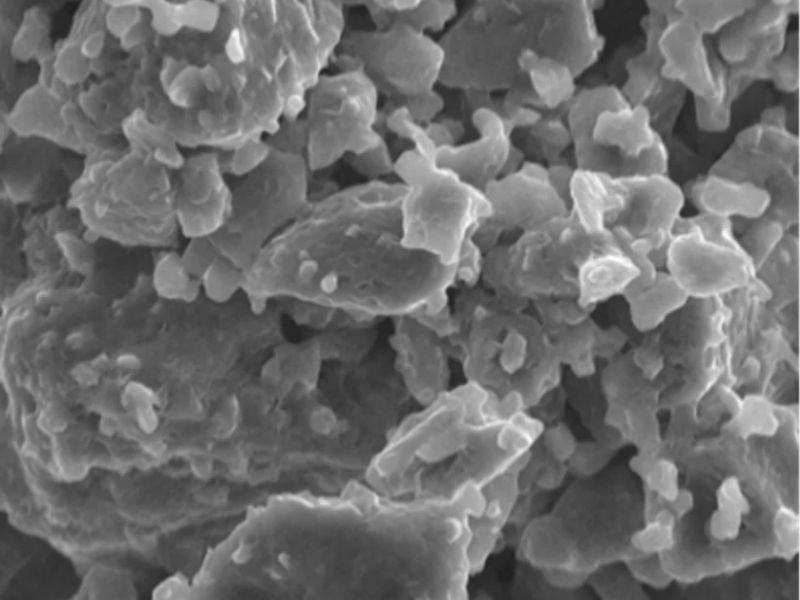
Sulfide Solid Electrolytes are becoming an important area of research as battery developers explore solid state designs. Ampcera supports this field with advanced materials and services for researchers, engineers, and battery developers. Solid electrolytes can replace liquid electrolytes in certain battery architectures and create new possibilities for cell design. Their ionic transport, interface behavior, processing requirements, and moisture sensitivity all need careful study.
What Are Sulfide Solid Electrolytes?
Sulfide Solid Electrolytes are inorganic materials that conduct lithium ions while remaining solid. Unlike conventional liquid electrolytes, they do not flow through the cell. This makes them relevant to all solid state battery research, where the electrolyte is intended to provide ionic transport between the electrodes.
Sulfide materials attract research interest because some compositions can provide high ionic conductivity and can be processed into dense electrolyte layers. Their mechanical and interfacial characteristics also make them useful for studying different solid state cell architectures.
Researchers may evaluate these materials in powder, pellet, film, or composite electrode formats depending on their experimental goals.
Why Are Sulfide Electrolytes Important?
The electrolyte is one of the central components of a battery. It must allow lithium ion movement while remaining compatible with the cathode and anode.
Sulfide Solid Electrolytes can offer a different combination of properties from oxide and polymer solid electrolytes. Their relatively soft mechanical nature can help researchers investigate intimate contact between electrolyte particles and electrode materials.
However, no electrolyte is ideal for every application. Material selection should consider conductivity, stability, processing conditions, interface compatibility, and the requirements of the complete cell.
Important Material Characteristics
When comparing sulfide electrolyte materials, researchers may examine:
- Ionic conductivity
- Particle size and morphology
- Chemical composition
- Moisture sensitivity
- Electrochemical stability
- Interface compatibility
- Processing behavior
- Film forming capability
These characteristics can influence both laboratory testing and prototype development.
Sulfide Solid Electrolytes and Solid State Batteries
A solid state battery uses solid materials for its electrolyte rather than a conventional liquid electrolyte. This architecture requires careful integration of the electrolyte with both electrodes.
Sulfide Solid Electrolytes can be studied with high capacity cathode materials, including nickel rich NMC chemistries. Researchers need to understand how the electrolyte interacts with cathode surfaces, conductive additives, and other components in a composite electrode.
Ampcera provides sulfide electrolyte materials alongside coated cathodes and electrode processing services. This can support research teams that want to evaluate connected parts of a solid state battery rather than studying each material independently.
What Makes Sulfide Electrolytes Different?
One important characteristic of sulfide chemistry is its sensitivity to environmental conditions. Moisture control can be important during handling, preparation, and processing. Research facilities may therefore use controlled environments when working with these materials.
Another consideration is the interface between the electrolyte and electrode. A material may show strong ionic conductivity as a standalone electrolyte while still requiring additional engineering when incorporated into a complete cell.
Researchers can therefore evaluate the electrolyte through several stages:
- Material characterization
- Powder processing
- Electrolyte layer formation
- Composite electrode preparation
- Cell assembly
- Electrochemical testing
This staged approach can help identify where performance changes occur.
Choosing a Sulfide Electrolyte for Research
Selecting a solid electrolyte should start with the requirements of the experiment. Researchers should identify the target cell architecture, electrode chemistry, testing conditions, and processing method before choosing a material.
Questions to Ask Before Selection
- What ionic conductivity is required?
- What cathode and anode materials will be used?
- Will the electrolyte be tested as a pellet, film, or composite?
- What particle size is appropriate?
- What atmosphere is needed for handling?
- What pressure will be applied during cell testing?
- How will the electrolyte be characterized?
The answers can narrow the range of suitable materials and make experimental planning more efficient.
Particle Size and Processing
Particle size can influence packing, contact, mixing, and layer formation. Researchers may need different particle characteristics depending on whether they are preparing a dense electrolyte layer or a composite cathode.
Ampcera offers sulfide electrolyte materials in different formats and supports battery research through additional processing capabilities. Its broader portfolio includes coated cathode powders, dry processed electrodes, electrolyte film services, and battery testing equipment.
When working with these materials, researchers should consider the relationship between powder characteristics and the intended fabrication method. Consistent processing can make experimental comparisons more meaningful.
The Role of Coated Cathodes
Cathode surface engineering is another important area in solid state battery research. The interface between a cathode and solid electrolyte can affect cell behavior, especially during repeated cycling.
Ampcera offers coated cathode materials using surface treatment approaches such as lithium niobium oxide and lithium zirconium oxide. These materials allow researchers to investigate how cathode surface modification can influence interactions within advanced battery systems.
A coated cathode does not automatically guarantee better cell performance. Its effectiveness depends on coating chemistry, loading, processing, electrolyte choice, and testing conditions.
Moisture Handling and Laboratory Practices
Environmental control can be especially important when working with sulfide materials. Researchers should follow appropriate laboratory procedures for storage, handling, weighing, mixing, and cell preparation.
A controlled dry environment can help reduce unwanted reactions during material preparation. The exact environmental requirements depend on the material composition and experimental procedure.
Good laboratory practices may include:
- Using appropriate dry storage
- Limiting unnecessary exposure to ambient air
- Preparing materials in suitable controlled environments
- Maintaining consistent handling procedures
- Recording processing conditions
- Characterizing materials before and after important processing steps
Careful handling helps researchers obtain more reliable experimental data.
How Ampcera Supports Battery Development
Ampcera focuses on materials and services for advanced energy storage research. Its portfolio includes sulfide solid electrolytes, coated cathode materials, dry electrode processing, electrolyte film processing, and specialized battery research equipment.
This integrated approach can be useful for teams developing solid state cells. Instead of treating electrolyte development, cathode preparation, and electrode processing as completely separate activities, researchers can evaluate how these components work together.
Ampcera also supports research and development activities ranging from material evaluation to prototype cell work. The exact solution depends on the customer’s material, processing, and testing requirements.
Benefits and Challenges to Consider
Sulfide electrolyte research offers opportunities for developing new solid state battery architectures, but it also involves practical challenges.
Potential areas of interest include:
- High lithium ion conductivity
- Solid state cell integration
- Composite electrode development
- Thin electrolyte layer research
- Cathode interface engineering
- Prototype battery testing
At the same time, researchers need to consider moisture sensitivity, chemical compatibility, mechanical behavior, interface resistance, and processing complexity.
A balanced evaluation should therefore consider both material advantages and practical limitations.
Frequently Asked Questions
What are these solid electrolytes used for?
Sulfide Solid Electrolytes are studied as lithium ion conducting materials for solid state battery research. They can be evaluated in electrolyte layers and composite electrodes.
Are sulfide electrolytes suitable for every battery?
No. Suitability depends on the electrode materials, cell architecture, processing conditions, environmental controls, and required electrochemical properties.
Why is moisture control important?
Some sulfide materials can react with moisture. Controlled handling can therefore be important for maintaining material quality and supporting consistent experiments.
Can sulfide electrolytes be used with NMC cathodes?
Yes, researchers can study sulfide electrolytes with NMC cathode materials. Interface compatibility and processing conditions should be evaluated for the specific cell design.
What does Ampcera offer?
Ampcera provides advanced battery materials and services, including sulfide electrolytes, coated cathodes, dry electrode processing, electrolyte film services, and battery research equipment.
Conclusion
Sulfide Solid Electrolytes are an important material class for researchers exploring solid state battery technology. Their lithium ion conductivity, processing characteristics, and interface behavior make them valuable subjects for advanced battery research.
Ampcera supports this work through a portfolio that connects electrolyte materials with coated cathodes, electrode processing, electrolyte films, and testing solutions. For research teams, the most useful approach is to evaluate the electrolyte as part of the complete battery system.
By controlling material selection, processing, environmental conditions, and cell testing, researchers can build a stronger understanding of sulfide based solid state batteries and continue developing practical energy storage technologies.