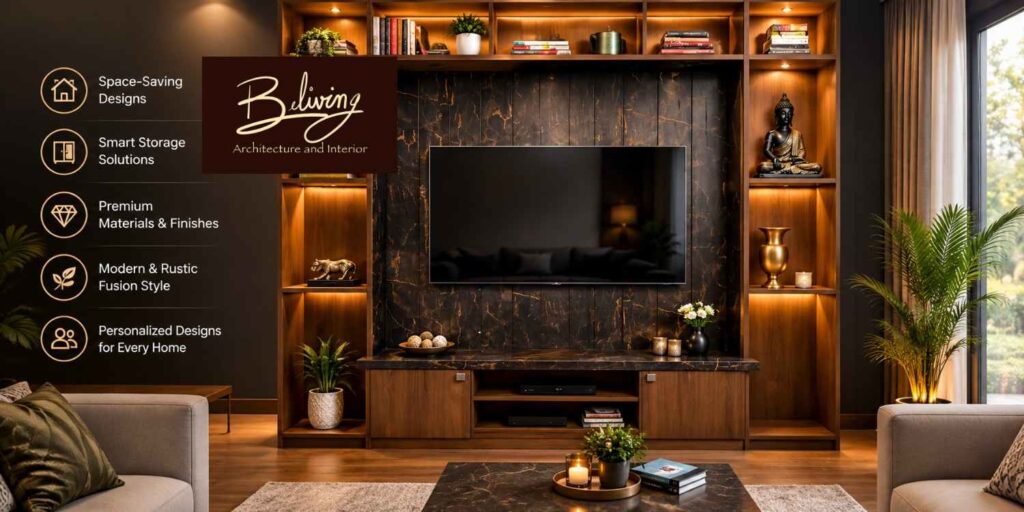
In addition to being visually pleasing, a good living room must perform various functions like conversation, socialization, relaxation, storage, movement, and contribute to the overall atmosphere of the home. Residential Interior Designers in Delhi may help the homeowner achieve all these aims through practical space planning, furniture selection, lighting, materials, colour coordination, customization, etc. In a place like Delhi, which has various types of housing options such as flats, builder floors, independent houses, villas, etc., the living room design must be conceived based on the real estate and not just from a catalogue.
The living room must also be naturally integrated with the other rooms in the house. The sofa plan, television wall, entrance, dining, windowing, movement and storage must cohesively compose into one picture. That is where the role of professional interior designing becomes important, as aesthetics are created along with the functional aspect of the design.
Why Living Room Design Needs Professional Planning
The living room is usually the most exposed area in a typical Delhi house. The area may be utilized for family meetings on weekdays, entertaining guests during weekends, special occasions, work-from-home purposes, or leisurely nights. Since one room can have multiple roles, simply buying expensive furniture will not necessarily lead to a good interior design.
A designer will first take into account the size of the room, natural lighting, access points, architecture, electrical sockets, ceiling height, and movement within the space. Then comes furniture choice based on scale. In doing this, many mistakes that could arise like sofas being too large and preventing movement, not enough seating, improperly placed televisions, and decoration walls without any practical purpose of storage will be avoided.
Professional design may also assist homeowners in prioritizing budget allocation. Rather than splurging money on everything that is visible, budget can be allocated to different aspects.
What Should a Delhi Living Room Include?
Every project has different requirements, but several elements deserve attention during the planning stage.
- Comfortable seating: Choose sofa dimensions according to room size and expected usage rather than appearance alone.
- Functional storage: TV units, concealed cabinets, display shelves, and side storage can reduce visible clutter.
- Layered lighting: Combine ambient, task, accent, and decorative lighting where appropriate.
- Balanced materials: Wood, stone, glass, metal, fabric, paint, and textured surfaces should have a visual relationship.
- Clear circulation: Keep natural walking routes open between the entrance, seating, dining zone, balcony, and other rooms.
For Delhi residences, natural light should also influence the design. A living room receiving strong daylight may require different colours, curtains, finishes, and lighting arrangements from a darker interior.
Residential Interior Designers in Delhi: What Services Should You Expect?
Homeowners should not restrict themselves to looking at the images of the projects of residential interior professionals. A professional service will comprise various steps, starting with the understanding of the property and requirements of the homeowner. The process of Comparing Residential Interior Designers in Delhi can include the analysis of the approach towards space planning, design development, materials, budgeting, execution and coordination of the project.
Initially, the following topics need to be discussed: lifestyle of the client, number of family members, the language of the design, storage options, furniture, budget, time schedule, and customisation requirements. Then site measurements and conditions will help in the process of design development.
The design step may comprise furniture layouts, color schemes, material choices, lighting concepts, false ceiling concepts, wall decoration ideas, storage ideas and presentations. In case of some projects, the execution step may comprise coordination with carpenters, electricians, painters, fabricators and installers.
Beliving Interior focuses on residential interiors according to the lifestyle, taste, functionality and project requirements. The residential design service of Beliving Interior may be relevant if the homeowner wants the living room to be integrated into the whole house instead of being isolated decorative zone.
How to Evaluate a Designer Before Hiring
Before settling down with a designer, consider more practical things than the visual presentation of the portfolio.
See if the designer has done similar projects for properties like yours. Ask about measuring, revision process, suggested materials, execution process, and the extent of quotation.
The scope of work becomes very important. As per published guides of Delhi market, the cost of interiors may vary considerably depending upon the quality of materials, furniture, civil work, electrical work, storage, etc.
Living Room Styles That Work Well in Delhi Homes
There is no single style that suits every Delhi residence. The right direction depends on the architecture, available space, lifestyle, and personal preferences.
Contemporary Living Rooms
Contemporary interiors usually rely on clean furniture forms, controlled colours, practical storage, and carefully selected decorative elements. This approach works well when homeowners want a modern space without excessive ornamentation.
Textures can be introduced through upholstery, wood finishes, rugs, wall panels, curtains, and selected artwork rather than covering every surface with decorative treatments.
Modern Luxury Living Rooms
Modern luxury does not necessarily mean filling a room with expensive materials. Proportion, detailing, lighting, craftsmanship, and material coordination are often more important.
A combination of natural-looking stone, veneer, upholstered furniture, warm lighting, and restrained decorative elements can create a refined atmosphere while keeping the room comfortable for everyday use.
Minimalist Living Rooms
Minimalism works particularly well when homeowners want visual calm. The design should prioritise useful furniture, concealed storage, clean lines, and a limited material palette.
However, minimalism does not mean removing everything from the room. A carefully selected artwork, textured wall, statement light, or indoor plant can give the space personality without creating visual clutter.
Modern Indian Living Rooms
A Delhi residence can also combine contemporary planning with Indian materials, artwork, textiles, handcrafted objects, or traditional references. The result can feel personal rather than overly dependent on international design trends.
The key is proportion. Traditional elements should support the overall composition rather than compete with every other feature.
Local Cost Guide for Living Room Interiors in Delhi
One of the biggest considerations that owners consider when planning their living rooms is the cost of the living-room interior. The price is not standard in the Delhi area because it will vary depending on the room sizes, furniture, material used, carpentry, electrical work, ceiling, wall, lighting, and customization.
Currently available market references for the year 2026 in the Delhi/NCR area indicate considerable variation. Some sources refer to residential prices at a general range of between ₹1,200 – ₹3,500+ per square foot based on specifications, while others give a general residential range of ₹1,500 – ₹5,000 per square foot.
For a living-room project, homeowners should separate the budget into practical categories:
- Furniture and seating
- TV unit and storage
- False ceiling and lighting
- Wall finishes and paint
- Curtains, blinds, rugs, and soft furnishings
- Decorative elements
- Electrical modifications
- Custom carpentry
- Design and project-management charges, where applicable
A smaller living room can still become expensive if it contains highly customised furniture, premium hardware, extensive wall panelling, imported finishes, or significant electrical and civil modifications.
For this reason, ask for an itemised quotation instead of comparing only the final project figure.
How the Living Room Design Process Works
A structured process reduces uncertainty and helps homeowners make decisions in the right sequence.
Step 1: Requirement Discussion
The first stage identifies how the living room is actually used. Discuss family routines, guest requirements, seating capacity, storage, television usage, preferred style, colours, and budget.
Step 2: Site Measurement and Assessment
Measurements should include walls, openings, windows, ceiling height, electrical points, plumbing constraints where relevant, and existing architectural features.
This stage is particularly important for older Delhi homes and renovated properties, where site conditions may differ from original drawings.
Step 3: Space Planning
Furniture and circulation are established before decorative details are finalised. The designer determines sofa placement, tables, television positioning, storage, pathways, and connections with adjoining spaces.
Step 4: Concept and Material Selection
Once the layout works, the design language can be developed through colours, textures, wood finishes, stone, fabrics, lighting, wall treatments, and furniture.
Step 5: Design Development
Detailed drawings, elevations, furniture specifications, lighting requirements, and material selections help convert the concept into an executable plan.
Step 6: Budget Finalisation
The scope should be reviewed carefully before execution. Materials, quantities, hardware, labour, installation, transportation, taxes, and exclusions should be understood.
Step 7: Execution and Site Coordination
Execution transforms the design into the physical interior. Regular coordination helps ensure that carpentry, electrical work, painting, lighting, furniture installation, and finishing activities follow the planned sequence.
Step 8: Final Inspection and Handover
The final stage involves checking finishes, fittings, storage operation, lighting, furniture placement, and outstanding work before the project is considered complete.
Read More – Beliving Interior Medium Article
Best Villa Interior Designers in Delhi: Planning Larger Living Spaces
The living room of villas requires a different amount of thought since the scale may be much larger compared to an ordinary apartment. High ceilings, wide spaces, several sitting areas, stairs, courtyards, balconies, dining space, and large windows may all affect the interior design.
Therefore, home owners trying to find Best Villa Interior Designers in Delhi must look for professionals who have extensive experience in designing large residential spaces instead of evaluating a designer solely based on apartment interiors.
It is essential to make a living room in a villa spacious without making it look empty. The sizes of the furniture start to matter in a big way. If there is a very small group of sofas in a big room, then it may look as though it has been put somewhere by mistake. On the other hand, very big furniture can spoil circulation.
Lighting also becomes more complicated with many layers of it being used – architectural lighting, decorative, wall, accent and natural daylight.
Beliving Interior can design villa interiors using the interconnection between space planning, materials, furniture, lighting, storage and lifestyle of homeowners.
How to Control Your Interior Budget
Priority list will help you avoid unnecessary costs. Begin with the aspects that will improve the comfort and functionality of your living space.
The homeowners will prioritize comfortable sofas, sufficient storage, good lighting and electrical needs, and strong finishes over decor. Having taken care of these, one can then go for the statement walls, art pieces, accents, or luxurious accessories.
It is also helpful to maintain some contingency costs for unforeseen circumstances on-site. The renovation works might uncover something that was not there initially during consultations.
Common Living Room Design Mistakes to Avoid
Even an attractive concept can fail if practical requirements are ignored.
- Choosing furniture before measuring the room.
- Blocking windows or important circulation routes.
- Using too many unrelated materials.
- Depending on a single overhead light.
- Creating decorative walls without considering maintenance.
- Forgetting storage requirements.
- Selecting finishes only because they are trending.
- Comparing quotations without checking inclusions and exclusions.
The most successful living rooms usually balance visual appeal with everyday usability. The design should still make sense when the room is being used by real people rather than photographed for a portfolio.
A Short Homeowner–Designer Conversation
Owner: I need Residential Interior Designers in Delhi who can transform my living room into something elegant and usable.
Designer: Beliving Interior can offer you a personalized design considering your style of life, available space and budget.
Owner: I want modern style but without compromising on my comfort.
Designer: We will combine clever space planning, lighting, furniture, storage and finishes for an efficient living room.
Why Beliving Interior Can Be Part of the Planning Journey
Beliving Interior emphasizes the designing of residential interiors where the functionality, personal preference, life style, material choices, and design requirements have to be balanced together. For those who intend to renovate their living room, this methodology can help in setting up the design direction prior to making furniture and decoration decisions.
In the case of large homes, the importance of such planning methodology is even more emphasized. A villa might have multiple bedrooms, dining area, kitchen, family lounges, stairs, outside connection, and recreation area. It is possible to design all of these spaces according to a single design language, yet having each room fulfill its own function.
One should not try to design an impressive room only, but rather a functional and beautiful interior that will be convenient for the use of the entire family.
Summary
Selecting Residential Interior Designers for a living room project in Delhi is essentially an exercise in achieving a fine balance between design, functionality, budget, materials, and execution. Good planning starts with knowing who uses the space and culminates in details that simplify life in the room.
Beliving Interior combines all these aspects within the process of designing residential interiors, considering lifestyle, functionality, customization, and overall visual coherence. No matter whether the requirement is that of a contemporary apartment living room, a refined interior of a builder floor, or a villa, careful planning can ensure that the end result is visually appealing and functional.
Some Important Questions
1. How much does living room interior design cost in Delhi?
There is no fixed cost. Pricing depends on room size, furniture, materials, carpentry, lighting, electrical work, wall treatments, ceiling work, and customisation. Current Delhi market references show wide residential pricing variations, so a project-specific quotation is more reliable than a generic rate.
2. What should I ask Residential Interior Designers in Delhi before hiring them?
Ask about relevant project experience, site measurement, design stages, material specifications, execution supervision, project timelines, payment milestones, warranty, revisions, and what is included or excluded from the quotation.
3. How long does a living-room interior project take?
The timeline depends on the scope. A simple refresh may be relatively quick, while customised carpentry, electrical changes, false ceilings, wall treatments, and multiple furniture installations can extend the schedule. Larger villa projects generally require more coordination.
4. Are villa interiors more expensive than apartment interiors?
They can be, particularly when the project involves multiple floors, larger spaces, bespoke furniture, premium finishes, extensive lighting, custom storage, and more complex execution. However, the final cost depends on specifications rather than property type alone.
5. What living-room style is suitable for a Delhi home?
Contemporary, modern luxury, minimalist, and modern Indian approaches can all work. The most suitable direction depends on the home’s architecture, natural light, room proportions, lifestyle, maintenance expectations, and personal taste.
6. Why should living-room design be planned with the rest of the house?
A connected plan creates consistency between furniture, colours, materials, lighting, flooring, storage, and circulation. It also prevents the living room from looking visually disconnected from the dining area, kitchen, bedrooms, entrance, or other parts of the residence.
About us –
Official No. – +91 9871678798