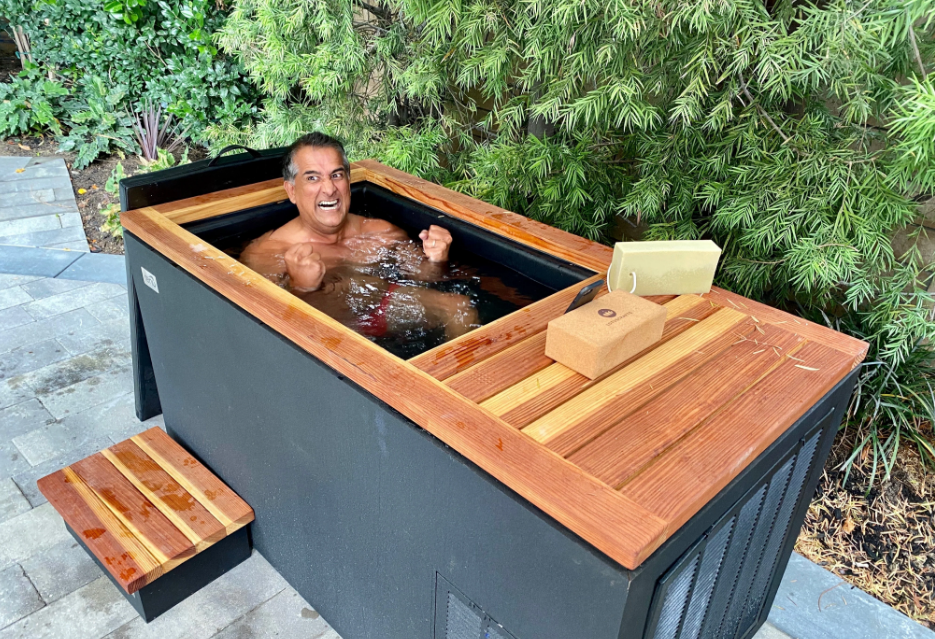
Cold water immersion therapy is becoming a norm in the mainstream and as such is being adopted by several businesses. These businesses include, but are not limited to, spas, hotels, gyms, and physical therapy practices. It is important to note, that while adding a cold plunge to your business may improve your clientele and promote positive reviews, purchasing the correct equipment for commercial use has several considerations. As a business owner, you will have health inspectors and liability underwriters review your equipment. The equipment has to be able to safely and efficiently serve its purpose while being used by numerous consumers.
Owners often forget the numerous considerations commercial cold plunges have and purchase the first equipment they find. This often results in the cold plunges not being able to meet consumer demand, having a filtration system that requires continual maintenance, or not fitting through doorways.
When you have decided cold plunges and/or saunas will be part of your commercial wellness center, conduct the assessments outlined in this checklist to decide the best equipment for your needs. If you are new to owning a wellness center and need guidance with regard to the recovery industry, this checklist will help you answer the initial questions you have.
A tub isn’t just a tub. Think about how it will make money for your business. It is important to consider your space and the flow of your members. This holds true before looking at any product pages. There are major differences in equipment for a high volume athletic facility and for a day spa.
Think about who will use the equipment and how often.
Consider the expected daily use and the average length of each use. Clients may spend 10-20 minutes in a tub, and may also spend time waiting to use the equipment. There may need to be more than one tub for high use equipment to avoid long wait times for members. The equipment may also be a waste of space for low use equipment.
Here are the questions you need to answer:
- How many users are there during peak hours and in a typical day?
- What kind of scheduling will you have? Will you have scheduled sessions like a class? Will it be available on a first come first serve basis?
- What kind of use will it see? Will it be a single activity, or will it facilitate social interaction?
- What other elements will you have in conjunction? Will you have a hot tub and/or steam room?
- Client flow and placement of amenities play a large role in the success and profitability of your business. Place sauna units and cold plunges as a unit, especially if you want clients to use them as part of a circuit. Separating the two makes it harder to charge a premium.
- Assess your site constraints and limitations
Filled cold plunges are very heavy. Make sure your floor is capable of supporting the load. Measure everything to make sure your cold plunges can be transported to and placed at your business. Make sure you have a way to easily remove the water and clean the cold plunge.
Power Supply. Review what your building’s electricity can support.
- Ventilation. Chillers create heat, and if there is no air movement in the room, the equipment will overheat.
- Clear Space. Equipment must be accessible for service.
- Think about the entire guest experience.
- Flooring. The type of flooring you choose can impact the safety and cleanliness of your spa.
- Towel Storage
- Signs/Directional markers to give guidance and instructional information to the guests using your spa.
- A Timer.
- A Path. If you have a cold plunge located near a sauna, be sure to provide a pathway to the plunge to keep wet floors as safe as possible.
- Quality and Performance
When researching plunge pool equipment, understand your business requirements first, and then assess equipment options.
Minimum Operating Temperature. Most clients want water in the low to mid 40’s (F). You need to get your unit to this temperature and stay there. This is dependent on your climate and the temperature of the room.
Duty Cycle. Continuous operation can damage consumer units. Commercial units are built for continuous operation.
Noise Level. Units that generate a lot of noise can be detrimental to the atmosphere of a spa. Find the decibel rating of the unit.
Energy Consumption. Units that are not energy efficient can increase your operating costs.
Water Quality. Commercial units can have thousands of users a week. They must have a water quality and sanitation system to support that use.
As mentioned, water quality and sanitation are critical to support the commercial use of a spa. Some features to compare are the type of filters and the flow rate. Also compare the maintenance needs of the filter. Some units have an ozone or UV light sanitation system. Support and replacement costs of these systems must also be taken into account. Some systems may also require the use of certain sanitation chemicals. Easy to use systems should allow a commercial user to test water quality and adjust sanitization levels.
Automatic circulation can help combat bacteria that grows in stagnant water. Look for a unit that has circulation or turnover of the water.
Clients of a spa are extremely conscious of cleanliness and can be lost because of unpleasant or unsafe water quality. A unit that uses water quality features can help support and protect your business.
Section 1: Materials and Construction
Because commercial tubs get a lot of use, it is important to look beyond the price of the model you are considering and make sure you are evaluating the same factors for all models, for example:
Other factors to consider may include the ease of transport and installation. Shorter tubs may be easier to handle and install.
An energy-efficient tub will help keep operating costs low.
The interior shape of the tub affects comfort and the ease of which a client can access the tub and leave it.
It is important to see if the manufacturer has a client base that includes commercial facilities. A residential client base may not include the needs of a client that has continuous use throughout the day. To gain further insight into the product you may want to contact a facility that has recently purchased the product for their commercial use.
Section 2: Automation and Control Systems
The controls and systems on a tub may include automated temperature controls or filtration controls that may integrate with the manufacturer’s mobile app. Staff may be able to view the status of a tub and be notified of maintenance through the app or the internet. To ensure that the tub meets your desired standards, it is important that the controls and systems integrate reliability and that the manufacturer provides support to ensure that the systems remain functional.
Section 3: Safety, Compliance and Maintenance
There are numerous risks associated with commercial cold water immersion, including, but not limited to, the effects of hypothermia, hyperventilation, cardiac arrest, and drowning. Your business is required to assess the risks and take precautions to protect your clients.
Check local regulations and permits
Commercial water feature regulations vary by location. In many regions, cold plunge tubs are required to meet the same building and public health codes as spas and pools. Contact your local health department to determine: Are permits and inspections required for commercial cold plunge tubs? Are there public health code requirements for water quality and sanitation? Are there sign and depth markers requirements for cold plunge tubs? Are the requirements for commercial cold plunges the same for saunas and other steam and hot water immersion features?
You will want to contact your liability insurance company to see if there are any exclusions for cold plunge features, and what kind of protection cold plunges provide.
Safety policies and training are more important than the equipment you purchase. Some of the policies you should consider including are customer waivers and screenings to determine if it is safe for a customer to use a cold plunge based on any medical conditions.
As you work with your vendor, you’ll cover how your staff will be trained to recognize and respond to certain medical conditions. These conditions will likely include cold shock, dizziness, and hypothermia. Staff training will also cover rules regarding supervision.
Some rules regarding supervision will depend on the specific activities being offered at your facility. For example, rules regarding activities that include remote staff supervision (i.e. using cameras) may differ from rules regarding activities that do not.
If clients are moving between the sauna and cold plunge, your vendor should provide instructions regarding contrast therapy. Your vendor should also provide guidance regarding cooldowns and listening to your body.
You will develop plans for the routine cleaning and routine maintenance of the equipment. Ask your vendor to estimate the time staff would spend performing routine maintenance. You should develop a schedule for routine maintenance and name a staff member to be responsible for the maintenance.
Downtime for repair of the equipment would negatively impact your members. You should contact the vendor’s service and repair staff to determine how quickly they could reach you.
The total cost of ownership is important when evaluating equipment. You should review the price of equipment but also consider the costs associated with the equipment over time.
- Estimate total cost of ownership
- Include expected costs in the first 3-5 years of ownership
- Initial costs
- Cost of purchase of the tub and chiller
- Delivery and installation costs
- Cost of electric and plumbing connections
- Cost of improvements to surrounding structures and the premises
- Cost of water quality and treatment supplies
- Cost of water and electricity
- Staff costs for operation
- Cost of insurance and licenses
- Maintenance and replacement costs
Consider the long-term costs of ownership when evaluating tubs and chillers. An inexpensive tub and chiller may have high ownership costs if it does not retain water and uses a lot of energy. Ask vendors for estimated energy costs. Consider the costs for maintenance and replacement.
- Assess the company and not just the product
- Consider the following when assessing a company’s services and products
- Commercial Warranty. Does the company replace or repair the product if it breaks during the warranty period?
- Training. Will the company provide staff training on the operation of the product?
- Availability and delivery. Will the product be available when the company starts business?
- Finances. Can the company survive and continue operations to service the warranty?
- References. Are references from similar business?
- Competitor Products
Review competing products from other companies to evaluate if your product meets the baseline to enter the market.
When purchasing sauna units, consider if you can buy your cold plunges units from the same place. Usually, simplifying a business makes more sense, as long as you aren’t sacrificing something important. Look at the units separately, and if bundling makes sense, then go for it.
Consider your potential return on investment
Cold plunges have the potential to pay for themselves, and you can easily imagine different scenarios in which that happens. A few ideas:
- Charge more for memberships. Add cold plunges to your current offerings.
- Sell individual sessions. Charge for cold plunges and/or contrast therapy sessions.
- Sell packages. Sell access to cold plunges with other offerings, like massages and classes.
- Rent out to groups. Sell plunge sessions to groups or teams.
- Sell merch. Sell plunge related items.
Consider how long it will take you to get your money back. If you want a conservative estimate, assume the worst, and expect it to take a long time to get your investment back. Hopefully you’ll be pleasantly surprised.
Equipping a Recovery Center is Only Half the Battle
While procuring high quality equipment is important, successful implementation requires extensive marketing efforts to raise awareness about your service offering. Staff should be equipped to communicate the benefits and give safety instruction. Recovery centers should utilize design and media personnel to develop marketing materials and signage to illustrate recovery and benefit of contrast therapy. Consider offering trials to cultivate early member endorsed testimonials. Given your expected service offering and local search competition, confirm your business website and listing adequately describe your sauna and cold plunge offerings.
Before you seal the Deal
Always verify you’ve answered yes to the following:
- Do you understand what your average daily and peak hour usage will be?
- Have you measured the dimensions of the access route to the recovery center and the floor load?
- Is the chiller up to the commercial demand?
- Do you have a plan to address sanitation and infection control?
- Have you determined what the demand for your service will be and are you in compliance with local ordinances?
- Do you have a safety policy and trained employees?
- Do you know the true cost of owning and operating the equipment?
- Is the equipment warrantied for commercial use?
- Do you have a marketing plan?
If you will offer sauna services in addition to cold plunge, do you have a complementary plan?
You need to invest in planning if you want to succeed in this industry. It’s not enough to just plunk down your money on a cold plunge to benefit from the increasing trend of “Rise and Plunges” and related health and wellness activities. You need to plan to profit.
Use this checklist to help you with your planning. Each section should be expanded and explained based on your specific situation. (Of course, feel free to tailor or omit anything that doesn’t apply.) Take the time to really consider your choices and your answers before moving on. Once you are clear on your choices, share this with your team.