Removing a tooth that is visible with forceps is not necessarily as easy as dental extraction. The tooth must often be loosened from its socket in a gentle manner. This is where dental elevators come in handy. These tools aid in restrained movement and accurate processing.
What Are Dental Elevators and How Are They Used?
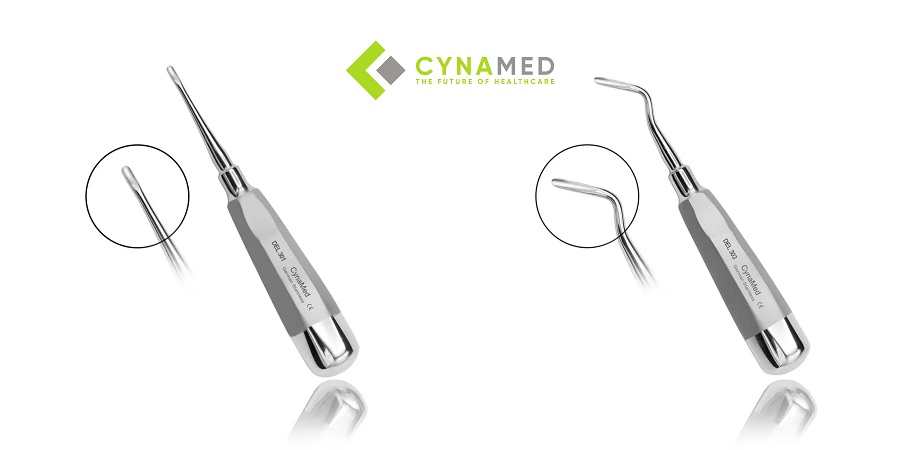
Dental elevators refer to hand instruments that are used to loosen the teeth before their extraction. They operate on the principle of exerting a controlled force between the tooth, periodontal ligament, and the adjacent bone. The aim is to develop mobility to enable safe removal.
An elevator can be used to:
- Sever or stretch periodontal ligament fibres.
- Mobilize a tooth that is difficult to grasp.
- Create space before forceps are applied.
Different Types of Dental Elevators for Tooth Extraction
Dental elevators are available in various shapes and designs, as there are teeth that are different in position, size, and root structure. The typical designs are straight elevators, curved elevators, and specialized root elevators. They each offer a varying working angle.
General luxation is commonly achieved with straight elevators, but curved or angled designs may be more effective in reaching specific locations. Root elevators can be employed when a fragment of root requires controlled mobilization.
The choice of dental extraction elevators is based on the tooth, access, anatomy of the root, and the method of extraction.
How Dental Extraction Elevators Help Loosen Teeth
The primary aim of an elevator is not to remove but to mobilize forcefully. The instrument can be used to enlarge the socket a bit and break up the periodontal ligament surrounding the tooth when positioned properly.
The good use requires:
- Correct instrument selection for the tooth and access.
- A stable fulcrum and controlled hand pressure.
- Awareness of nearby teeth, bone, and soft tissue.
- Avoiding unnecessary pressure that could cause damage.
The instrument is as important as good technique. They are to be used in accordance with the training of the clinician.
Choosing Dental Elevators Based on Tooth and Procedure
No elevator fits all extractions. Selection is based on the clinical scenario and tooth morphology. A straight elevator can be effective in simple cases of luxation, and a slimmer or steeper-angled one can be more convenient in cases where there is limited access.
Clinicians should consider:
- Tooth location and accessibility.
- Root shape, number, and condition.
- Amount of tooth structure available for engagement.
- Whether the procedure involves a retained root or difficult extraction.
Key Features to Look for in Dental Extraction Elevators
It is critical since the lifts will require being able to withstand constant pressure. Instruments that can endure this should be robust, resistant to corrosion, and have comfortable handles.
Such features include:
- Precise working ends for controlled placement.
- Strong construction for dependable performance.
- Ergonomic handles for better comfort and control.
- Smooth surfaces that are easier to clean and process.
- Appropriate sizes and shapes for different extraction needs.
Cleaning, Sterilization, and Proper Maintenance of Dental Elevators
The dental extraction elevators must be made from reusable material and should be cleaned and sterilized according to the guidelines provided by the manufacturer and those that are recommended by the dentist. Inspection will be necessary to ensure that the device is not worn out, corroded, or damaged before sterilization.
Instruments must be stored in a clean and dry place after processing and properly handled to preserve their condition. Where mentioned, disposable alternatives must not be reused.
Dental elevators are a very crucial component of most extraction surgeries, as they assist clinicians in loosening teeth and roots using controlled motions prior to their removal. The correct design of the work, the right technique, and the correct maintenance of instruments may help to provide effective, accurate dental care.
In the case of dental instruments, visit Cynamed. Have a closer look at its dental extraction elevators and select the instruments that will help support dental procedures. Visit Cynamed today and get the right tools to practice and make a confident choice of your instruments.