Professional Hat Digitizing Services vs Regular Embroidery Digitizing
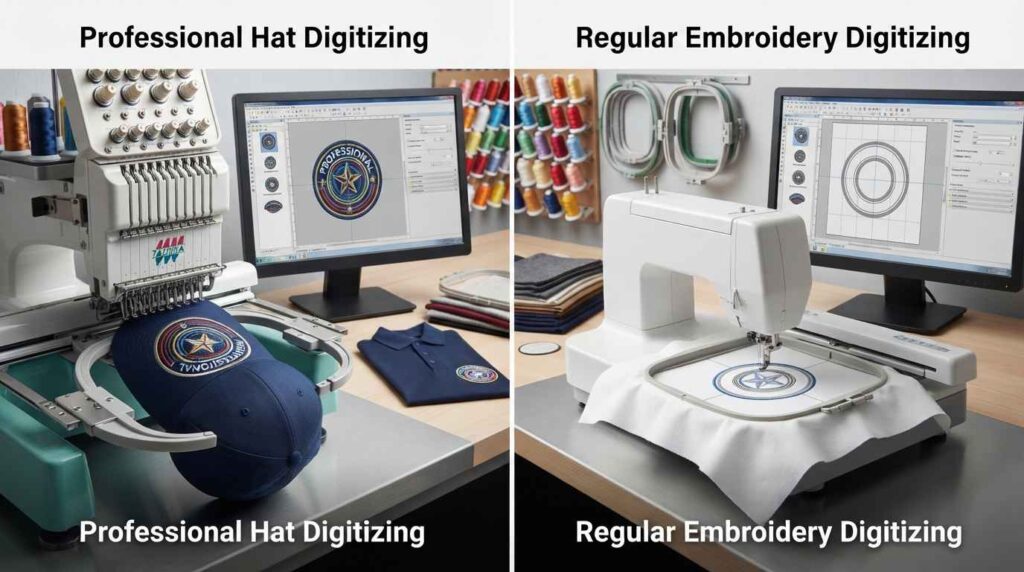
Embroidery digitizing converts artwork into stitch instructions that an embroidery machine can read, but not every embroidery project has the same technical requirements. Flat garments and caps behave differently during stitching, which means a design prepared for a shirt may not perform the same way on a curved cap. Professional hat digitizing services are specifically planned around cap construction, curvature, placement, and machine requirements, while regular embroidery digitizing is often prepared for flatter embroidery surfaces.
Understanding the differences between these two approaches can help businesses, apparel decorators, sports teams, and individuals select a suitable embroidery file for their intended application.
What Is Regular Embroidery Digitizing?
Regular embroidery digitizing involves converting artwork into a machine-readable embroidery file for applications such as shirts, jackets, bags, towels, uniforms, and other embroidery surfaces.
The digitizer determines stitch types, density, underlay, stitch direction, sequencing, thread colors, and other technical settings based on the artwork and intended material.
When the embroidery area is relatively flat, the design can be planned around a surface that does not have the same curvature as a cap crown.
What Is Hat Digitizing?
Hat digitizing is the preparation of an embroidery file specifically for caps and hats.
The digitizer must consider the curved crown, limited embroidery field, cap seams, material, frame or hoop, and direction in which the machine will stitch the design.
Because of these conditions, a cap design may require different stitch planning from a design intended for a flat garment.
Key Difference: Flat vs Curved Surfaces
The most important difference is the embroidery surface.
A shirt front or other flat area provides a relatively consistent surface for stitching. A cap crown curves around the shape of the wearer’s head.
As the embroidery moves across the curved area, the relationship between the needle, fabric, and design changes. This can influence registration and the appearance of certain design elements.
Professional hat digitizing takes this curvature into account during the preparation of the file.
Design Size and Available Space
Regular embroidery may have a relatively large working area, depending on the garment and machine.
Caps generally provide less usable embroidery space, particularly on the front panel. The design must fit within this area without interfering with seams or other structural features.
A professional hat digitizer evaluates the final dimensions before planning the stitch structure. Simply reducing a flat embroidery design does not always produce an appropriate cap file.
Stitch Direction Differences
Stitch direction is important in both types of digitizing, but the curved surface of a cap can make direction planning particularly important.
For flat embroidery, stitch directions can often follow the shapes of the artwork without needing to account for substantial curvature.
For caps, the digitizer may adjust directions so that different sections work more effectively across the curved surface.
Stitch Density Considerations
Density determines how closely stitches are placed within an area.
Regular embroidery files can use density settings based on the intended garment and design. Hat embroidery may require additional consideration because excessive stitching can create unnecessary stiffness or stress on the curved cap material.
If density is too low, coverage may be insufficient. If it is too high, the design may become unnecessarily heavy.
Professional digitizing balances coverage with the characteristics of the cap and the design dimensions.
Underlay Requirements
Underlay provides a foundation beneath the visible stitches and can help stabilize the embroidery area.
Both regular and hat digitizing may use underlay, but the appropriate structure can differ depending on the material and application.
Caps may require careful underlay planning because the crown can have a structured or flexible construction. The digitizer should consider the specific cap material rather than applying identical settings to every project.
Lettering on Caps vs Flat Garments
Lettering is common in both cap and regular embroidery. However, the limited area of a cap can make small text more challenging.
A business name, initials, or short phrase may need to be adjusted according to the available space and final embroidery dimensions.
Professional hat digitizing evaluates the actual stitch size of each character, including spacing, width, and stitch structure. This can help maintain readability.
Handling Detailed Artwork
Detailed artwork can be difficult to reproduce in any embroidery application, but the limited space on a cap can make the issue more noticeable.
Fine lines, tiny gaps, and small shapes may need simplification before they are converted into stitches.
For a flat garment, there may be more room to preserve certain details. A cap design may require more careful adjustment because the artwork is typically smaller.
Cap Seams and Construction
Cap construction can affect embroidery placement. Front panels, seams, structured crowns, closures, and other components can limit where the design can be stitched.
Regular embroidery on a flat garment may not have the same structural obstacles.
A professional hat digitizer considers these physical features when determining the design’s placement and dimensions.
Stitch Sequencing
Stitch sequencing determines the order in which the machine produces different elements of the design.
Both regular and hat embroidery require logical sequencing, but cap designs may benefit from more specialized planning because of their curved surface and limited embroidery field.
Proper sequencing can help manage registration and reduce unnecessary machine movement.
Machine and Hoop Compatibility
Regular embroidery can use different hoop sizes depending on the garment and machine.
Hat embroidery may involve specialized cap frames or attachments. The available embroidery field depends on the machine and setup.
Before digitizing, provide the machine information and required file format. Common embroidery formats include DST, PES, EXP, and JEF, although the correct format depends on the equipment.
Fabric and Material Differences
Regular embroidery can be performed on many materials, including cotton, polyester, denim, fleece, canvas, and other fabrics.
Caps can also use different materials, but their construction may include additional layers, structured panels, backing, or stiffeners.
The digitizing approach should take these characteristics into account because material behavior can influence density, underlay, and stitch structure.
Test Stitching Requirements
Test stitching can be useful for both regular and hat embroidery.
However, testing a cap design provides an opportunity to evaluate how the file behaves on the curved surface. Issues involving lettering, registration, density, and placement may become more apparent during actual stitching.
A sample can be reviewed before producing a larger quantity of caps.
When Regular Embroidery Digitizing May Be Suitable
Regular embroidery digitizing can be appropriate when the design will be stitched on relatively flat areas such as shirt fronts, jacket panels, bags, or other suitable surfaces.
The digitizer can prepare the file according to the fabric, design size, and embroidery equipment.
If the same artwork will later be used on a cap, it should not automatically be assumed that the original file will work without modification.
When Professional Hat Digitizing Is More Appropriate
Hat-specific digitizing is useful when the artwork will be embroidered on caps or other curved headwear.
It allows the file to be prepared around the specific conditions of cap embroidery, including the curved crown, limited embroidery area, cap construction, and available machine setup.
This can be particularly important for logos, small lettering, detailed graphics, and designs intended for repeated cap production.
Can the Same Design Be Used for Both?
Sometimes the same artwork can be used as the starting point for both applications, but the embroidery files may need different technical treatment.
A logo digitized for a flat shirt may require changes before being used on a cap. The stitch direction, density, underlay, sequencing, size, and other settings can be adjusted for the new application.
The artwork can remain visually consistent while the underlying embroidery instructions are adapted to the surface.
Common Problems When Using the Wrong File
Using a file that was not prepared for the intended surface can contribute to issues such as:
- Poor registration
- Distorted lettering
- Uneven coverage
- Excessive density
- Thread breaks
- Incorrect placement
- Fabric or cap distortion
These problems can also be caused by machine settings, thread tension, needles, stabilization, or other production factors. The embroidery file is one part of the complete production process.
How to Choose the Right Digitizing Approach
Start by identifying where the design will be embroidered. If it is intended for a cap, provide cap-specific information rather than treating it as a standard flat embroidery project.
Tell the digitizer the cap material, design dimensions, placement, machine format, and any lettering requirements.
For flat garments, provide the corresponding fabric and embroidery specifications. This allows the digitizer to prepare the file according to the actual application.
Final Thoughts
Professional hat digitizing services and regular embroidery digitizing share the same basic purpose: converting artwork into machine-readable stitches. The main difference is how the embroidery file is planned for the intended surface.
Hat digitizing requires attention to curved surfaces, limited space, cap construction, stitch direction, density, underlay, and placement. Regular embroidery digitizing can be prepared around flatter surfaces and different garment characteristics.
If the design will be used on a cap, providing cap-specific information helps ensure the embroidery file is prepared for that application. A design may begin from the same artwork, but its stitch instructions should be adapted to the surface and production conditions.
FAQs
Q1. What is the main difference between hat digitizing and regular embroidery digitizing?
Hat digitizing is specifically planned for curved caps and considers factors such as cap curvature, limited embroidery space, seams, and cap construction. Regular embroidery digitizing may be prepared for flatter surfaces.
Q2. Can I use a shirt embroidery file on a cap?
It may require adjustments before being used on a cap. Stitch density, direction, size, sequencing, and other settings may need to be modified for the curved surface.
Q3. Why does cap curvature matter?
The curved crown changes how the fabric interacts with the needle and stitches. Without appropriate planning, some areas may experience registration or appearance issues.
Q4. Does hat digitizing require different stitch density?
The appropriate density depends on the design and material. Cap embroidery may require adjustments to prevent unnecessary stiffness or excessive stitching while maintaining suitable coverage.
Q5. Is small lettering harder to embroider on caps?
Small lettering can be challenging because caps have limited embroidery space. Font selection, character spacing, dimensions, and stitch structure all affect readability.
Q6. Do cap seams affect embroidery placement?
Yes. Seams and panel construction can limit the usable embroidery area and should be considered when preparing the design.
Q7. Should I request a separate file for caps and shirts?
If the same artwork will be embroidered on both surfaces, separate technical files may be appropriate. Each file can be optimized for its intended material and embroidery conditions.