metal fabrication
If you have ever sat across from two quotes, one from a laser cutting shop and one from a waterjet shop, for what looks like the same job, you already know how confusing this comparison gets. The numbers are different. The lead times are different. And both shops will tell you their process is the right one for your part. So who do you believe?
The honest answer is that both processes are genuinely excellent in the right context. Neither one beats the other across the board. The question is never “which process is better” in the abstract. It is always “which process is better for this specific part, this specific material, and these specific requirements.” Get that distinction right and you stop second-guessing quotes and start making confident sourcing decisions.
Let us walk through both technologies properly and give you the framework to choose with confidence.
Understanding Both Processes Before Picking One
1. How Laser Cutting Works in Simple Terms
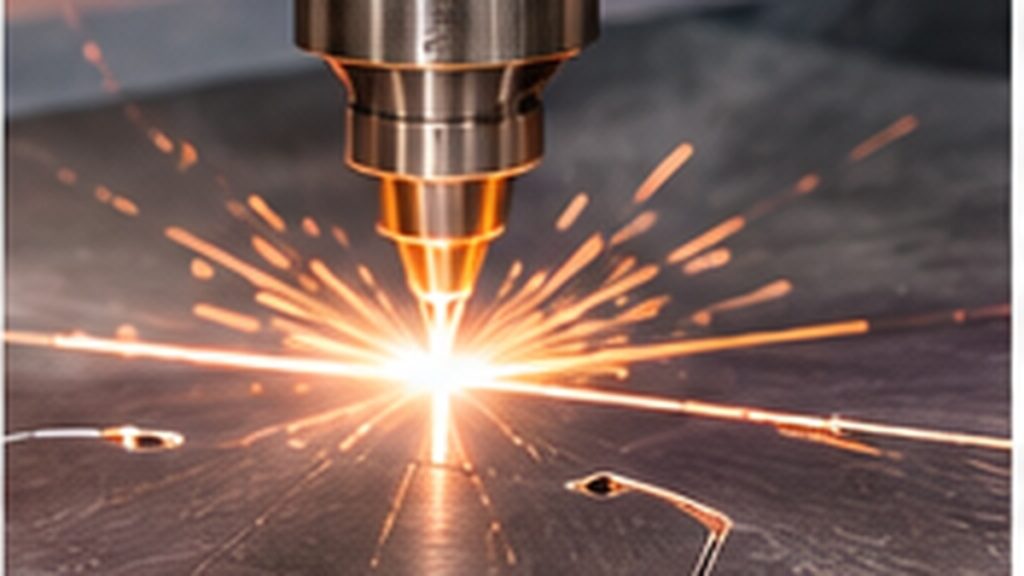
A laser cutter focuses an intense beam of light energy onto a very small point on the workpiece surface. That concentrated energy heats the material fast enough to melt and vaporize it, while an assist gas blows the molten material out of the cut zone, leaving a clean kerf behind. The cutting head moves under CNC control, tracing the part geometry with high accuracy.
Modern industrial fiber laser systems generate this beam through optical fiber amplification, producing a wavelength that metals absorb very efficiently. The result is a process that cuts metal at high speeds with excellent edge quality and tight tolerances, all driven by a compact, low-maintenance platform that integrates well with automated production environments.
2. How Waterjet Cutting Works in Simple Terms
Waterjet cutting uses a high-pressure stream of water, typically between 40,000 and 90,000 psi, forced through a tiny jewel orifice to create a cutting jet. For cutting hard materials, abrasive garnet is mixed into the stream at the nozzle, creating what is called abrasive waterjet cutting. The abrasive particles in the stream erode material away along the programmed cut path.
The critical difference from laser cutting is that waterjet is a cold process. No heat enters the workpiece. Material is removed mechanically by abrasion, not thermally by melting. That single distinction is what drives most of the meaningful differences between the two processes in practice.
3. Why the Comparison Matters for Your Project Budget
Choosing the wrong process for your part does not just affect quality. It affects total cost, lead time, secondary operation requirements, and sometimes whether the part is even manufacturable to your specification. A heat-sensitive material sent to a laser shop may require expensive post-processing to address distortion. An intricate thin sheet metal part sent to a waterjet may cost three times more than the laser alternative with no quality advantage.
Getting the process selection right at the start of your project is one of the highest-value decisions in the entire sourcing chain.
Where Laser Cutting Wins the Argument

1. Speed and Throughput on Thin to Mid-Range Material
On sheet metal and plate under roughly 15mm, laser cutting is faster than waterjet by a significant margin. A fiber laser moving at several meters per minute through 3mm stainless steel is doing something no waterjet can match on cycle time. For production environments where throughput matters, that speed advantage translates directly into lower per-piece cost and faster delivery.
When you are running hundreds or thousands of parts per week from sheet stock, the difference in cycle time between laser and waterjet is not a small consideration. It is often the dominant factor in process selection for metal fabrication work in the thin-to-mid thickness range.
2. Edge Quality and Dimensional Accuracy
Laser cutting produces a narrow, consistent kerf with smooth edges and a square cut face on thin to mid-range material. The focused beam creates a precise boundary between cut and uncut material, which results in dimensional accuracy that is difficult to match with abrasive waterjet on the same material range.
Waterjet edge quality is good but not laser-level good on thin metal. The abrasive stream creates a slightly rougher surface texture, and the jet tends to bow or lag at higher feed speeds, which introduces a taper on the cut edge that must be managed through slower cutting or post-processing. For parts where edge finish and tight dimensional control matter, laser is typically the cleaner answer in the material range where it competes.
3. Cost Efficiency on High-Volume Production Runs
Laser cutting machines have lower consumable costs than waterjet systems on metal cutting work. Waterjet consumes abrasive garnet continuously, which adds up fast on high-volume runs. The garnet, combined with the cost of high-pressure water, pump maintenance, and nozzle wear, makes waterjet operating costs per hour higher than laser for equivalent work on metal.
Why Per-Piece Cost Drops Dramatically at Volume
At low quantities, the difference in operating cost between laser and waterjet may not be the deciding factor. But at production volumes, that cost gap compounds quickly. A laser shop producing 500 identical parts per week in 4mm stainless steel will almost always deliver a lower per-piece cost than waterjet on the same job, and the laser parts will have better edge quality to boot. For commercial metal fabrication at scale, this is not a small advantage.
Where Waterjet Cutting Has the Clear Advantage

1. Heat-Sensitive Materials and No Heat-Affected Zone
This is waterjet’s most important advantage and the one that makes it irreplaceable in certain applications. Because waterjet removes material mechanically rather than thermally, the workpiece experiences no significant temperature rise during cutting. There is no heat-affected zone, no metallurgical changes to the material structure, no distortion from thermal gradients, and no recast layer on the cut surface.
For materials where any heat input is unacceptable, waterjet is often the only viable process. Hardened tool steels that cannot be re-annealed, pre-tempered spring steels, certain aluminum alloys sensitive to heat treatment degradation, and components where residual stress from thermal processing would compromise fatigue performance all point directly toward waterjet.
2. Extreme Material Thickness Without Compromise
Waterjet cuts thick material that laser simply cannot reach at acceptable quality levels. Mild steel plate at 100mm, stainless at 50mm, aluminum blocks at 75mm, these are all achievable with abrasive waterjet at reasonable production rates. The process does not fundamentally change as thickness increases the way laser does. There is no heat buildup, no kerf widening due to beam divergence, and no dross formation to deal with.
For heavy plate fabrication where thick cuts are the norm rather than the exception, waterjet holds a structural advantage that higher-power lasers can partially close but not entirely eliminate, particularly when edge quality at extreme thickness is part of the requirement.
3. Cutting Non-Metals, Composites, and Mixed Stacks
Waterjet cuts virtually any material. Stone, glass, rubber, foam, wood, carbon fiber, Kevlar, ceramics, and plastics all cut cleanly under the waterjet stream. Laser cutting handles some non-metals well, acrylic and certain plastics specifically, but many materials either reflect laser energy, burn rather than cut cleanly, or produce hazardous fumes during laser processing.
When Stacking Mixed Materials Makes Waterjet the Only Logical Choice
Some manufacturing operations need to cut through stacks of dissimilar materials in a single pass, a layer of titanium bonded to a composite substrate, or a rubber gasket material on top of a metal sheet. Laser cannot handle these mixed-material stacks because the optimal parameters for each material are completely different. Waterjet cuts through the entire stack in one pass without any of those conflicts. For operations that regularly work with layered or dissimilar material combinations, this capability is genuinely irreplaceable.
Head-to-Head Comparison Across Key Decision Factors
1. Tolerances and Precision: How Close Can Each Process Get?
Laser cutting on calibrated industrial systems holds tolerances in the plus or minus 0.05mm to 0.15mm range on thin to mid-range metal, making it the more precise process for sheet metal work in that thickness range. Waterjet holds plus or minus 0.1mm to 0.25mm under well-controlled conditions, with precision degrading somewhat on thicker material due to jet lag and deflection.
For applications requiring the tightest possible tolerances on metal sheet parts, laser has a real accuracy advantage. For thicker material or non-metals where laser cannot operate efficiently, waterjet’s tolerance capability is entirely adequate for most engineering applications.
2. Material Range: What Each Process Can and Cannot Touch
Laser cutting excels on metals across a wide thickness range and handles some plastics and organics well. It struggles with highly reflective metals like pure copper and gold at standard wavelengths, cannot cut tempered glass without cracking risk, and has limits on heat-sensitive materials.
Waterjet cuts almost anything that is not a material that degrades on water contact, and even then, abrasive-only cutting without water is possible in some specialized systems. The breadth of material compatibility is simply wider for waterjet, which is why shops that need to work across many different materials often keep waterjet capability alongside laser.
3. Operating Cost and Setup Time
Laser cutting has lower per-hour operating costs on metal cutting work than waterjet in most production scenarios. Garnet abrasive consumption is the biggest cost driver in waterjet and it adds up substantially. Laser systems do require optics maintenance and assist gas consumption, but total consumable costs typically run lower.
Setup time on both processes is similar for flat cutting work with good DXF files. Waterjet does not require material-specific parameter development to the same degree as laser, which can make setup simpler for low-volume mixed-material work. Laser setup is equally fast on familiar materials with established parameters.
4. Cut Speed Across Different Thicknesses
On material under 10mm, laser cuts faster. From 10mm to 25mm, the speed advantage shifts depending on material, laser power, and quality requirements. Above 25mm, waterjet generally maintains better practical cutting speed at acceptable quality levels. This crossover point is not a fixed number; it moves based on material type and the specific machines being compared.
Industry-Specific Guidance on Process Selection
1. Aerospace and Defense Manufacturing
Aerospace work involves a wide range of materials and a consistent demand for tight tolerances, full traceability, and zero compromise on material integrity. Laser cutting handles the majority of sheet metal and thin plate work efficiently. Waterjet steps in for heat-sensitive alloys, composite structures, and very thick titanium or aluminum plate sections.
Many aerospace fabricators maintain both capabilities for exactly this reason. The process gets selected by part drawing, not by habit or equipment availability.
2. Medical Device Fabrication
Medical device manufacturing shares some characteristics with aerospace but adds the complication of biocompatible materials that may be particularly sensitive to heat, contamination, or surface alteration. Laser cutting is widely used for stainless steel, titanium, and nitinol components at the thickness ranges typical in device manufacturing. Waterjet’s cold cutting is preferred for applications where any thermal effect on material properties is unacceptable.
3. Architectural, Signage, and Decorative Work
Laser cutting dominates architectural metal work and decorative signage. The edge quality, intricate detail capability, and speed on thin to mid-range material make it the natural choice for these applications. Waterjet is used here mainly when the design involves non-metals like stone, glass, or very thick plate where laser cannot perform adequately.
When Aesthetics Drive the Process Decision
For decorative and architectural applications, the visual quality of the cut edge is often the primary selection criterion. Laser edges on thin stainless, aluminum, and mild steel are visually superior to waterjet edges for most decorative applications. When the part will be seen up close and the cut edge is part of the finished appearance, laser almost always wins this comparison.
How to Make the Final Call for Your Specific Part
1. The Four Questions to Ask Before You Decide
Before you commit to either process, run through these four questions. What material and thickness am I cutting? Does heat input create any risk for this material or application? What edge quality and tolerance do I need on the finished part? What quantity am I producing and what is my total budget?
Answer those four questions honestly and the right process usually becomes obvious. Heat risk points to waterjet. Tight tolerances on thin metal point to laser. Very thick material points to waterjet. High volume production on metal sheet points to laser. The framework is not complicated; the challenge is applying it honestly rather than defaulting to whichever process you are most familiar with.
2. When Using Both Processes on One Part Makes Sense
Some parts benefit from both processes in sequence. Waterjet rough-cuts a heavy plate to near-net shape, then laser cutting adds fine detail or tight-tolerance features to specific areas. Or laser cutting handles the majority of parts on a sheet, and waterjet handles a specific feature in the same part that laser cannot produce cleanly.
This combination approach is not common, but in precision manufacturing environments where the application demands it, using both processes intelligently produces results that neither could achieve alone.
Conclusion
Laser cutting and waterjet cutting are both mature, capable technologies that excel in different situations. Laser wins on speed, edge quality, and cost efficiency for metal cutting in thin to mid-range thicknesses at production volumes. Waterjet wins on heat-sensitive materials, extreme thickness, and broad material compatibility. The best choice is always the one that matches the specific requirements of your part, not the one that happens to be most available or most familiar. Know your material, know your quality requirements, and find a shop experienced enough to give you an honest recommendation rather than just telling you what their equipment can do.
Frequently Asked Questions
- Is laser cutting more accurate than waterjet?
On thin to mid-range metal, yes. Laser typically holds tighter tolerances than waterjet in that thickness range. Above 25mm, waterjet often matches or exceeds laser accuracy. - Which process is cheaper for small quantities?
For small quantities on standard metals, laser cutting generally costs less per part due to lower operating costs and faster cycle times on thin material.
- Can waterjet cut the same materials as laser?
Waterjet cuts a broader range of materials including heat-sensitive metals, composites, glass, and stone that laser cannot handle effectively. - Does waterjet leave a better edge than laser?
On thin metal, laser typically produces a cleaner, smoother edge. On thick material or non-metals, waterjet edge quality is often superior to what laser can achieve. - Which process is better for titanium?
Both work on titanium, but heat-sensitive titanium applications often favor waterjet to avoid any heat-affected zone. Laser is faster and more cost-effective on thin titanium sheet where HAZ is acceptable.