Moisture can quietly damage products during storage and transportation. It can cause metal to rust, electronics to develop problems, packaging to weaken, and food or other goods to lose their quality. One of the simplest ways to manage moisture in enclosed packaging is silica gel
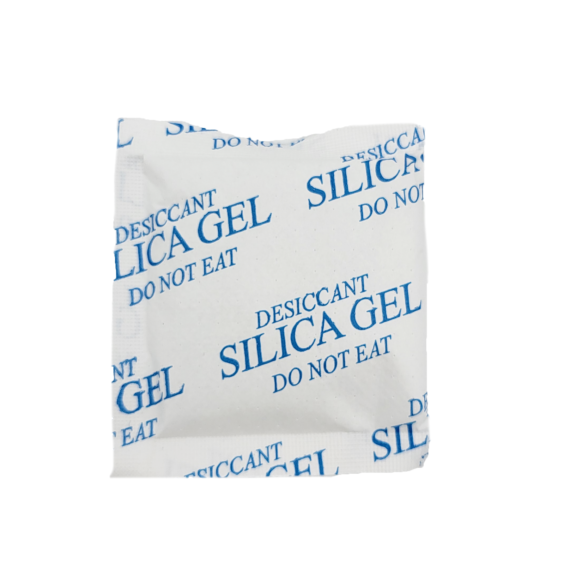
You have probably seen small packets marked “Do Not Eat” inside shoe boxes, bags, electronics packaging, medicine containers, and other products. These small packets contain a desiccant that helps control humidity inside the package.
Although silica gel looks simple, it has a surprisingly useful structure that allows it to attract and hold water vapour from the surrounding air. It is available in different forms, sizes, and packaging options for applications ranging from consumer products to industrial storage.
This guide explains what silica gel is, how it works, where it is used, the different types available, how to choose it, and how to handle it safely.
What Is Silica Gel?
Silica gel is a porous, granular form of silicon dioxide that is used as a desiccant to control moisture. Despite its name, it is normally a solid rather than a liquid gel.
Its structure contains many tiny pores and a large internal surface area. These characteristics allow it to attract and hold water molecules from the surrounding air.
It is commonly supplied as:
- Small sachets
- Packets
- Beads
- Granules
- Canisters
- Bulk material
- Sachets designed for specific packaging sizes
Silica gel is often placed inside sealed or semi-sealed packaging where moisture needs to be controlled.
The amount required depends on factors such as package volume, humidity, product type, packaging material, and expected storage period.
How Does Silica Gel Work?
Silica gel works through a process called adsorption.
Adsorption is different from absorption. Absorption means a substance is taken into the interior of another material, while adsorption involves molecules attaching to the surface.
Because silica gel has an extremely large internal surface area created by its porous structure, it can hold significant amounts of water vapour on its surface.
When a silica gel packet is placed inside a closed package, it begins attracting moisture from the air. This reduces the amount of water vapour available inside the package.
The process continues until the silica gel reaches its moisture-holding capacity or the surrounding conditions change.
This makes it useful for protecting products during storage, transportation, and distribution.
Why Is Moisture Control Important?
Moisture can affect products in several ways.
Metal components may corrode or develop rust. Electronics can be affected by condensation and humidity. Paper products may become damp or develop mould under suitable conditions. Leather can suffer from moisture-related problems, while some food and pharmaceutical products require carefully controlled humidity.
Packaging alone does not always provide sufficient protection because air inside the package may already contain moisture.
Adding an appropriate desiccant can help manage that moisture.
This is particularly important when products are transported through different climates, stored for long periods, or packaged in environments with high humidity.
Main Benefits of Silica Gel
Controls Moisture
The primary purpose of silica gel is moisture control.
It can reduce humidity within enclosed packaging by adsorbing water vapour from the surrounding air.
This can help protect moisture-sensitive products during storage and transportation.
Helps Prevent Corrosion
Moisture is one of the factors that can contribute to corrosion.
Placing an appropriate quantity of desiccant inside packaging can help create a drier environment around metal products and components.
This is particularly useful for tools, machinery parts, electronics, hardware, and other metal items.
Protects Electronics
Electronic components can be sensitive to moisture.
High humidity and condensation can create problems during storage and transportation.
Silica gel packets are commonly included in packaging for electronics, cameras, computer accessories, electrical components, and similar products to help control humidity.
Lightweight
Silica gel is relatively lightweight, making it practical for packaging applications.
Small sachets can be placed inside boxes, bags, containers, and product packaging without adding significant weight.
This is useful for businesses where shipping weight matters.
Easy to Use
Using silica gel generally does not require complex equipment.
A suitable sachet, canister, or other desiccant package can simply be placed inside the packaging.
For industrial applications, businesses may use calculated quantities based on the packaging volume and required moisture-control level.
Useful for Long-Term Storage
Silica gel can be useful when products need to remain protected for extended periods.
It can help maintain a lower-humidity environment inside appropriately sealed packaging.
The effectiveness depends on the amount of desiccant, package integrity, environmental conditions, and storage duration.
Common Uses of Silica Gel
Silica gel has applications across many industries.
Electronics Packaging
Electronics are commonly packaged with moisture-control materials.
Small desiccant packets can help reduce humidity inside boxes containing cameras, accessories, circuit boards, devices, and electronic components.
The exact protection required depends on the product and packaging design.
Clothing and Footwear
Shoe boxes, bags, and clothing packaging may contain silica gel packets.
The purpose is to help control moisture during storage and shipping.
This can be particularly useful when products spend extended periods in warehouses or pass through humid environments.
Pharmaceutical Packaging
Moisture can affect certain medicines and healthcare products.
Desiccants may be included in packaging to help maintain appropriate environmental conditions.
Pharmaceutical applications require careful product selection, packaging validation, and compliance with applicable requirements.
A general-purpose desiccant should not automatically be used for a regulated pharmaceutical application.
Food Packaging
Some packaged foods use desiccants or other moisture-control systems.
The purpose may be to help protect product quality or manage humidity inside the package.
However, not every desiccant is suitable for direct or indirect food-contact applications. Food manufacturers should use products that meet the applicable requirements for their intended use.
Industrial Components
Manufacturers and distributors may use desiccants when packaging:
- Metal parts
- Bearings
- Tools
- Machinery components
- Electrical components
- Automotive parts
- Precision equipment
Reducing moisture exposure can help protect products while they are stored or transported.
Leather Products
Leather goods can be affected by excessive moisture during storage.
Desiccant packets can help manage humidity inside packaging for items such as shoes, handbags, belts, and accessories.
The amount and type of moisture control should be appropriate for the product.
Documents and Archives
Moisture can damage paper documents, photographs, books, and other materials.
Desiccants can sometimes be used in storage containers to help manage humidity.
For valuable archives, however, professional environmental controls are generally more appropriate than relying solely on packets.
Types of Silica Gel
Different types are available for different applications.
White Silica Gel
White silica gel is a common form of desiccant.
It is generally supplied as beads or granules and is widely used in packaging and moisture-control applications.
Blue Indicator Silica Gel
Some silica gel products contain a moisture indicator that changes colour as the material becomes saturated.
Traditional cobalt chloride-based indicators have been used historically, but cobalt chloride presents health and environmental concerns and is restricted or discouraged for many applications.
Businesses should check the safety data and regulatory status of indicator materials before selecting them.
Orange Indicator Silica Gel
Orange indicator products are available as alternatives to traditional cobalt-based indicators.
The colour changes as moisture is adsorbed, allowing users to visually estimate when the desiccant needs regeneration or replacement.
The exact colour transition depends on the indicator formulation.
Self-Indicating Silica Gel
Self-indicating silica gel contains a moisture-sensitive indicator that changes appearance as moisture loading increases.
This can make monitoring easier because users do not need specialized equipment to check the desiccant visually.
Silica Gel Packets
Packets are among the most common forms of silica gel.
They contain a measured quantity of desiccant inside a porous sachet material that allows water vapour to reach the silica gel while keeping the granules contained.
Packet sizes vary considerably.
Small packets may be suitable for shoes, bags, or small electronic products, while larger sachets may be used for boxes, equipment, machinery, or shipping containers.
The correct packet size should be selected based on the moisture load and package conditions rather than simply choosing the smallest available option.
How Much Silica Gel Do You Need?
There is no single quantity that works for every package.
The required amount can depend on:
- Package volume
- Type of packaging
- Initial humidity
- Product moisture content
- Storage duration
- Transportation conditions
- External humidity
- Required moisture level
For simple consumer packaging, manufacturers often provide recommended packet sizes.
For industrial packaging, a more detailed calculation may be necessary.
Using too little desiccant may provide insufficient moisture control, while using excessive amounts can increase packaging costs without providing a meaningful additional benefit.
How to Use Silica Gel Correctly
Using silica gel is straightforward, but placement and packaging quality matter.
Place the desiccant inside the package with the product.
The package should be sufficiently sealed so that the desiccant can control the moisture inside rather than constantly receiving new humid air from outside.
Do not open or damage the sachet. The silica gel should remain contained inside its intended packaging.
For larger containers, distribute desiccant appropriately rather than placing the entire quantity in one location when the packaging design calls for multiple packets.
Always follow the supplier’s recommendations for the specific application.
Can Silica Gel Be Reused?
Some silica gel products can be regenerated and reused.
Regeneration typically involves heating the material under controlled conditions to remove the moisture it has adsorbed.
The exact temperature, time, and method depend on the product.
Not every silica gel packet is suitable for regeneration. The packet material, indicator chemicals, and manufacturer’s instructions must be considered.
Never heat an unknown packet simply because it contains silica gel. Check the product information first.
Industrial desiccant products may be designed specifically for repeated regeneration, while small consumer packets may be intended for disposal after use.
How to Know When Silica Gel Is Saturated
Ordinary silica gel may not provide a visible indication when it reaches its moisture capacity.
Indicator silica gel can make this easier.
Depending on the formulation, the material may change colour as it adsorbs moisture.
For example, some indicator products change from one colour to another as moisture increases. The exact colour sequence depends on the indicator used.
Always follow the supplier’s instructions rather than assuming that a particular colour means the same thing for every product.
Is Silica Gel Toxic?
Silica gel itself is generally considered chemically stable and is commonly used as a desiccant.
However, the small packets found in consumer products are labelled “Do Not Eat” because the packet and its contents are not intended to be consumed.
The packet can also present a choking hazard, particularly for children and animals.
Some indicator formulations may contain additional chemicals that require specific handling considerations.
Always check the product’s safety information, especially when using industrial or indicator-grade desiccants.
What Happens If You Eat Silica Gel?
Accidentally swallowing a small amount of ordinary silica gel is generally not expected to cause systemic poisoning, but it should not be consumed.
The larger concern with small packets can be choking, especially in young children.
If someone swallows a packet, particularly a large amount or an indicator product, seek appropriate medical or poison-control advice and provide the product packaging or label information if available.
Do not intentionally consume silica gel.
How Should Silica Gel Be Stored?
Unused silica gel should be protected from moisture.
Keep sealed packets or containers in a dry environment until they are ready for use.
If the material is exposed to humid air for a long period before being placed into packaging, it may adsorb moisture prematurely and have less capacity available for the intended application.
For bulk desiccant, use an airtight container where practical.
Follow the supplier’s storage recommendations for temperature, humidity, packaging, and shelf life.
Silica Gel vs Other Desiccants
Silica gel is only one type of desiccant.
Other moisture-control materials include molecular sieves, activated clay, and calcium chloride.
Each material has different moisture capacity, operating characteristics, regeneration requirements, and suitable applications.
Silica gel is popular because it is easy to package, relatively stable, and effective across many common humidity-control applications.
Molecular sieves may be selected when very low humidity levels are required. Other desiccants may be preferred for high moisture capacity or specialized industrial applications.
The correct choice depends on the environment and moisture-control requirements.
How Businesses Can Choose the Right Silica Gel
Businesses should consider several factors before purchasing desiccants in bulk.
Application
Identify what you are protecting.
Electronics, metal components, pharmaceuticals, food, documents, and consumer products can have different requirements.
Package Size
A larger package generally requires more desiccant than a small box or pouch.
Storage Period
Long-term storage may require more careful moisture-control planning than short-term shipping.
Environmental Conditions
Consider the humidity and temperature the package will experience during storage and transportation.
Indicator Requirements
If staff need to monitor moisture loading visually, an indicating product may be useful.
Regulatory Requirements
For food, pharmaceuticals, medical products, or other regulated applications, select products that meet the relevant requirements.
Common Mistakes When Using Silica Gel
Using Too Little Desiccant
An undersized packet may become saturated before the end of the storage period.
Leaving Packaging Open
Silica gel works best when moisture exposure is controlled. Leaving the product packaging open can continually introduce humid air.
Storing Unused Packets Incorrectly
If packets are left exposed to humid air, they may adsorb moisture before use.
Assuming All Silica Gel Is the Same
Different formulations and indicators have different characteristics.
Always check the product specification.
Heating Packets Without Instructions
Some silica gel can be regenerated, but not every packet or indicator can safely be heated.
Follow the manufacturer’s instructions.
Frequently Asked Questions
What is silica gel used for?
Silica gel is primarily used to control moisture. It is commonly placed inside product packaging to help protect electronics, metal components, clothing, footwear, pharmaceuticals, food packaging, and other moisture-sensitive goods.
Does silica gel absorb water?
Silica gel primarily adsorbs water vapour onto its large internal surface area. It does not work in exactly the same way as a sponge that absorbs liquid water.
Is silica gel safe?
Silica gel is generally stable when used as intended, but it should not be eaten. Small packets can also present a choking hazard, and some indicator formulations require additional handling precautions.
Can silica gel be reused?
Some types can be regenerated by controlled heating. Whether a particular product can be reused depends on the silica gel, packet material, indicator, and manufacturer’s instructions.
How long does silica gel last?
Its effective life depends on the amount of moisture it encounters and its storage conditions. A packet may become saturated quickly in a humid environment or last much longer inside a well-sealed package.
What colour is silica gel?
Silica gel can be white, clear, orange, blue, or another colour depending on the formulation and whether it contains a moisture indicator.
Why does silica gel change colour?
Indicator silica gel contains a moisture-sensitive indicator. The colour change provides a visual indication that the material has adsorbed moisture. The exact colour change depends on the indicator formulation.
Can I put silica gel in my shoe?
Yes, a suitable silica gel packet can be placed inside footwear to help control moisture. The packet should remain intact and should not be opened.
Can silica gel prevent rust?
It can help reduce humidity inside sufficiently sealed packaging, which may help reduce conditions that contribute to corrosion. It does not remove existing rust.
Can silica gel protect electronics?
Silica gel can help control moisture inside electronics packaging. It is commonly used during storage and transportation of moisture-sensitive electronic products and components.
Is silica gel biodegradable?
Silica gel itself is not generally considered biodegradable in the same way as organic materials. Disposal requirements depend on the product formulation and local waste-management rules.
Can silica gel be used with food?
Only use a desiccant specifically intended and suitable for the relevant food-packaging application. Not every silica gel product is approved for use around food.
Final Thoughts
Silica gel is a simple but highly effective moisture-control material used across consumer, commercial, and industrial applications. Its porous structure allows it to adsorb water vapour, helping create a drier environment inside appropriately sealed packaging.
From electronics and footwear to metal components, pharmaceuticals, food packaging, and industrial equipment, the right desiccant can help protect products from humidity-related problems during storage and transportation.
Choosing the correct product is important. Consider the package size, environmental conditions, storage period, required moisture level, indicator type, and applicable regulations before purchasing.
Used correctly, silica gel can provide a convenient and practical way to manage moisture and help maintain product quality throughout storage, shipping, and distribution.