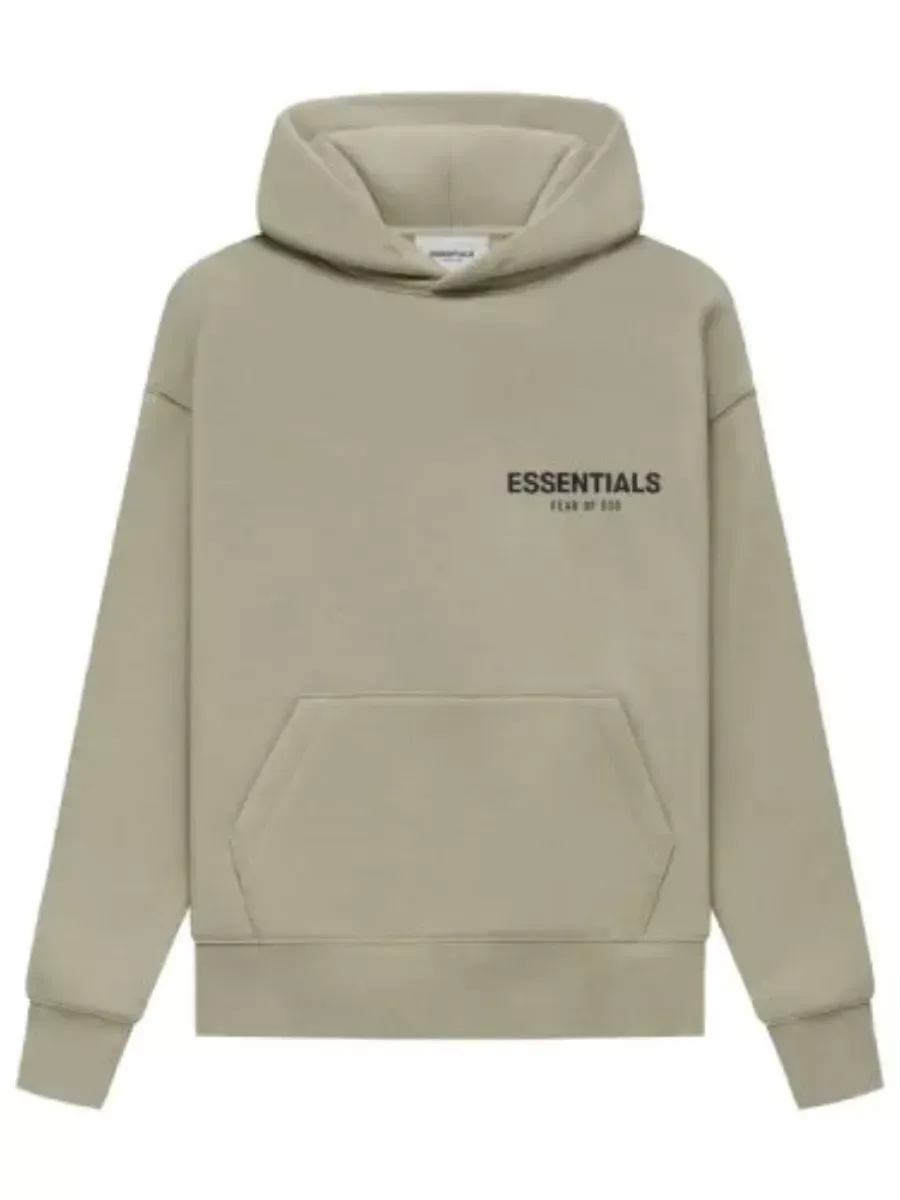
Essentials Hoodie: The Complete 2026 Guide
Essentials Hoodie: The Complete 2026 Guide to America’s Favorite Everyday Luxury
Walk through any American high school parking lot, college quad, or weekend farmers market, and you will see it. A boxy silhouette. Muted earth tones. The small, understated “Essentials” text across the chest. It does not scream for attention. It does not need to.
The Essential Hoodie has quietly become the uniform of a generation that values comfort without sacrificing presence. It is the piece that made “affordable luxury” more than a marketing phrase. But what actually makes this specific hoodie different from the hundreds of other options competing for space in your closet?
This guide breaks down everything you need to know — the design philosophy, the sizing reality, how to spot fakes, and how to care for it so it lasts. No fluff. Just the information that actually matters before you click “add to cart.”
What Is the Essentials Hoodie, Really?
Essentials is not a standalone brand that appeared overnight. It is the diffusion line of Fear of God, the Los Angeles-based luxury label founded by Jerry Lorenzo in 2013. While mainline Fear of God pieces often retail for $395 to over $1,000, Essentials was created to bring that same aesthetic language — the oversized proportions, the neutral palette, the elevated basics — to a price point regular people can justify.
The hoodie launched in 2018 and quickly became the flagship product of that concept. It proved that you could make something accessible without making it feel cheap. That balance is rarer than it sounds.
The Design DNA That Sets It Apart
Most hoodies you own were designed to fit a certain way: snug through the chest, standard shoulder seams, maybe a little taper at the waist. The Essentials Hoodies ignores almost all of those conventions.
It features a deliberately oversized, boxy silhouette with dropped shoulder seams and extra room through the body. This is not a sizing error. It is the entire point. The fit is meant to look intentional and relaxed, not sloppy. When you see someone wearing it well, the hoodie drapes rather than clings. It reads as considered rather than careless.
Branding stays minimal. You get a small “Essentials” or “Fear of God” wordmark — sometimes just a subtle rubberized label on the hood or a printed graphic on the chest or back. In a streetwear market crowded with loud logos and aggressive graphics, that quiet restraint has become its biggest flex.
The Fabric and Construction: Why It Feels Different
Pick up an authentic Essentials T-Shirts, and the first thing you notice is the weight. These are typically constructed from a heavyweight cotton-polyester fleece blend, often in the 380gsm range or higher. For context, a standard department store hoodie usually sits somewhere between 250 and 300gsm.
That extra weight serves two purposes. First, it makes the hoodie genuinely warm without being suffocating. Second, it gives the fabric enough structure to hold the boxy shape rather than collapsing into a shapeless sack after a few washes. The heavyweight cotton resists clinging to your body because the fabric’s own weight pulls it downward in straight vertical lines.
The hood itself often features a double-layer construction that holds its shape whether worn up or down. The ribbed cuffs and hem maintain tension without digging in. These are the kinds of details that separate a garment built to last from something designed to be replaced next season.
Sizing: The One Thing You Must Get Right
Here is where most first-time buyers make their mistake.
Essentials Hoodies run intentionally oversized. This is not a case of “order your normal size and hope for the best.” The design system is built around a boxy chest, dropped shoulders, and a controlled body length that hits right around the hip.
For most people, the question is not whether to size down, but how much.
-
If you want the full, intended streetwear silhouette (roomy chest, dramatic drop shoulder), order true to size.
-
If you want a cleaner, slightly more fitted look that still preserves the boxy structure, size down one.
-
Never size down two. The proportions break. The dropped shoulder effect starts to look mismatched against a chest that now reads almost fitted.
Slim builds often find that true-to-size adds welcome dimension. Athletic or broad-shouldered builds should almost always stay true to size to avoid tightness across the shoulders.
And yes — the sweatpants run big too. Size down one from your normal trouser size to keep the proportions coherent if you are building a matching set.
Real vs. Fake: How to Protect Yourself
The popularity of Essentials created a predictable problem: a flood of counterfeits. Some are obvious. Others are getting dangerously good.
Here are the authentication signals that actually matter:
The weight test. A genuine Essentials Hoodie feels substantial in your hands. Counterfeits often use thinner cotton-poly blends that feel flimsy or slick. If it feels light and cheap, it probably is.
The stitching. Look at the seams along the pouch pocket, hood, sleeves, cuffs, and waistband. Authentic pieces have clean, even stitching with no loose threads or blown seams. Fakes frequently show uneven tension or skipped stitches.
The hood. On a real Essentials Tracksuit, the hood edges do not fully close when laid flat. This is an intentional design detail. Counterfeits often have hoods that overlap when spread out.
The cuffs. Authentic ribbed cuffs are thick, sturdy, and hold their shape. Fake cuffs tend to be thin and overly stretchy.
The price. New Essentials Hoodies generally retail between $130 and $200 depending on the style. If someone offers you a “brand new authentic” hoodie for $50, you already know the answer.
The seller. Legitimate retailers and resale platforms use secure HTTPS connections. If the site is missing the “s” in “https,” walk away.
How to Care for Your Essentials Hoodie So It Lasts
You spent real money on this. A few simple habits will keep it looking right for years.
Wash it inside out. This is non-negotiable, especially if your hoodie has a rubberized logo or flocked graphic. The inside-out position puts fabric between the logo and the drum during agitation, dramatically reducing friction damage.
Use cold water only. Warm water activates the thermal stress that weakens the adhesive bond on rubberized logos. Hot water accelerates it further. Cold water is the only safe option.
Skip the dryer entirely. The tumble dryer produces the highest sustained heat exposure your hoodie will ever face — often 125°F to 150°F or more. That is enough to delaminate logo edges in a single cycle and shrink heavyweight cotton in ways you cannot undo. Lay it flat or hang it to dry.
Use a gentle liquid detergent. Harsh detergents with enzymes and optical brighteners degrade the adhesive chemistry on printed logos over time. Woolite or a similar delicate formula works well. Avoid pods, which concentrate detergent in one spot early in the cycle.
Do not bleach. Do not dry clean. These are unnecessarily aggressive treatments that the fabric and graphics do not need.
Top 10 FAQs About the Essentials Hoodie
1. Do Essentials Hoodies run big?
Yes — they run intentionally oversized, so size down one if you want a cleaner fit or stay true to size for the full boxy silhouette.
2. What is the price range for an Essentials Hoodie?
New hoodies typically retail between $130 and $200 depending on the style and season.
3. Are Essentials and Fear of God the same brand?
Essentials is a diffusion line under Jerry Lorenzo’s Fear of God label, launched in 2018 as a more accessible alternative to the mainline collection.
4. How can I tell if an Essentials Hoodie is fake?
Check the weight, stitching quality, hood shape (edges should not fully close), cuff tension, and price — anything dramatically under retail is almost certainly counterfeit.
5. Will an Essentials Hoodie shrink in the wash?
It can shrink significantly if washed in warm or hot water or machine dried; cold water and air drying prevent measurable shrinkage.
6. What is the best way to wash an Essentials Hoodie?
Wash inside out in cold water on a gentle cycle with mild detergent, then air dry flat or hanging.
7. Is the Essentials Hoodie warm enough for winter?
The heavyweight 380gsm+ fleece provides substantial warmth, but for freezing temperatures you will likely want a jacket layered over it.
8. Can I put my Essentials Hoodie in the dryer?
No — the dryer heat damages logos and causes shrinkage; always air dry instead.
9. Why is the Essentials Hoodie so popular?
It combines a distinctive oversized silhouette, heavyweight construction, and minimalist branding at a price point far below mainline luxury streetwear.
10. Does the Essentials Hoodie fit the same as mainline Fear of God?
No — Essentials is noticeably less exaggerated in its oversized proportions than mainline Fear of God, which tends toward more dramatic volume.
Final Thoughts:
The Essentials Hoodie sits in a specific sweet spot that few garments manage to occupy. It feels more considered than fast fashion. It costs a fraction of true luxury. And it has a visual identity — the boxy cut, the muted tones, the quiet branding — that makes it instantly recognizable without being obnoxious.
It is not the cheapest hoodie you can buy. But it is one of the few that will still look and feel like a deliberate choice after a year of regular wear. If you understand the sizing, protect yourself from fakes, and treat it with basic care, it earns its place in your rotation. That is the definition of essential.