For businesses, plumbing problems are rarely minor inconveniences. A blocked drain can affect customers, a leaking pipe can damage stock or equipment, and a malfunctioning commercial bathroom can disrupt daily operations. For this reason, choosing the right commercial plumbing provider requires more than searching for the first company that appears online.
Businesses looking for the best commercial plumbing companies near me should consider experience, response times, technical capabilities, compliance, communication, and the ability to handle both routine maintenance and urgent repairs. In Melbourne, where commercial properties range from retail stores and offices to restaurants, warehouses, and industrial facilities, plumbing requirements can vary significantly.
A reliable commercial plumbing service should understand these differences and provide practical solutions that protect business operations while reducing the risk of recurring problems.
What Makes a Commercial Plumbing Company Reliable?
Commercial plumbing is different from residential plumbing. A business may have multiple bathrooms, larger drainage systems, hot-water equipment, grease traps, backflow prevention devices, or complex pipe networks. The plumbing system may also need to operate continuously during business hours.
When comparing a commercial plumbing company Melbourne businesses can rely on, several factors deserve attention.
1. Commercial Experience
Experience with commercial properties is one of the most important considerations. A plumber who primarily works on residential properties may not have the equipment, knowledge, or workflow required for larger commercial systems.
Look for providers familiar with:
- Retail and shopping premises
- Restaurants and cafés
- Offices and commercial buildings
- Warehouses and industrial sites
- Strata and property-managed buildings
- Schools and community facilities
- Renovation and fit-out projects
Commercial experience also helps plumbers identify potential problems before they become expensive emergencies.
2. Emergency Response Capability
Some plumbing problems cannot wait until the next business day. Burst pipes, major drainage blockages, overflowing toilets, and serious water leaks can quickly create operational and safety issues.
Businesses should therefore ask prospective providers about their emergency response procedures. Important questions include:
- Is emergency plumbing available outside normal hours?
- How quickly can technicians generally attend?
- Does the company handle commercial emergencies?
- Can the plumber isolate the source of a leak?
- What equipment is available for difficult blockages?
A fast response does not replace quality workmanship, but it can significantly reduce the potential impact of a plumbing emergency.

Understanding Local Commercial Plumbing Needs in Melbourne
Melbourne businesses operate across a wide range of building types, ages, and industries. Older commercial properties may contain ageing pipework, while recently renovated premises can have modern fixtures and more complex plumbing installations.
This makes local knowledge particularly useful.
A local commercial plumbing service near me should ideally understand common issues associated with Melbourne commercial properties, including drainage problems, water pressure concerns, pipe deterioration, blocked sewer lines, hot-water failures, and plumbing requirements during renovations.
Local service providers can also become familiar with a property’s plumbing history. This can make future troubleshooting more efficient because recurring problems may be easier to identify.
Preventive Maintenance Matters
One of the most effective ways businesses can reduce plumbing disruption is through preventive maintenance.
Instead of waiting for a pipe to burst or a drain to become completely blocked, property managers can arrange periodic inspections. Depending on the type of business, maintenance may include:
- Checking visible pipes and connections
- Inspecting taps, toilets, and commercial fixtures
- Testing water pressure
- Cleaning drainage systems
- Inspecting hot-water systems
- Looking for signs of leaks
- Assessing sewer and stormwater drainage
- Reviewing recurring plumbing faults
Preventive maintenance is particularly valuable for businesses that depend heavily on water and drainage systems, such as restaurants, hospitality venues, healthcare facilities, and retail premises.
Technology Is Changing Commercial Plumbing
Modern plumbing services increasingly use technology to diagnose problems more efficiently. Traditional methods still have an important role, but advanced diagnostic equipment can help locate issues without unnecessary excavation or property disruption.
CCTV drain inspections are one example. A small camera can be inserted into a drainage line to identify blockages, damaged pipes, tree-root intrusion, or other structural problems.
Other useful technologies and techniques may include:
- Electronic leak detection
- High-pressure water jetting
- Drain inspection cameras
- Pipe location equipment
- Modern water-efficient fixtures
- Digital inspection and reporting systems
Technology is particularly useful when a business experiences a recurring drainage problem. Rather than repeatedly treating the symptom, inspection equipment can help determine the underlying cause.
For example, a drain that repeatedly blocks may have a damaged section of pipe, inappropriate pipe gradients, root intrusion, or accumulated debris. Identifying the actual cause can lead to a more durable solution.
Common Commercial Plumbing Challenges and Practical Solutions
Commercial properties often experience plumbing issues because of high usage, ageing infrastructure, inappropriate disposal practices, or insufficient maintenance.
Blocked Drains
Blocked sinks, floor drains, toilets, and sewer lines are common commercial problems. In food-service environments, grease and food waste can contribute to drainage restrictions.
Businesses can reduce risk by educating employees about appropriate waste disposal and arranging regular drain maintenance where necessary.
Leaking Pipes and Fixtures
Even a relatively small leak can waste water and gradually damage walls, flooring, stock, or electrical systems.
Signs of a possible hidden leak include:
- Unexpected increases in water usage
- Damp or discoloured surfaces
- Persistent musty smells
- Reduced water pressure
- Unexplained sounds from pipework
- Water appearing when fixtures are not being used
Early investigation can prevent a small plumbing defect from becoming a major property issue.
Hot-Water Problems
Commercial hot-water systems may serve many users throughout the day. Failure can therefore affect staff facilities, customer amenities, cleaning operations, and hospitality services.
Regular inspection can help identify issues involving temperature, pressure, valves, connections, and system performance.
Plumbing During Renovations
Commercial renovations require careful plumbing planning. Moving bathrooms, kitchens, sinks, or other water-using fixtures may involve drainage, water supply, ventilation, and compliance considerations.
A plumbing contractor should ideally be involved early in the planning process rather than brought in after construction decisions have already been finalised.
How Businesses Should Compare Commercial Plumbing Providers
Searching for the best commercial plumbing companies near me can produce many results, but businesses should look beyond rankings and advertising.
A practical comparison checklist can include:
- Relevant commercial experience – Does the provider regularly work with businesses similar to yours?
- Range of services – Can they handle maintenance, repairs, drainage, and renovation work?
- Emergency availability – What happens when a serious plumbing issue occurs outside normal hours?
- Communication – Are findings and recommended repairs explained clearly?
- Documentation – Can the provider supply useful reports or service records?
- Safety and compliance – Are relevant plumbing standards and requirements taken seriously?
- Diagnostic capability – Does the business use appropriate technology to investigate difficult problems?
- Maintenance planning – Can recurring problems be addressed proactively rather than repeatedly repaired?
It is also sensible to request a clear explanation of the proposed work. Businesses should understand what has been identified, what needs attention, and whether there are alternative approaches.

The Importance of Documentation and Communication
Commercial plumbing is closely connected with property management. Building owners, facility managers, tenants, and business operators may all need access to information about previous repairs.
Good documentation can help businesses track:
- Previous plumbing faults
- Completed maintenance
- Drainage inspections
- Replaced components
- Recurring problems
- Recommended future work
Clear communication is equally important. A plumber should be able to explain a technical issue in practical terms so that the business owner or property manager can make an informed decision.
For example, rather than simply reporting that a drain is blocked, a useful service report might identify the location, likely cause, inspection method, work completed, and whether additional repairs are recommended.
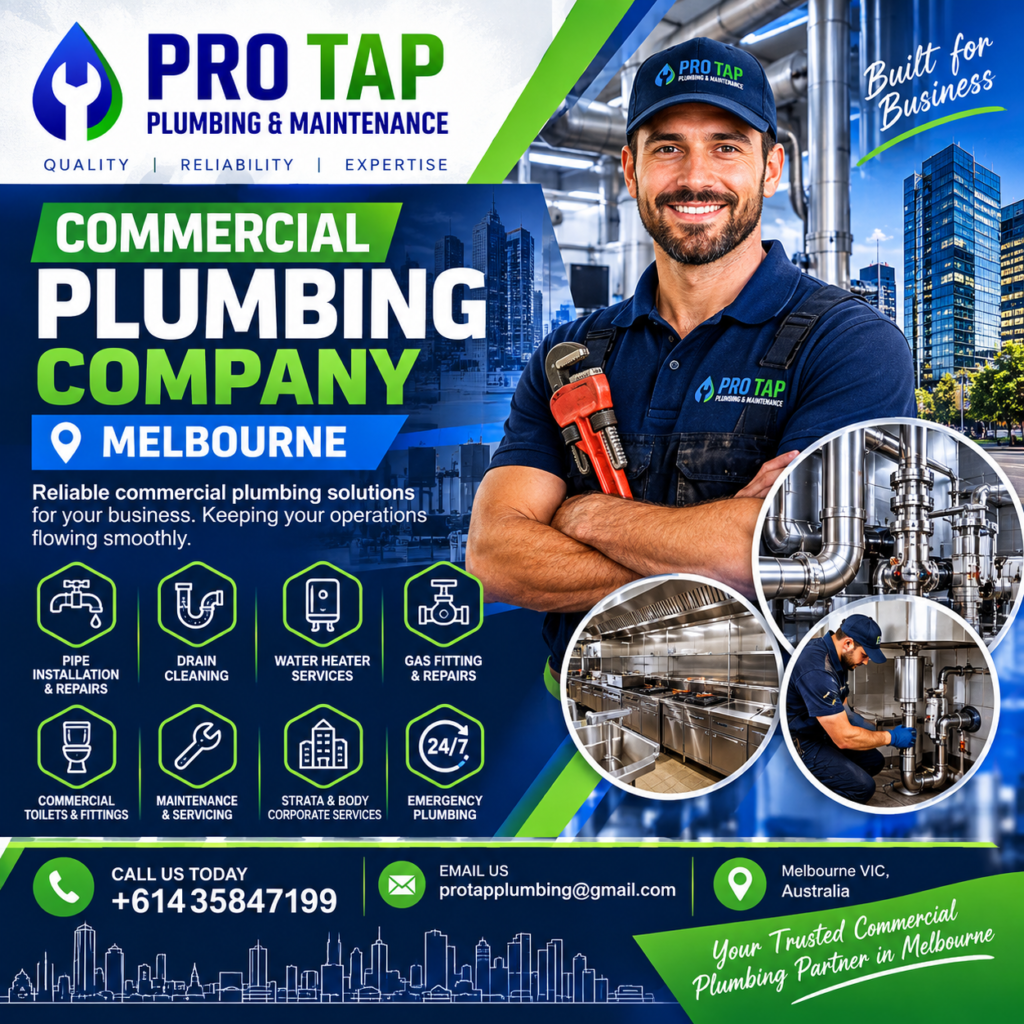
In Melbourne, providers such as Pro Tap Plumbing and Maintenance can serve as an example of a local commercial plumbing option for businesses seeking assistance with maintenance and plumbing-related property issues.
Choosing a Long-Term Plumbing Partner
The strongest commercial plumbing relationship is not necessarily based on finding someone only when an emergency occurs. Businesses can benefit from developing a relationship with a qualified provider who understands their property and its plumbing infrastructure.
Over time, this can make maintenance planning easier and provide technicians with useful background information when problems arise.
A long-term approach may involve:
- Scheduled plumbing inspections
- Drain maintenance
- Hot-water system checks
- Leak detection
- Emergency support
- Renovation plumbing
- Record keeping
- Recommendations for future improvements
This approach is especially useful for businesses where plumbing reliability directly affects customers or daily operations.
Conclusion
Finding the right commercial plumber requires more than typing commercial plumbing company Melbourne into a search engine and choosing the first result. Businesses should evaluate experience, emergency response, technical capabilities, preventive maintenance, communication, and knowledge of commercial plumbing requirements.
A dependable local commercial plumbing service near me should be capable of addressing immediate problems while also helping businesses understand and manage the condition of their plumbing systems.