Why Is Denim Tears So Expensive? The Truth Behind the Hype and Premium Prices
Denim Tears has become one of the most recognizable names in contemporary streetwear, but its prices often leave shoppers asking the same question: why is Denim Tears so expensive? A hoodie, pair of jeans, or sweatshirt can cost considerably more than standard streetwear, making the brand feel closer to luxury fashion than conventional casual clothing. The answer is not simply a high price tag attached to a popular logo. Denim Tears combines cultural storytelling, limited production, distinctive design, premium materials, collaborations, and the creative direction of founder Tremaine Emory.
Understanding the price of Denim Tears clothing requires looking beyond the garment itself. We need to consider what the brand represents, how its products are developed, why certain collections are produced in limited quantities, and how demand affects the resale market. The combination creates a brand where the price reflects both the physical product and the cultural value surrounding it.
Who Founded Denim Tears?
Denim Tears was founded by Tremaine Emory, a designer and creative figure whose work has been closely connected with music, fashion, and Black cultural history. The brand emerged with an identity built around storytelling rather than conventional seasonal fashion.
From the beginning, Denim Tears has explored the relationship between American history, African-American experiences, cotton production, slavery, migration, and contemporary culture. This gives many of its garments a deeper narrative than simply displaying a fashionable graphic.
The historical connection is particularly important when examining the brand’s famous cotton motifs. Cotton is not merely an aesthetic choice. It carries a complicated historical meaning in the United States, particularly because of its connection to enslaved labor and the economic development of the American South.
That cultural foundation helps explain why Denim Tears is expensive. Consumers are purchasing a garment that participates in a larger creative and historical conversation.
The Story Behind Denim Tears’ High Prices
One of the biggest reasons for Denim Tears’ premium pricing is the brand’s approach to design.
Rather than producing anonymous basics and placing a recognizable logo on them, Denim Tears frequently develops collections around specific ideas, cultural references, and historical themes. Graphics, silhouettes, embroidery, washes, patterns, and materials are often selected to support the overall story.
This creative process adds value that is difficult to measure purely through fabric costs.
A plain cotton hoodie might cost relatively little to manufacture. A Denim Tears hoodie, however, can involve specialized graphics, custom treatments, embroidery, garment washing, carefully selected blanks or fabrics, and limited production. The final retail price therefore reflects more than the raw material.
The brand’s identity itself has also become part of the product.
Premium Materials and Garment Construction
Another factor behind the price of Denim Tears hoodies, jeans, sweatshirts, and T-shirts is the quality and construction of individual garments.
Premium streetwear frequently focuses on details that are easy to overlook when comparing products online. Fabric weight, stitching, finishing, dye processes, hardware, printing techniques, embroidery, and garment treatments can all influence production costs.
Heavyweight hoodies, for example, generally require more fabric than lightweight alternatives. Specialized washes can require additional processing. Intricate embroidery requires additional labor and equipment. Unique dyeing techniques can also increase manufacturing complexity.
These differences do not automatically mean every expensive garment is objectively better than a cheaper alternative. Instead, they explain why the production cost of a premium streetwear item can be significantly higher than that of a mass-market garment.
Limited Production Creates Scarcity
Scarcity is another major reason Denim Tears clothing costs so much.
The brand operates within the world of limited-edition and highly desirable streetwear. When a collection is produced in relatively limited quantities, availability becomes part of its appeal.
This is particularly important in streetwear culture. A product that everyone can easily purchase from a major retailer does not create the same sense of exclusivity as a garment that disappears quickly after release.
Limited production can also reduce the ability of consumers to purchase older pieces directly from the brand. Once a collection sells out, shoppers may have to look toward resale platforms or secondary markets.
That creates an important distinction between retail price and market price.
A garment might originally sell for one amount but later become significantly more expensive because demand exceeds the remaining supply.
Denim Tears Hype and Brand Recognition
Streetwear operates heavily on cultural momentum. Denim Tears has benefited from strong recognition among fashion enthusiasts, musicians, celebrities, and collectors.
When influential people wear a particular brand, its visibility can increase dramatically. Social media then amplifies that exposure, allowing a single garment to appear repeatedly across Instagram, TikTok, fashion publications, music videos, and street-style photography.
This creates a cycle:
Visibility → demand → scarcity → resale interest → increased hype.
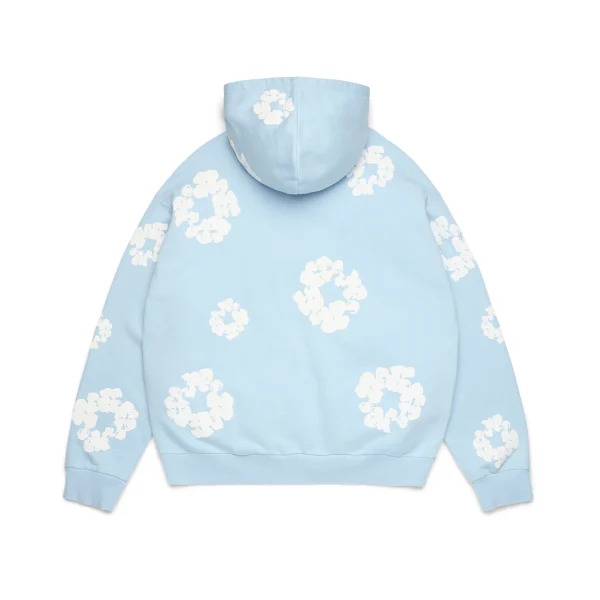
The effect is especially powerful when the clothing has a recognizable visual identity. Denim Tears’ distinctive cotton wreath motifs, branding, and historical references make many pieces immediately identifiable.
As recognition grows, consumers may become willing to pay a premium simply because they want to participate in the culture surrounding the brand.
Collaborations Increase Denim Tears’ Value
Collaborations are another important component of the brand’s pricing strategy.
Denim Tears has worked with major names in fashion and sportswear, including Levi’s and UGG, among others. Collaborations can combine the identity of Denim Tears with the manufacturing expertise, heritage, or global recognition of another established brand.
The result is often more collectible than a standard release.
A collaboration may also have a smaller production run than a regular product. When two recognizable brands create a limited product together, collectors may view it as a special piece rather than an ordinary wardrobe item.
This helps explain why certain Denim Tears collaborations command particularly high prices after release.
Why Are Denim Tears Jeans So Expensive?
Denim Tears jeans have become particularly recognizable because denim is central to the brand’s identity.
Denim itself is an important part of American fashion history, making it a natural material for a label concerned with American cultural narratives.
The brand’s denim products can include distinctive washes, prints, embroidery, patches, treatments, and construction details. These features separate them from ordinary jeans.
There is also an important psychological element. A pair of jeans from a globally recognized streetwear label carries a different cultural value from an unbranded pair of jeans, even if both technically perform the same basic function.
Consumers are often paying for:
- Design
- Materials
- Construction
- Brand identity
- Cultural storytelling
- Exclusivity
- Collectibility
- Demand
The final retail price reflects the combined value of these elements.
Why Are Denim Tears Hoodies So Expensive?
The Denim Tears hoodie is one of the brand’s most recognizable products.
Its popularity comes partly from the combination of a familiar streetwear silhouette and distinctive branding. Hoodies are already central to modern streetwear, but Denim Tears gives the classic garment a recognizable identity through graphics, cotton motifs, embroidery, color choices, and collection-specific designs.
Premium hoodies can also use heavyweight fabrics and specialized finishing processes. Depending on the particular release, construction and decoration can add considerable manufacturing expense.
However, production costs alone do not explain the entire retail price.
Brand positioning matters.
Denim Tears has established itself as a premium cultural fashion label. Consumers therefore compare its products not only with ordinary hoodies but also with other high-end streetwear and designer labels.
The Cultural Meaning Adds Value
Perhaps the most important distinction between Denim Tears and ordinary streetwear is its emphasis on history.
The brand’s imagery frequently references Black history and the role of cotton in America’s past. This gives its designs an intellectual and cultural dimension.
For some customers, buying Denim Tears is not simply about owning fashionable clothing. The garment represents an idea, historical reference, or cultural statement.
That makes the product more similar to other forms of culturally significant fashion, where the meaning behind an object contributes substantially to its perceived value.
This is one reason the brand has developed such a loyal following.
Is Denim Tears Actually Worth the Price?
Whether Denim Tears is worth the money depends on what a buyer expects from the purchase.
If the goal is simply to buy a comfortable cotton hoodie, there are countless cheaper alternatives. Paying several times more for a branded hoodie may not make practical sense.
If the goal is to own a piece of contemporary streetwear with strong cultural symbolism, distinctive design, limited availability, and collectible appeal, the calculation changes.
The value becomes partly subjective.
Collectors may value rarity. Fashion enthusiasts may value design. Fans may value the brand’s cultural message. Others may simply appreciate the quality and aesthetic.
There is no universal answer to whether the price is justified because clothing value is not determined by manufacturing cost alone.
Denim Tears vs. Ordinary Streetwear
The easiest way to understand the premium is to compare Denim Tears with mass-market streetwear.
A typical mass-market hoodie is designed primarily around scalability. Manufacturers aim to produce large quantities efficiently while maintaining acceptable quality and competitive pricing.
Premium streetwear takes a different approach.
Collections can emphasize limited production, distinctive creative direction, collaborations, specialized decoration, and brand storytelling. The smaller scale means production cannot always achieve the same economies of scale.
This difference is reflected in retail pricing.
Denim Tears therefore sits in an interesting position between traditional luxury fashion and modern streetwear. It combines the accessibility of everyday garments with the cultural positioning and exclusivity normally associated with premium fashion.
Why Denim Tears Costs More on the Resale Market
Retail pricing is only part of the story.
Once popular Denim Tears products sell out, resale platforms can introduce a completely different pricing structure. Sellers may increase prices because they know that collectors are competing for limited remaining stock.
The most desirable pieces can become especially expensive when:
- The original release was highly limited.
- The item has a recognizable design.
- The collaboration is significant.
- The product is no longer available at retail.
- Celebrity or influencer exposure increases demand.
- The item has become culturally recognizable.
- Collectors begin treating the garment as a desirable archive piece.
This explains why someone searching for an older Denim Tears hoodie or jacket may encounter prices substantially higher than the original retail price.
Does Expensive Mean Better Quality?
Not necessarily.
Price and quality are related in some cases, but they are not identical.
A premium price can reflect better materials and construction, but it can also reflect brand recognition, creative value, scarcity, marketing, collaborations, and consumer demand.
Denim Tears’ price should therefore be understood as the total cost of a premium fashion product rather than simply the cost of cotton, stitching, and manufacturing.
That distinction is important for shoppers deciding whether to purchase.
The Real Reason Denim Tears Is So Expensive
Ultimately, Denim Tears is expensive because several forms of value come together in one product.
The brand combines:
Premium streetwear + cultural storytelling + limited availability + recognizable design + collaborations + brand reputation + consumer demand.
None of these factors alone completely explains the price. Together, however, they create a strong premium-fashion proposition.
The brand has successfully transformed everyday garments such as hoodies, jeans, T-shirts, and sweatshirts into pieces associated with contemporary culture and historical storytelling.
That is the real secret behind the price.
Final Thoughts
So, why is Denim Tears so expensive? The answer goes far beyond a logo.
Denim Tears has built a premium streetwear identity around meaningful design, cultural history, recognizable graphics, limited releases, collaborations, and strong demand. Its products occupy a space where clothing functions as both fashion and cultural expression.
For some shoppers, the price will be difficult to justify when cheaper alternatives are available. For collectors and dedicated streetwear enthusiasts, however, the combination of design, scarcity, history, and brand identity can make the premium worthwhile.