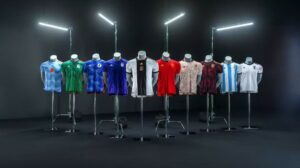
These days, customers don’t just want to see photos of the products. They want to see products clearly, understand, explore different finishes and visualize how they will look in real-life environments. That’s where 3d product rendering services are a great solution for Manufacturers, Retailers, Designers, Furniture Brands and eCommerce businesses.
With cutting-edge 3D modeling, materials, lighting, and rendering techniques, companies can produce lifelike images of their products, significantly minimizing the need for extensive traditional photography. These digital assets can be applied to webpages, catalogs, ads, social media, product presentations and sales campaigns and used across the whole spectrum of websites.
What Are 3D Product Rendering Services?
3d product rendering services are the process of generating computer-generated images of a product that are based on a detailed three-dimensional model. A CGI artist creates or recreates a product digitally and adds realistic materials, textures, lighting and camera angles, as opposed to photographing a physical product.
The end picture may resemble a professional product photograph, but with many more possibilities. Multiple perspectives, colors, configurations and environments can be rendered from a single 3D model without having to manufacture or photograph all the variations.
It is useful for businesses that have customized products or products that are often updated, such as in the case of product rendering.
Why Businesses Use 3D Product Rendering
Traditional product photography may involve the creation of samples, studio environments, lights and equipment, photographers, and post production. For products with various color choices or combinations, generating images for each option can be costly and time-intensive.
There is a solution with 3D rendering. After creating the digital model, multiple variations of the same model can be created for businesses.
For instance, a furniture company can make one true-to-scale 3D model of a sofa and generate images in various fabrics, colors, room layouts and camera positions. This can be applied to appliances, electronics, packaging, lighting products, kitchen products and other consumer goods.
Key Elements of High-Quality Product Rendering
A realistic product visualization can’t be achieved by a simple 3D model. There are a number of factors that affect the quality of the finished render.
1. Accurate 3D Modeling
The digital model must be able to accurately depict the size, form, scale and separate parts of the product. All the details like buttons, handles, stitching, edges, grooves etc can have a significant impact on realism.
It is particularly important to be accurate when the render is intended for a product presentation or technical marketing.
2. Realistic Materials and Textures
Materials can be used to convey the visual and tactile properties of a product. CGI artists can duplicate surfaces like wood, metal, glass, leather, plastic, fabric, marble, and ceramic.
The texture mapping, roughness, reflection, and surface detail are important to create realistic results. On high-quality products, this information could be a major factor in customer quality perception.
3. Professional Lighting
The interaction of the product with its environment is determined by lighting. Artists can produce studio lighting for eCommerce pictures or natural scene lighting for lifestyle photographs.
Ambient lighting, shadows, highlights and reflections can be carefully controlled to aid in drawing attention to key features of the products in question.
4. Multiple Camera Angles
The 3D rendering has a great benefit of generating several renderings from one digital model. All kinds of views, such as front, side, rear, top, close-up and perspective can be produced as required.
These graphics enable customers to view products from multiple angles prior to buying.
Product Rendering for eCommerce
Professional product CGI can prove to be a great asset to eCommerce businesses. Visual presentation is especially crucial for online customers, who are unable to physically handle the products.
Product pages or realistic environments can be used to show how a product can be used.
Images can be also created for various product variations without taking photos of each individual variation. This can make large product catalogs easier to manage and can help maintain the visual quality.
Product Rendering for Furniture Brands
One area where 3D rendering can offer a significant amount of flexibility is furniture. When buying a sofa, bed, table, chair or cabinet, customers typically want to know what it will look like in a room.
A product can thus be put to use independently, as well as in a realistic interior setting. With 3d interior design rendering, the manufacturers and retailers can actually see how the furniture elements may actually look in the completed bedroom, living room, office or business place.
This way, customers can see how things work together, and they can gauge the scale and proportions of the design.
Combining Product CGI With Architectural Visualization
It is not a rule in product rendering that it must be independent of architectural visualization. Product CGI can be used in conjunction with architectural exterior 3d renderings to demonstrate how products fit within a larger space.
For instance, an outdoor furniture, lighting fixture, architectural or door and window company may incorporate their items into a realistic building exterior construction.
This provides a more contextual presentation and gives the architects, developer and the customer a better understanding of how a product can relate to the image of the project.
Product Variations Without Physical Prototypes
A great advantage of 3D product rendering is the ability to visualize products before they are physically created.
Manufacturers are able to try out various colors, materials, dimensions and configurations virtually. This can help teams to compare and contrast options and determine designs they like before investing resources in fabricating physical prototypes.
CGI can also be helpful for products that are still being developed as it can be used to generate promotional images prior to production.
Marketing Applications of 3D Product Rendering
Product images can be used in many marketing channels such as:
- eCommerce product pages
- Social media pages and profiles
- Digital advertisements
- Social media campaigns
- Packaging concepts
- Trade show displays
- Retail marketing materials
How the 3D Product Rendering Process Works
It usually goes from product drawings, CAD files, photographs or measurements or physical references. The CGI artist is able to use this information to produce a faithful 3D model.
Then comes the application of materials and the textures, the lighting and the camera setup. Once the initial render is done, post production can be done to perfect colors, shadows, reflections and more.
Other versions can then be developed for different colors, configurations, environments, and camera angles, depending on the project.
Final Thoughts
3d product rendering services offer businesses a flexible method to generate realistic, adaptable and scalable product visuals. Whether it’s showcasing eCommerce product listings and catalogs, or visualizing architectural designs and marketing campaigns, CGI is a powerful tool that can enhance the way brands communicate their product designs.
Product visualization also complements architectural exterior 3d renderings and 3d interior design rendering, enabling businesses to showcase products in realistic settings and provide a glimpse into real-world applications. With the increasing visual nature of digital marketing, high-quality 3D rendering can provide a tangible method for displaying products before, during, and after production, giving brands a new avenue to market. Get the vision transformed using 3d rendering new york today.