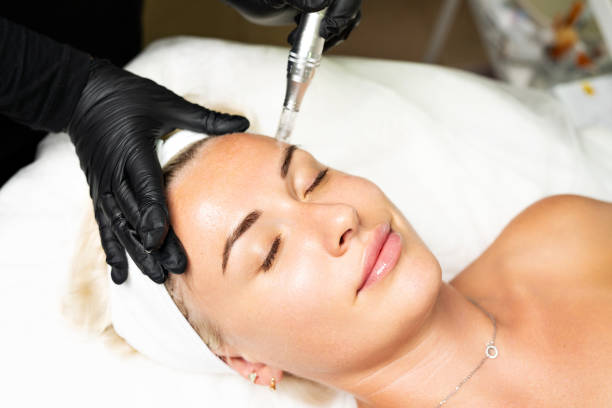
Microneedling is widely used to improve uneven skin texture and the appearance of depressed acne scars by encouraging natural collagen remodeling within the skin. One of the most common questions surrounding the procedure is whether the temporary redness that follows treatment can become permanent. For those considering Microneedling for Acne Scars in Abu Dhabi, understanding why redness occurs, how long it generally lasts, and what factors influence its duration can make the treatment process easier to understand. In most cases, redness following microneedling is part of the skin’s normal response to controlled micro-injury and gradually becomes less noticeable as the skin settles.
Why Does Microneedling Cause Redness?
Microneedling uses very fine needles to create precisely controlled microscopic channels in the skin. These channels activate the body’s natural repair response and encourage collagen production, which is particularly relevant when treating depressed acne scars. Because the procedure temporarily stimulates the skin, increased redness can occur immediately afterward.
This redness, medically described as erythema, reflects increased blood flow and activity within the treated skin. It can make the face look pink or flushed and may be more noticeable in areas where the treatment has been performed more intensively. Clinical reviews of microneedling for acne scars consistently identify erythema as a common temporary response to treatment.
Is Redness After Microneedling Usually Permanent?
For most people, post-treatment redness is temporary rather than lasting. The skin progressively returns toward its usual appearance as the initial healing response settles. The exact duration can differ considerably between individuals, so there is no single timeframe that applies to every treatment.
Research on microneedling for acne scars describes erythema as a frequent treatment response rather than a permanent change in skin color. Reviews have also found that microneedling is generally well tolerated when appropriate treatment protocols are used.
The appearance of redness immediately after treatment should therefore not be confused with the final outcome. Acne-scar improvement itself develops gradually as collagen remodeling takes place beneath the surface of the skin.
How Long Can Microneedling Redness Last?
The duration of redness depends on several factors, including the depth of treatment, the intensity of the procedure, the individual’s skin characteristics, and the area being treated. Some people notice that their skin looks considerably calmer within a short period, while others may retain a pink or flushed appearance for longer.
Treatment depth is particularly relevant. Deeper microneedling reaches further into the skin and can create a stronger healing response than very superficial treatment. When deeper settings are selected for certain acne scars, the visible recovery period may consequently differ from that associated with lighter treatment.
The number of treatment sessions can also influence how the skin behaves over time. Microneedling for acne scars is commonly performed as a series of sessions separated by several weeks, allowing collagen remodeling to progress between treatments.
What Determines Whether Redness Lasts Longer?
Individual skin characteristics play an important role in determining how quickly redness fades. People with naturally reactive or highly sensitive skin may notice visible redness for longer than those whose skin settles quickly after treatment.
The condition of the skin before treatment is also important. Existing inflammation, recent irritation, active acne, or an impaired skin barrier can influence how the skin responds to microneedling. For this reason, treatment planning should take the current condition of the skin into account rather than focusing solely on the acne scars themselves.
The treatment technique matters as well. Needle depth, pressure, the number of passes over an area, and the overall treatment intensity can all affect the degree of visible redness. A carefully calibrated approach aims to stimulate collagen while matching the treatment intensity to the individual’s skin and scar characteristics.
Does Skin Tone Affect Post-Microneedling Redness?
Skin tone can influence how redness appears after microneedling. On lighter skin, erythema may be highly visible because the increased pink or red coloration contrasts strongly with the surrounding skin. On deeper skin tones, redness may be less visually obvious, although changes in pigmentation can be another consideration when evaluating the skin after an inflammatory process.
This distinction is important because visible redness and pigmentation are not the same thing. Redness reflects vascular changes associated with the skin’s inflammatory response, whereas pigmentation involves changes in melanin. Understanding the difference helps explain why the skin may look different temporarily without that appearance representing a permanent alteration.
Can Microneedling Make Existing Acne Redness Worse?
Microneedling is primarily intended to improve textural concerns such as atrophic acne scars rather than directly treating every type of acne-related discoloration. If the skin already has persistent red marks after acne, those marks may need to be distinguished from true depressed scars before deciding whether microneedling is appropriate.
Post-acne redness can have a different underlying mechanism from an indentation or change in skin texture. Microneedling may be useful for collagen remodeling in suitable scar types, but it should not automatically be assumed to be the ideal approach for every red mark left behind by acne.
A proper assessment can distinguish between textural acne scars and flat color changes, helping establish whether microneedling is likely to address the specific concern.
Why Deeper Treatment Does Not Mean Longer-Lasting Redness
It may seem logical that deeper needles would always produce prolonged redness, but the relationship is not that simple. Treatment depth is only one part of the overall procedure. The condition of the skin, technique, treatment intensity, and individual healing characteristics all contribute to the visible recovery period.
The goal of microneedling is controlled collagen stimulation rather than maximum penetration. Research has used different needle lengths and treatment protocols for acne scarring, demonstrating that there is no universal setting that applies to every person.
An individualized treatment plan can therefore help balance the desired scar improvement with an appropriate treatment intensity.
When Should Persistent Redness Be Evaluated?
Although temporary redness is expected after microneedling, redness that remains unusually prominent or does not appear to be gradually settling deserves professional evaluation. Persistent redness may not necessarily be related to the original acne scars, and determining its cause is important before undergoing another treatment session.
It is also useful to compare the skin’s appearance over time rather than judging the result immediately after treatment. Acne-scar improvement occurs through gradual collagen remodeling, while the initial redness belongs to the early healing phase. These are two separate processes that should be considered independently.
The Connection Between Redness and Acne-Scar Improvement
Microneedling does not remove acne scars instantly. Instead, the controlled microchannels stimulate biological processes that encourage the skin to produce and reorganize collagen. As this remodeling progresses, depressed scars may become smoother and less noticeable.
Because the collagen response develops gradually, temporary redness should not be interpreted as evidence of the final treatment result. Clinical literature has reported improvements in acne-scar severity following microneedling across multiple studies, with treatment commonly performed over a series of sessions.
Frequently Asked Questions
Can microneedling cause permanent facial redness?
Microneedling-related redness is generally temporary and is associated with the skin’s immediate healing response. Persistent redness is not considered the expected outcome, although individual recovery can vary.
How quickly does redness fade after microneedling for acne scars?
The visible redness commonly becomes less noticeable as the initial treatment response settles. The exact duration varies according to treatment intensity, needle depth, skin characteristics, and individual healing patterns.
Does deeper microneedling create more redness?
Deeper treatment can produce a stronger temporary skin response, but redness depends on more than needle depth alone. Treatment intensity, technique, skin sensitivity, and the treated area can all influence how pronounced and long-lasting the redness appears.
Can microneedling treat red acne marks as well as depressed scars?
Microneedling is primarily associated with improving skin texture and depressed acne scars through collagen remodeling. Flat red marks left after acne can have a different underlying cause and may require a separate assessment.
When does acne-scar improvement become visible after microneedling?
Improvement develops gradually rather than immediately because the desired collagen remodeling process takes time. A series of appropriately spaced treatments may be used, with changes becoming more apparent as the skin continues to remodel