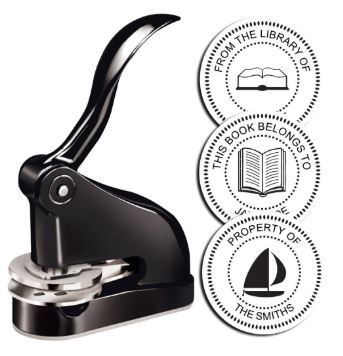
book embossing
Book embossing is a timeless way to personalize books, journals, notebooks, and other paper items with an elegant raised design. Whether you want to add your name, initials, a family name, or a personal message, embossing creates a distinctive impression without relying on ink.
For book lovers, collectors, students, professionals, and organizations, book embossing offers a practical and attractive way to identify and personalize their books.
What Is Book Embossing?
Book embossing is the process of pressing a custom design into the cover or paper of a book to create a raised or recessed impression. Unlike a traditional rubber stamp, an embosser does not apply ink. Instead, it physically changes the surface of the material.
A typical book embosser consists of two matching plates or dies. When pressure is applied, the material is positioned between them, creating the desired embossed design.
Why Choose Book Embossing?
One of the biggest advantages of book embossing is its professional appearance. A clean embossed name or monogram can give a book a refined and personalized finish.
Personalize Your Collection
If you own a large collection of books, adding your name or initials can help identify them as your personal property. This can be particularly useful for books that are frequently shared with family members, classmates, or colleagues.
Create an Elegant Appearance
Embossing provides a subtle and sophisticated look. Because the design is pressed directly into the material, it can appear more refined than a standard ink impression.
No Ink Required
Book embossers work without ink, cartridges, or ink pads. This makes them convenient for creating clean impressions without worrying about smudging or drying ink.
Long-Lasting Identification
An embossed impression becomes part of the surface of the material. When properly applied, it can provide a durable way to personalize books and other paper products.
What Can You Emboss?
Although book embossing is commonly associated with book covers and title pages, embossers can be used for a variety of paper products, depending on the material and embosser design.
Common applications include:
- Hardcover books
- Softcover books
- Journals
- Notebooks
- Planners
- Diaries
- Personal stationery
- Paper folders
- Certificates
- Library materials
Before embossing, it is important to make sure the material is suitable for the specific embosser being used.
Custom Book Embossers
A custom book embosser allows you to create a design specifically for your needs. You can typically personalize the embosser with details such as a name, initials, monogram, or short phrase.
For example, a personal book embosser might display:
A professional or organizational embosser could include a company or institution name and a simple logo.
Keeping the design clean and readable is important. Small or highly detailed artwork may not produce the same clarity as a simple design.
How to Use a Book Embosser
Using a book embosser is generally straightforward. First, determine where you want the impression to appear. Position the page or cover correctly between the embossing plates.
Apply firm, even pressure to create the impression. Release the handle and carefully remove the material.
For the best results, practice on a similar piece of paper or material before embossing a valuable book. This allows you to determine the ideal placement and pressure.
Book Embossing for Libraries and Organizations
Book embossing can also be useful for libraries, schools, offices, and organizations. A customized embosser can provide a consistent way to identify books and materials belonging to an institution.
Libraries and educational organizations can use embossed marks to establish ownership while maintaining a clean and professional appearance.
Choosing a Book Embosser
When selecting a book embosser, consider the size of the impression, the type of material you intend to emboss, and how frequently you plan to use it.
A compact embosser can be convenient for personal collections, while a heavy-duty design may be better suited for frequent professional use.
You should also consider the design carefully. Names, initials, and simple logos are generally easier to reproduce clearly than highly detailed artwork.
Book Embossing vs. Traditional Stamping
Book embossing and traditional stamping serve similar personalization purposes, but they create different results.
A traditional stamp uses ink to transfer a design onto the surface. An embosser physically presses the design into the material. As a result, embossing produces a raised or recessed effect without ink.
If you want a classic, subtle, and ink-free appearance, book embossing can be an excellent choice.
Tips for Better Embossing Results
For a clean impression, make sure the material is positioned evenly before applying pressure. Avoid moving the page while the embosser is engaged.
Choose a suitable location that provides enough space for the entire design. If you are embossing a valuable or collectible book, test the embosser on a similar material first.
Regularly inspect the embossing plates and keep them free from debris to help maintain clean impressions.
Add a Personal Touch With Book Embossing
Book embossing offers a simple and elegant way to make books feel more personal. Whether you are marking a private collection, creating personalized gifts, or identifying organizational materials, a custom book embosser can provide a distinctive and lasting impression.