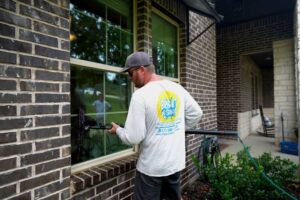
Let’s be brutally honest for a second. When was the last time you actually looked at the outside of your commercial building? Not a glance as you walked to your car, but a hard, critical stare?
If you’re like most busy owners, the exterior is “out of sight, out of mind” until a gutter falls off or a client complains. Here’s the hard truth I’ve learned in five years of writing on this topic: neglect isn’t just ugly; it’s a slow-burning fire under your balance sheet.
We aren’t talking about a quick splash with a garden hose. We’re talking about holistic Commercial Exterior Care a rigorous protocol that acts like a suit of armor for your asset. Let’s ditch the fluff and dive into the seven proven, tangible ways this protects your bottom line.
1. Skyrocketing Curb Appeal and Property Valuation
Imagine two banks. One has streak-free windows and a spotless facade. The other has bird droppings on the sign and algae crawling up the brick. Which one would you trust with your life savings?
Humans make snap judgments in under seven seconds. Professional Commercial Exterior Care polishes that snapshot. But it goes deeper than vanity. If you’re refinancing or selling, commercial appraisers heavily penalize “deferred maintenance.” A clean building envelope signals to the assessor that the mechanicals and structure are likely just as pristine. You aren’t just cleaning; you’re inflating your property’s equity by proving viability.
2. Preventing Million-Dollar Structural Decay
This is the silent budget killer. You see a little crack, and you think, “I’ll seal it next spring.” By next spring, winter’s freeze-thaw cycle has turned that hairline fissure into a canyon.
True exterior maintenance isn’t about aesthetics; it’s a structural intervention. Water intrusion is the number one enemy of concrete, steel, and wood. When we talk about systematic care, we’re talking about hydrophobic sealants that force water to bead and roll away, stopping destructive spalling and rust-jacking in its tracks. Ignoring this is like leaving your 401(k) out in a hurricane.
3. Strict Adherence to USA Health and Safety Codes
We live in a litigious world. A patch of black mold on a sidewalk or a greasy film on a loading dock isn’t just “dirt”; it’s a legally documented slip-and-fall hazard. OSHA and local municipal codes are tightening their grip on environmental health standards.
Investing in routine professional care removes the biofilm that makes walkways slick. It also removes airborne pollutants like exhaust soot that cling to facades. Think of it as a compliance audit, but with water and eco-friendly solvents. By documenting your Commercial Exterior Care log, you’re building a legal shield, proving you exercised reasonable care to prevent injury.
4. Dramatic Energy Efficiency Improvements
Now, let’s talk about a utility bill that’s 15-30% higher than it needs to be. Dark, heat-absorbing grime on your roof acts like a thermal trap, cooking your top floors in summer. Dirty windows reduce natural light, forcing you to burn more electricity.
A “cool roof” isn’t born; it’s maintained. By routinely washing reflective roofing membranes to remove soot and algae, you restore solar reflectance. This Commercial Exterior Care strategy literally pushes heat away from the building. It’s the most overlooked low-hanging fruit for slashing operational overhead without buying new HVAC units.
5. Eliminating Biological Hazards (Mold, Mildew, Allergens)
It’s not just gray dirt. That staining on the north-facing walls is an active biological colony feeding on your limestone or stucco. Mold, mildew, and algae don’t just destroy substrates; they drastically lower the air quality seeping into your intake vents.
For the public reader or employee entering your building, this can trigger allergies or asthma. Soft-wash techniques used in modern exterior cleaning don’t just blast the surface; they kill the root system of these organisms. You’re essentially creating a sterile, hypoallergenic zone for your entire property, stopping the spread of spores before they infiltrate your lobby.
6. Extending Asset Lifecycles and Reducing Capital Expenditure
I want you to think of your building like a car. Would you drive a car for 15 years without ever changing the oil, then act surprised when the engine seizes? Of course not. Yet, we watch owners let their facades go without a “fluid change” for decades.
Waterproofing membranes have a finite life. Sealants degrade. Without scheduled Commercial Exterior Care, a $5,000 restoration project today becomes a $150,000 wall rebuild in three years. By softening the wear curve protecting against UV oxidation and acid rain you’re deferring massive capital expenditures. It’s preservation, not just cleaning.
7. Hardening the Envelope Against Extreme Weather
USA weather patterns are getting wilder. We’re seeing heavier rain bombs and stronger UV indexes. Your building’s first line of defense is its skin. If that skin is porous or cracked, you’re vulnerable.
Professional exterior care includes checking and repairing penetration points. By keeping weep holes clear and applying UV-resistant barriers, you’re hardening your asset. When a nor’easter or a dust storm hits, the building that had regular maintenance repels the water, while the neglected one absorbs it like a sponge, leading to catastrophic interior mold blooms.
Why DIY Approaches Fail Commercial Properties
I know what you’re thinking: “I’ll just rent a power washer and send Joe from maintenance up on a lift.” Please don’t. Not only is this a massive OSHA liability, but consumer-grade pressure often etches glass and rips out mortar joints.
Professional Commercial Exterior Care technicians understand surface chemistry. They know that a hot-water, low-pressure approach dissolves grease without causing structural harm. They use proprietary detergents that balance pH something a Home Depot rental can’t mimic. You pay a pro for the chemistry degree, not just the strong thumb.
How to Select a Licensed Commercial Exterior Care Contractor
Before you Google and click the first ad, pause. You need a partner with an EPA-compliant wash water recovery system, because allowing soapy, polluted water to flow into storm drains can net you a massive fine in most US cities.
Ask for their Safety Data Sheets (SDS). If they hand you something that smells like industrial poison, walk away. The modern standard is eco-friendly, biodegradable chemistry that kills organics without killing landscaping. Verify their insurance certificate for “Completed Operations” coverage. This ensures you aren’t holding the bag if something gets damaged three days after the wash.
Conclusion
Your building is a breathing, aging organism. It silently fights gravity, weather, and biology every single day. By implementing a rigid schedule of professional Commercial Exterior Care, you aren’t engaging in a vanity project. You are executing a high-level asset protection strategy. It’s time to stop paying for repairs and start investing in prevention. Your building will thank you by standing strong for decades to come, and your accountant will thank you for the lower utility bills and higher property valuation. Don’t let the outside world chip away at your hard work—lock that curb appeal and structural integrity in today.