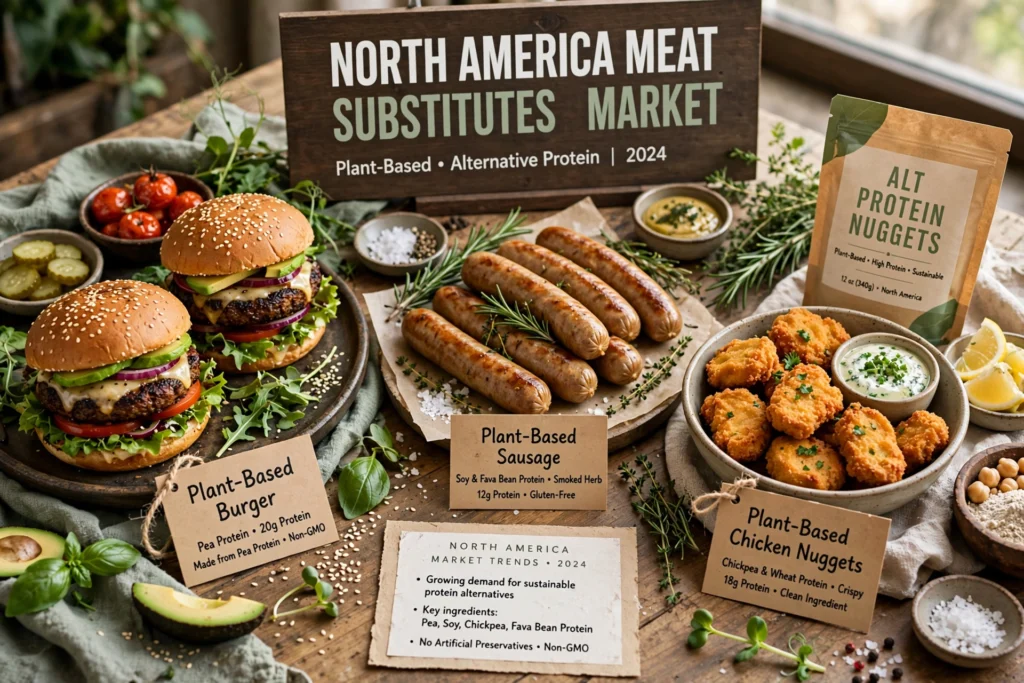
The culinary landscape across North America is undergoing a seismic shift. Once relegated to niche health-food aisles, meat substitutes—often referred to as plant-based proteins—have moved center stage, gracing the menus of fast-food giants and the shelves of major hypermarkets. As consumers increasingly prioritize personal health and planetary well-being, the industry is poised for a period of rapid expansion.
According to recent analysis by Renub Research, the North America meat substitutes market is projected to grow from US$ 2.93 billion in 2025 to US$ 7.45 billion by 2034. This robust expansion reflects a Compound Annual Growth Rate (CAGR) of 10.92% between 2026 and 2034, signaling that the move toward alternative proteins is not merely a passing trend, but a fundamental change in regional dietary habits.
Understanding the Meat Substitute Evolution
Meat substitutes are designed to replicate the sensory experience of conventional animal protein—mimicking the taste, texture, and nutritional profile of beef, chicken, or pork. While traditional staples like tofu and seitan have been around for centuries, modern innovation has ushered in a new era of “imitation meats.”
Today’s products rely on sophisticated processing of soy, pea protein, and wheat gluten, while cutting-edge firms are now utilizing precision fermentation and cell-based technologies to create hyper-realistic experiences. Whether in the form of a plant-based burger, a breakfast sausage, or ready-to-eat nuggets, these products have become highly versatile ingredients for everything from pasta dishes to backyard barbecues.
Primary Growth Drivers: Why Consumers are Switching
The surge in demand is fueled by a “perfect storm” of health awareness, environmental anxiety, and unprecedented product availability.
Rising Health Consciousness and Dietary Shifts
Modern North American consumers are increasingly linking diet to long-term wellness. Data from the Centers for Disease Control and Prevention (CDC) highlights that obesity prevalence among American adults reached 40.3% between 2021 and 2023. This sobering statistic has prompted a massive cultural pivot toward preventative nutrition.
Many consumers are adopting a “flexitarian” approach—intentionally reducing meat consumption rather than eliminating it entirely—to lower their risk of heart disease, diabetes, and obesity. By choosing plant-based alternatives, they can enjoy familiar flavors without the saturated fats and cholesterol associated with processed red meats.
Environmental and Sustainability Concerns
Sustainability has become a non-negotiable pillar for the younger generation of shoppers. Animal agriculture is widely recognized as a significant contributor to carbon emissions, water scarcity, and land degradation. As climate change becomes a tangible reality, consumers are “voting with their forks.”
Organizations like the International Food Information Council (IFIC) report that a significant portion of Americans now actively seek “natural” or “clean-label” food products. This shift forces manufacturers to focus on ingredient transparency, favoring minimally processed, sustainable protein sources that offer a lower environmental footprint.
Innovation and Mainstream Accessibility
Innovation is bridging the “taste gap” that once held the industry back. In May 2025, T. Hasegawa USA launched a breakthrough flavoring technology designed to replicate the complex, savory profiles of beef and pork specifically for plant-based proteins. When combined with improved extrusion technologies that mimic muscle fibers, these advancements ensure that the “mouthfeel” of meat substitutes is closer than ever to the real thing. Furthermore, with dedicated sections in supermarkets and inclusive menus in fast-food chains, the friction to trying these products has effectively vanished.
Navigating Challenges in the Alternative Protein Sector
Despite double-digit growth projections, the market faces hurdles that must be addressed to reach mass-market penetration.
-
Price Sensitivity: Production methods for high-end meat analogues are often energy-intensive, leading to retail prices that exceed those of conventional animal proteins. In an era of economic instability and inflation, cost remains a primary barrier for the average household.
-
Taste and Texture Hurdles: While progress is significant, some consumers remain skeptical regarding the “processed” nature of these foods. There is an ongoing challenge to reduce complex additive lists while maintaining the structural integrity of a burger or nugget during high-heat cooking.
-
Ingredient Skepticism: Some segments of the population prefer “whole foods” over lab-engineered alternatives, leading to resistance against products perceived as highly synthetic.
Regional Market Dynamics
The United States: The Industry Powerhouse
The U.S. leads the North American market, driven by a highly advanced retail infrastructure and a culture of rapid food innovation. Major players are aggressively marketing to flexitarians, ensuring that meatless options are available everywhere from stadiums to corner cafes. Recent activity, such as Calbee’s September 2025 acquisition of a majority stake in Hodo (a U.S.-based tofu specialist), underscores the continued investment in high-quality, plant-based heritage foods.
Canada: Sustainability-Led Growth
Canada’s market is characterized by a strong government and consumer emphasis on sustainable food systems. Local brands are thriving by focusing on non-GMO and clean-label credentials. Strategic consolidations, such as the 2022 acquisition of Sol Cuisine Ltd. by PlantPlus Foods LLC, highlight a maturing market where major global food processors are integrating local innovative startups into their portfolios.
Mexico: The Emerging Frontier
Mexico represents a significant opportunity for growth. While meat remains culturally central to the diet, urbanization and health education are shifting consumer preferences. Affordability is the key driver here; as companies introduce soy-based and legume-based products at competitive price points, adoption is expected to accelerate significantly over the next decade.
Key Market Segments at a Glance
The North American market is diversified across several categories to cater to varying consumer needs:
-
By Source: Soy remains the dominant protein due to its complete amino acid profile, followed by pea protein and wheat gluten.
-
By Product Type: Burgers and patties currently hold the largest share, but sausages and ground-meat crumbles are seeing the fastest growth as they integrate seamlessly into home cooking.
-
By Distribution: While supermarkets remain the primary revenue stream, the Food Service channel—restaurants and fast-food partnerships—is the most critical driver for brand trial and consumer discovery.
Competitive Landscape: Who is Leading?
The market is a mix of specialized vegan food companies and massive, diversified food conglomerates. Key players currently shaping the region include:
-
Impossible Foods Inc. & Beyond Meat: Pioneers in high-tech, sensory-focused meat replication.
-
Maple Leaf Foods: A leader in integrating plant-based brands into mainstream distribution.
-
Nestlé S.A. & Cargill Inc.: Global giants leveraging supply chain efficiencies to lower costs and expand the availability of plant-based options.
-
Conagra Brands Inc. & The Kellogg Company: Utilizing long-standing trust in their legacy brands to introduce health-conscious consumers to meat alternatives.
Frequently Asked Questions (FAQs)
1. What is the projected market size of North America meat substitutes by 2034? The North America meat substitutes market is expected to reach US$ 7.45 billion by 2034, up from US$ 2.93 billion in 2025.
2. What is the expected CAGR for the North American meat substitutes market? The market is forecasted to grow at a Compound Annual Growth Rate (CAGR) of 10.92% between 2026 and 2034.
3. Why are consumers in North America switching to meat substitutes? The primary drivers include rising health consciousness (managing obesity/heart health), environmental concerns regarding carbon footprints, and the increasing availability of tasty, convenient plant-based options.
4. What are the most common ingredients used in meat substitutes? Most meat substitutes are manufactured using soy protein, pea protein, wheat gluten, and legumes. Advanced products also utilize fermentation-derived ingredients.
5. Which country dominates the North American meat substitutes market? The United States holds the largest market share due to high consumer demand, aggressive product innovation, and advanced retail distribution networks.
6. What is the biggest challenge facing the meat substitutes industry? High production costs compared to conventional meat and consumer skepticism regarding the level of processing involved in plant-based alternatives are the primary obstacles.
7. What is “flexitarianism” and why does it matter? Flexitarianism is a diet that emphasizes plant-based foods while allowing for occasional meat consumption. It is the primary demographic driving the growth of the meat substitute market, as it represents a much larger group than strict vegans or vegetarians.