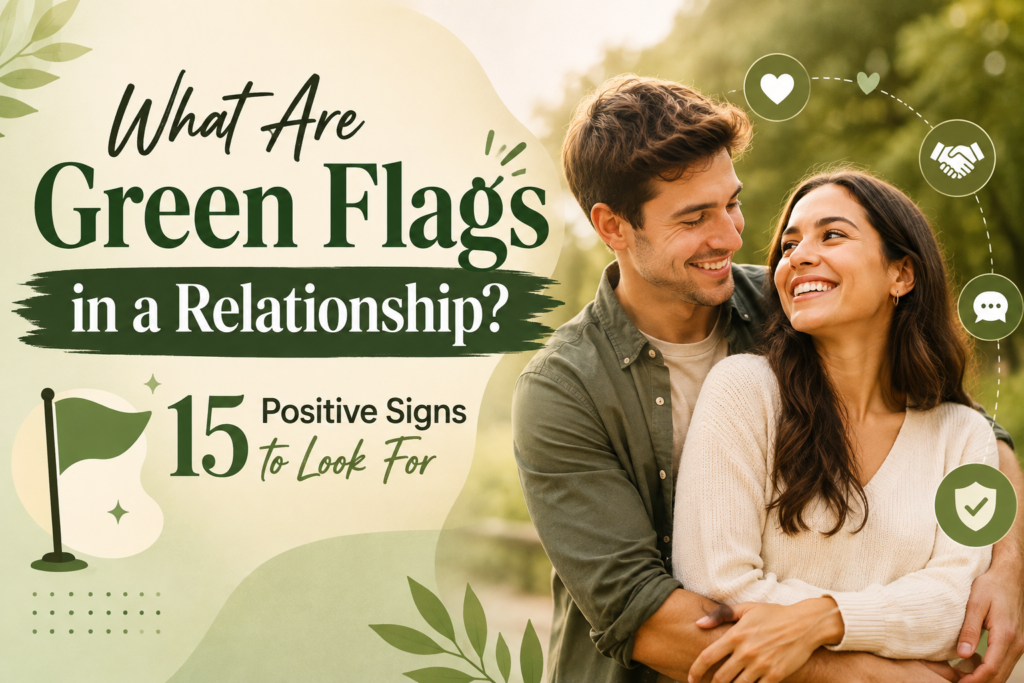
When people talk about dating, they often focus on warning signs and unhealthy behaviors. While recognizing red flags is important, understanding Green Flags in a Relationship is just as valuable. Green flags are positive qualities and healthy habits that show a relationship has the potential to grow into something meaningful and long lasting.
Healthy relationships are not built on grand gestures alone. They develop through consistent respect, honest communication, emotional support, and shared values. According to research published by the American Psychological Association, healthy communication and mutual respect are closely linked to greater relationship satisfaction. Likewise, studies from the Gottman Institute suggest that everyday positive interactions play a significant role in long-term relationship success.
If you are dating someone new or evaluating your current relationship, these positive signs can help you recognize a healthy connection.
Why Green Flags Matter
Many people become so focused on avoiding toxic behaviors that they overlook the qualities worth seeking. Green flags provide a stronger foundation for lasting relationships because they encourage:
- Emotional security
- Honest communication
- Mutual respect
- Healthy conflict resolution
- Personal growth
- Long-term compatibility
Instead of asking, “What should I avoid?” it is equally important to ask, “What should I look for?”
15 Green Flags in a Relationship
1. Open and Honest Communication
Healthy couples discuss their thoughts, concerns, and feelings openly. They listen carefully without interrupting or becoming defensive.
Good communication creates understanding instead of confusion.
2. Mutual Trust
One of the strongest Green Flags in a Relationship is genuine trust in relationships. Trust is built through consistency, honesty, and reliability rather than constant reassurance.
Partners who trust one another avoid unnecessary suspicion and respect each other’s independence.
3. Respect for Personal Boundaries
Everyone has personal limits. A caring partner respects your physical, emotional, and social boundaries without making you feel guilty.
Healthy boundaries strengthen relationships instead of weakening them.
4. Healthy Conflict Resolution
Disagreements are normal. What matters is how couples handle them.
Healthy partners focus on solving problems rather than winning arguments. They avoid insults, manipulation, and silent treatment.
5. Emotional Support During Difficult Times
Life brings challenges, and supportive partners stand beside each other through setbacks.
Whether someone experiences work stress, family problems, or personal disappointment, emotional support demonstrates genuine care.
6. You Can Be Yourself
A healthy relationship allows you to express your personality without pretending to be someone else.
You feel accepted for your strengths, imperfections, interests, and opinions.
7. They Celebrate Your Success
A positive partner feels proud of your accomplishments rather than threatened by them.
Your achievements become shared moments of happiness instead of sources of competition.
8. Consistency Between Words and Actions
Promises have value only when followed by action.
Reliable partners consistently do what they say they will do. This builds confidence and strengthens trust over time.
Everyday Habits That Strengthen Healthy Relationships
Respectful Communication
Small daily conversations often matter more than occasional romantic gestures.
Healthy couples:
- Say thank you
- Offer sincere apologies
- Express appreciation
- Listen without distractions
- Speak respectfully during disagreements
Shared Responsibility
Healthy relationships involve teamwork.
Responsibilities such as planning, decision making, finances, or household tasks should feel balanced rather than one-sided.
Room for Individual Growth
Strong couples encourage each other to pursue personal goals, hobbies, friendships, and professional development.
Supporting independence often strengthens emotional closeness.
More Positive Signs to Notice
9. Genuine Kindness
Kindness appears in everyday moments.
Simple acts like checking in after a stressful day or offering encouragement show emotional maturity.
10. They Respect Your Opinions
You may not always agree, but your ideas are heard and valued.
Healthy discussions allow both people to express different viewpoints respectfully.
11. Shared Core Values
You do not have to enjoy every activity together, but having similar values around honesty, family, finances, or future goals often creates stronger compatibility.
12. Accountability
Everyone makes mistakes.
A healthy partner accepts responsibility, apologizes sincerely, and works to improve instead of making excuses.
13. Emotional Safety
One of the most overlooked green flags is emotional safety.
You should feel comfortable discussing fears, dreams, concerns, or mistakes without fear of ridicule or manipulation.
14. Mutual Effort
Healthy relationships are rarely one-sided.
Both partners invest time, energy, communication, and care into maintaining the relationship.
15. You Feel Peace More Than Anxiety
While every relationship has occasional uncertainty, a healthy one generally brings comfort instead of constant stress.
You spend more time feeling secure than questioning where you stand.
Practical Tips for Identifying Green Flags Early
Finding healthy qualities becomes easier when you pay attention to consistent behavior.
Here are a few practical approaches:
- Observe how they treat family, friends, and strangers.
- Notice whether their actions match their words.
- See how they respond during disagreements.
- Look for consistency instead of perfection.
- Pay attention to how you feel after spending time together.
- Ask whether the relationship encourages personal growth.
A Realistic Example
Imagine two people who disagree about weekend plans.
Instead of becoming defensive, both explain their preferences calmly, listen carefully, and agree on a compromise.
No one feels ignored, blamed, or pressured. This simple interaction demonstrates communication, respect, and teamwork, all important green flags.
Common Misconceptions About Green Flags
Many people assume green flags mean a relationship has no problems.
That is not true.
Healthy couples still experience disagreements, misunderstandings, and stressful periods. The difference is that they approach challenges with respect, honesty, and a willingness to work together.
Perfection is not the goal. Healthy patterns are.
Conclusion
Recognizing Green Flags in a Relationship helps you focus on what truly supports lasting happiness. Qualities such as honesty, emotional safety, mutual respect, and strong trust in relationships create a solid foundation that can grow over time.
Whether you are starting to date or evaluating an existing partnership, looking for these positive signs can help you make thoughtful relationship decisions. If you enjoy learning about healthy dating habits, resources from Favor can provide additional educational insights alongside other trusted relationship experts.
FAQs
1. What are green flags in a relationship?
Green flags are healthy behaviors and qualities that indicate a relationship is built on trust, respect, communication, and emotional support.
2. Why is trust important in relationships?
Trust creates emotional security, encourages honest communication, and helps partners feel confident in each other’s reliability.
3. Can a relationship have both green and red flags?
Yes. Most relationships have strengths and weaknesses. The key is whether healthy behaviors consistently outweigh harmful patterns.
4. How can I identify green flags early while dating?
Observe consistency, communication style, respect for boundaries, accountability, and how the person handles disagreements over time.
5. Are green flags more important than chemistry?
Chemistry may create attraction, but green flags are what help sustain a healthy relationship over the long term.