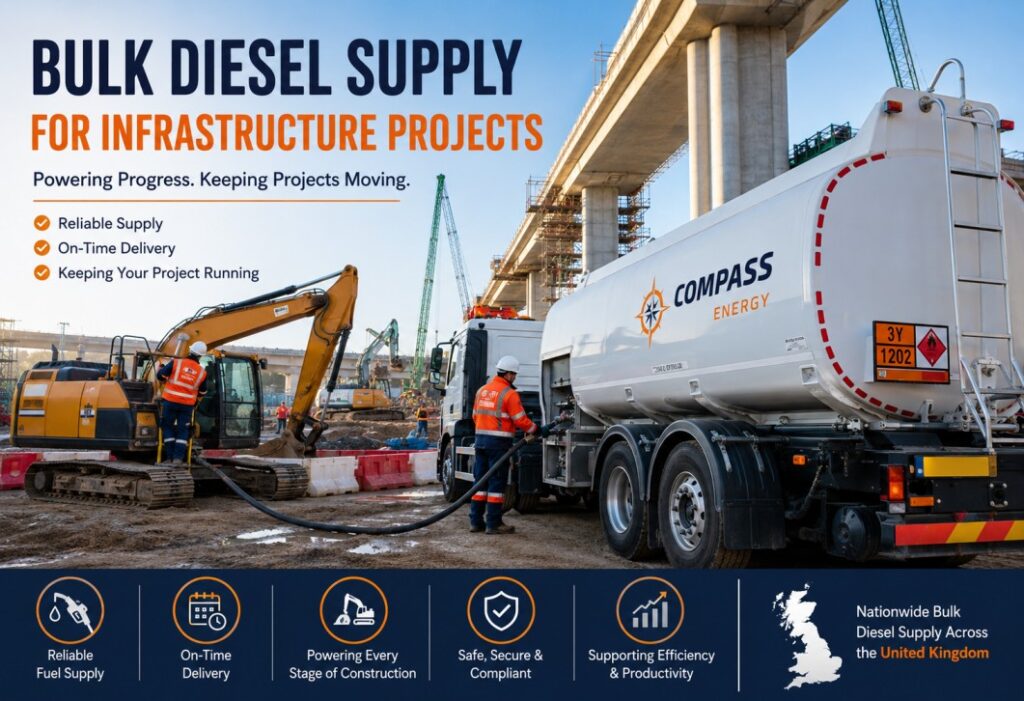
Infrastructure projects are the backbone of the United Kingdom’s economic growth. From motorway upgrades and rail developments to commercial construction, utilities, ports, airports, and renewable energy installations, every project depends on reliable machinery operating without interruption. Behind every excavator, crane, generator, dumper, and haulage vehicle is one essential requirement—bulk diesel supply for infrastructure projects.
A dependable fuel supply is far more than a delivery service. It directly influences project schedules, equipment performance, operational costs, environmental compliance, and overall productivity. Delayed fuel deliveries can halt multiple operations, increase labour costs, and create unnecessary downtime that affects project deadlines.
This guide explains everything project managers, contractors, procurement teams, and infrastructure companies across the United Kingdom should know about planning, managing, and optimising bulk diesel supply for large-scale infrastructure projects.
Why Bulk Diesel Supply for Infrastructure Projects Is Essential
Large infrastructure developments consume significant volumes of diesel every day. Heavy construction machinery, backup generators, lighting towers, compressors, pumps, and transport fleets all require continuous fuel availability.
Bulk diesel delivery offers several advantages over purchasing fuel in smaller quantities.
These include:
- Reduced operational interruptions
- Better fuel cost management
- Improved site productivity
- Less administrative workload
- Enhanced fuel security
- Greater delivery flexibility
- Easier inventory management
For projects operating across multiple locations, scheduled bulk deliveries help ensure every site remains fully operational.
Industries That Depend on Bulk Diesel Supply
Bulk diesel supports a wide range of infrastructure sectors throughout the UK.
These include:
- Highway and motorway construction
- Railway infrastructure
- Airport expansion projects
- Port developments
- Water treatment facilities
- Renewable energy construction
- Wind farm installations
- Solar farm developments
- Commercial property developments
- Housing infrastructure
- Civil engineering projects
- Mining support operations
- Utility maintenance
- Telecommunications infrastructure
Each industry has unique fuel requirements that demand accurate forecasting and reliable delivery schedules.
Equipment That Requires Bulk Diesel
Infrastructure projects rely on numerous diesel-powered assets operating simultaneously.
Common equipment includes:
- Excavators
- Bulldozers
- Dump trucks
- Wheel loaders
- Graders
- Rollers
- Cranes
- Telehandlers
- Forklifts
- Concrete pumps
- Generators
- Lighting towers
- Water pumps
- Mobile compressors
- Site vehicles
- Fuel bowsers
Fuel shortages affecting even one critical machine can slow progress across an entire project.
Benefits of Bulk Diesel Supply for Infrastructure Projects
Improved Project Efficiency
Waiting for fuel deliveries or arranging emergency refuelling wastes valuable working hours.
Scheduled bulk deliveries ensure machinery continues operating throughout the working day without interruptions.
Continuous operations improve productivity while helping contractors meet strict project milestones.
Better Cost Control
Bulk purchasing often allows companies to manage fuel expenditure more effectively.
Instead of frequent small orders, procurement teams can:
- Forecast monthly usage
- Plan purchasing strategies
- Reduce emergency delivery costs
- Improve budgeting accuracy
- Simplify financial reporting
Better planning also reduces unexpected project expenses.
Increased Site Productivity
Construction equipment cannot generate revenue while standing idle.
Reliable fuel management means:
- Less downtime
- Faster project completion
- Higher equipment utilisation
- Improved workforce efficiency
- Better subcontractor coordination
Every productive hour contributes towards project profitability.
Simplified Fuel Management
Managing fuel across multiple construction sites can become challenging.
Professional bulk diesel supply services simplify operations through:
- Scheduled deliveries
- Usage monitoring
- Fuel level tracking
- Delivery planning
- Tank management
- Consumption reporting
This reduces administrative workload while improving operational visibility.
Planning Bulk Diesel Requirements
Successful infrastructure projects begin with accurate fuel planning.
Several factors influence diesel consumption.
Project Duration
Long-term projects require ongoing delivery schedules rather than one-off orders.
Planning several months ahead improves supply reliability.
Fleet Size
The number of machines operating on-site directly affects fuel demand.
A larger fleet requires greater storage capacity and more frequent replenishment.
Machine Operating Hours
Equipment running extended shifts consumes significantly more fuel.
Night operations, weekend work, and overtime should all be considered.
Seasonal Conditions
Cold weather increases fuel demand due to:
- Longer engine warm-up times
- Increased generator use
- Additional site heating
- Extended lighting requirements
Seasonal planning helps avoid supply shortages during busy periods.
Choosing the Right Bulk Diesel Storage Solution
Safe storage is essential for maintaining fuel quality and protecting the environment.
Popular storage options include:
Static Fuel Tanks
Ideal for long-term projects with predictable consumption.
These provide:
- Large storage capacity
- Easy monitoring
- Reduced delivery frequency
- Improved fuel security
Mobile Fuel Bowsers
Suitable for projects where equipment frequently moves between work zones.
Benefits include:
- Flexible refuelling
- Reduced equipment travel
- Faster site operations
- Lower downtime
Temporary Site Fuel Storage
Short-term projects often benefit from temporary storage systems that can be relocated as construction progresses.
This provides operational flexibility without permanent infrastructure investment.
Preventing Fuel Contamination
Fuel contamination is one of the leading causes of diesel engine problems.
Common contaminants include:
- Water
- Dirt
- Dust
- Rust particles
- Microbial growth
- Debris
Maintaining clean storage tanks protects expensive machinery and reduces maintenance costs.
Best practices include:
- Inspect storage tanks regularly
- Keep tanks sealed
- Prevent water ingress
- Clean storage systems periodically
- Rotate stored fuel efficiently
Fuel Security on Infrastructure Sites
Fuel theft remains a significant concern across construction projects.
Protecting bulk diesel supplies helps minimise financial losses.
Effective security measures include:
- Lockable storage tanks
- Restricted access
- CCTV monitoring
- Security fencing
- Fuel monitoring systems
- Daily fuel reconciliations
- Controlled refuelling procedures
Good fuel security supports both operational continuity and cost control.
Environmental Responsibility in Diesel Management
Modern infrastructure projects are increasingly focused on reducing environmental impact.
Responsible fuel management supports sustainability by:
- Preventing spills
- Reducing unnecessary deliveries
- Improving fuel efficiency
- Minimising waste
- Supporting cleaner site operations
Good environmental practices also strengthen contractor reputation and compliance.
Managing Fuel Deliveries Across Multiple Sites
Large infrastructure programmes often involve numerous active locations.
Centralised fuel planning provides several advantages:
- Coordinated delivery schedules
- Better inventory visibility
- Reduced transport costs
- Improved resource allocation
- Consistent fuel availability
Project managers gain greater control over overall fuel logistics.
Emergency Bulk Diesel Supply
Unexpected events can rapidly increase diesel demand.
Examples include:
- Equipment breakdowns
- Generator failures
- Severe weather
- Power outages
- Accelerated construction schedules
- Emergency repairs
Having access to responsive bulk diesel supply helps projects continue operating even during unforeseen circumstances.
How Reliable Bulk Diesel Supply Reduces Project Risk
Reliable fuel availability contributes directly to project success.
It helps reduce:
- Machinery downtime
- Schedule delays
- Labour inefficiencies
- Contract penalties
- Equipment wear
- Operational disruption
Fuel reliability becomes a strategic advantage for major infrastructure developments.
Selecting a Bulk Diesel Supply Partner
Choosing an experienced supplier is just as important as selecting the right equipment.
Key considerations include:
- Nationwide delivery capability
- Reliable delivery schedules
- Flexible order volumes
- Industry experience
- Strong health and safety standards
- Professional customer support
- Fuel quality assurance
- Emergency delivery capability
Working with an experienced supplier enables infrastructure projects to maintain productivity from project commencement through to completion.
Future Trends in Bulk Diesel Supply for Infrastructure Projects
The UK’s infrastructure sector continues to evolve.
Future developments are expected to include:
- Digital fuel monitoring
- Automated tank level reporting
- GPS-coordinated deliveries
- Smart inventory forecasting
- Enhanced sustainability initiatives
- Greater operational efficiency
- Improved fuel analytics
These innovations will help infrastructure businesses make faster, data-driven decisions while reducing operational costs.
Conclusion
Reliable Bulk Diesel Supply for Infrastructure Projects is a fundamental component of successful construction and civil engineering operations across the United Kingdom. Whether supporting road construction, rail upgrades, utilities, commercial developments, or renewable energy projects, dependable bulk fuel management keeps machinery operating, improves productivity, controls costs, and reduces operational risks.
By combining accurate fuel forecasting, secure storage, scheduled deliveries, and effective fuel management practices, infrastructure businesses can maintain continuous operations and complete projects efficiently. Investing in a dependable bulk diesel supply strategy is not simply about keeping equipment fuelled—it is about ensuring every stage of an infrastructure project progresses safely, efficiently, and on schedule.
Frequently Asked Questions (FAQs)
What is bulk diesel supply for infrastructure projects?
Bulk diesel supply involves delivering large quantities of diesel directly to construction, civil engineering, and infrastructure sites to keep machinery, generators, and vehicles operating efficiently.
Why is bulk diesel better than purchasing fuel in small quantities?
Bulk diesel deliveries reduce downtime, simplify fuel management, improve budgeting, minimise emergency orders, and help maintain continuous site operations.
Which infrastructure projects use bulk diesel?
Road construction, railway developments, airports, ports, utilities, housing developments, renewable energy projects, commercial construction, and civil engineering projects all commonly rely on bulk diesel.
How often should bulk diesel be delivered?
Delivery frequency depends on project size, equipment usage, storage capacity, and daily fuel consumption. Many projects use scheduled deliveries based on expected demand.
How can construction sites prevent diesel theft?
Fuel theft can be reduced through secure storage tanks, restricted access, CCTV, regular fuel monitoring, daily usage checks, and controlled refuelling procedures.
What factors affect diesel consumption on infrastructure projects?
Key factors include machinery size, operating hours, weather conditions, project duration, site location, equipment efficiency, and workload intensity.
How should bulk diesel be stored safely?
Diesel should be stored in suitable tanks with regular inspections, proper maintenance, contamination prevention measures, and secure access to protect fuel quality and site safety.
Can bulk diesel supply support multiple project locations?
Yes. Many infrastructure businesses coordinate scheduled deliveries across multiple sites, allowing centralised fuel management and improved operational efficiency.
Why is fuel planning important for infrastructure projects?
Effective fuel planning reduces delays, controls costs, prevents equipment downtime, improves project scheduling, and ensures continuous operations throughout the project lifecycle.
What should businesses look for in a bulk diesel supplier?
Businesses should choose a supplier with reliable delivery schedules, nationwide coverage, flexible delivery options, industry expertise, strong safety standards, quality fuel management, and responsive customer support.