Introduction
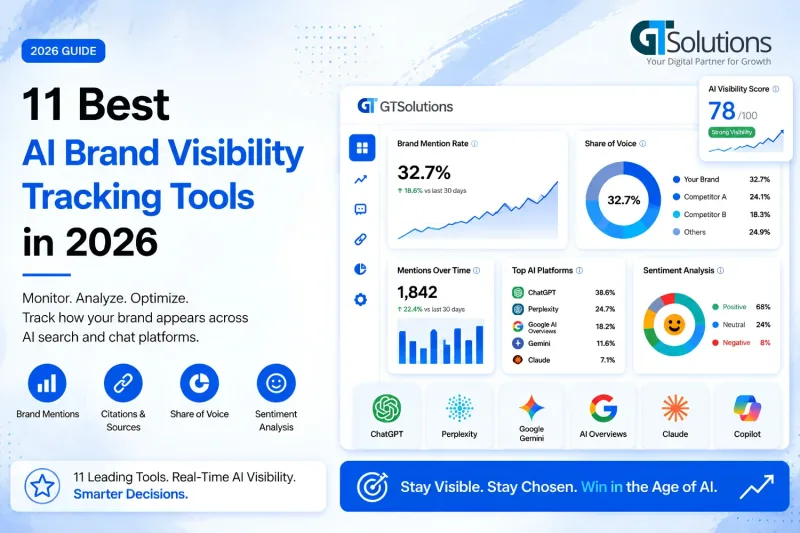
The way people discover brands online is changing rapidly. Instead of relying solely on traditional search engines, many users now turn to AI-powered platforms like ChatGPT, Gemini, Perplexity, and other conversational assistants to find products, compare services, and get recommendations. This shift has created a new challenge for businesses. Ranking well on search engines is still important, but it is no longer the only measure of online visibility. Brands also need to understand how often they are mentioned, cited, or recommended by AI systems. This is where AI brand tracking becomes essential. AI brand tracking helps businesses monitor their presence across AI-generated responses, identify opportunities to improve visibility, and better understand how their brand is perceived in an AI-driven search environment. In this guide, you’ll learn what AI brand tracking is, why it matters, the key metrics to monitor, and practical strategies for improving your brand’s visibility across AI search platforms.
What Is AI Brand Tracking?
AI brand tracking is the process of monitoring how artificial intelligence platforms mention, describe, recommend, or cite your business when responding to user queries.
Unlike traditional brand monitoring, which focuses on social media mentions, online reviews, and search engine rankings, AI brand tracking measures how visible your business is within AI-generated answers.
As AI-powered search becomes more common, understanding your brand’s presence in these search results is an important part of digital marketing.
Why It Matters
AI assistants increasingly influence purchasing decisions by providing direct recommendations instead of simply listing websites.
If your business is consistently referenced in AI-generated answers, you may benefit from:
- Increased brand awareness
- Greater customer trust
- Higher-quality website traffic
- More qualified leads
- Stronger competitive positioning
Businesses that ignore AI visibility risk missing opportunities as search behavior continues to evolve.
How AI Search Platforms Mention Brands
AI platforms generate responses by analyzing information from a variety of trusted sources. Depending on the question, your brand may appear in several different ways.
AI-Generated Answers
When users ask questions such as “What are the best project management tools?” or “Which agencies specialize in AI SEO?”, AI systems may recommend specific brands based on the information available.
Product Recommendations
For commercial queries, AI assistants often suggest products that appear trustworthy, widely recognized, and well documented online.
Local Business Suggestions
Location-based questions may result in recommendations for businesses with strong local authority and consistent online profiles.
Industry Comparisons
AI platforms frequently compare businesses based on features, expertise, pricing, or reputation.
Expert Citations
Brands that publish high-quality educational content may be referenced as reliable sources when AI systems answer informational questions.
Content Summaries
Rather than quoting entire articles, AI systems often summarize information from authoritative websites while mentioning the original source.
Although AI models use different methods to generate responses, they generally favor content that demonstrates expertise, authority, and trustworthiness.
Key Metrics to Track
Effective AI brand tracking goes beyond counting mentions. It helps you understand how your brand is represented and how it compares with competitors.
Brand Mentions
Track how often your business appears in AI-generated responses across different platforms.
A higher number of relevant mentions generally indicates stronger visibility.
Citation Frequency
Monitor how often AI systems reference your website, research, case studies, or published content.
Frequent citations suggest your content is viewed as a reliable source.
Sentiment Analysis
Evaluate whether AI describes your brand positively, neutrally, or negatively.
Understanding sentiment helps identify opportunities to strengthen your reputation.
Share of Voice
Compare your visibility with competitors within your industry.
If competing brands appear more frequently, analyze the factors contributing to their stronger presence.
Competitor Comparisons
Observe how AI platforms position your business relative to competitors.
Questions to consider include:
- Which competitors are mentioned most often?
- What strengths are highlighted?
- Which services receive the most attention?
Visibility Across AI Platforms
Different AI systems may generate different responses.
Track your brand across multiple platforms to identify patterns and improve overall visibility.
Benefits of AI Brand Tracking
Monitoring AI visibility provides several long-term advantages.
Measure AI Visibility
Businesses gain a clearer understanding of how often they appear in AI-generated recommendations.
Identify Reputation Trends
Tracking mentions over time reveals changes in brand perception.
Discover Content Gaps
Analyzing competitor recommendations helps identify topics your website has not yet covered.
Improve Brand Authority
Publishing content that answers common user questions can increase your chances of future AI citations.
Monitor Competitor Performance
Understanding why competitors receive more AI visibility helps guide your own content strategy.
Support SEO and Generative Engine Optimization GEO
Traditional SEO and AI optimization work best together.
AI brand tracking provides insights that complement website analytics and search performance.
How to Improve AI Brand Visibility
Improving visibility requires consistent effort across multiple areas of digital marketing.
Publish Expert-Led Content
Create comprehensive, accurate content that genuinely answers user questions.
AI systems are more likely to reference informative resources than promotional pages.
Build Topical Authority
Cover your area of expertise thoroughly instead of publishing isolated articles.
A strong content ecosystem demonstrates subject-matter expertise.
Earn High-Quality Backlinks
Mentions from respected publications strengthen your brand’s credibility.
Quality is more valuable than quantity.
Gain Mentions from Trusted Websites
Guest posts, interviews, industry reports, and partnerships expand your digital footprint.
Maintain Consistent Brand Information
Ensure your company name, website, contact information, and service descriptions remain consistent across all online platforms.
Use Structured Data
Schema markup helps search engines understand your content and business information more effectively.
Update Existing Content
Fresh, accurate information improves credibility and increases the likelihood of future AI references.
Best Practices for AI Brand Tracking
Successful monitoring requires a systematic approach.
Track Multiple AI Platforms
Different AI assistants may provide different recommendations.
Review your brand across multiple platforms rather than relying on a single one.
Monitor Branded Queries
Regularly ask AI platforms questions related to your business and industry.
Examples include:
- What are the best marketing agencies?
- Who provides AI SEO services?
- Which companies specialize in content optimization?
Analyze whether your business appears naturally.
Review Competitor Mentions
Understanding why competitors receive recommendations often reveals opportunities for improvement.
Analyze Citation Quality
Not every mention carries equal value.
Focus on authoritative references that accurately represent your expertise.
Combine AI Tracking with Traditional Analytics
Monitor AI visibility alongside website traffic, search rankings, referral sources, and conversions.
Together, these metrics provide a more complete view of brand performance.
Maintain Accurate Business Profiles
Keep your website, social profiles, directory listings, and company information current and consistent.
Common Mistakes to Avoid
Businesses beginning AI brand tracking often make several avoidable mistakes.
Tracking Only Google Rankings
Search rankings remain important, but they no longer provide a complete picture of online visibility.
Ignoring AI-Generated Answers
Many users now receive recommendations directly from AI assistants without visiting traditional search results.
Measuring Mentions Without Context
The quality and relevance of AI mentions matter more than simply counting them.
Inconsistent Branding
Conflicting company information makes it more difficult for AI systems to accurately identify your business.
Failing to Update Content
Outdated articles gradually lose relevance and become less likely to appear in AI-generated responses.
Conclusion
AI-powered search is reshaping how consumers discover and evaluate businesses. As conversational assistants become a regular part of the customer journey, monitoring your presence in AI-generated responses is no longer optional; it is an important extension of your digital marketing strategy. AI brand tracking enables businesses to understand where they are being mentioned, how they are being described, and how they compare with competitors. Combined with high-quality content, strong topical authority, trusted third-party mentions, and consistent brand information, it provides actionable insights that can improve both visibility and credibility. Rather than replacing traditional SEO, AI brand tracking complements it. Businesses that invest in both approaches will be better positioned to earn trust, increase discoverability, and stay competitive as AI continues to influence how people search for information and make purchasing decisions.